Lecture 3: Sea-floor depth, age, and heat flow
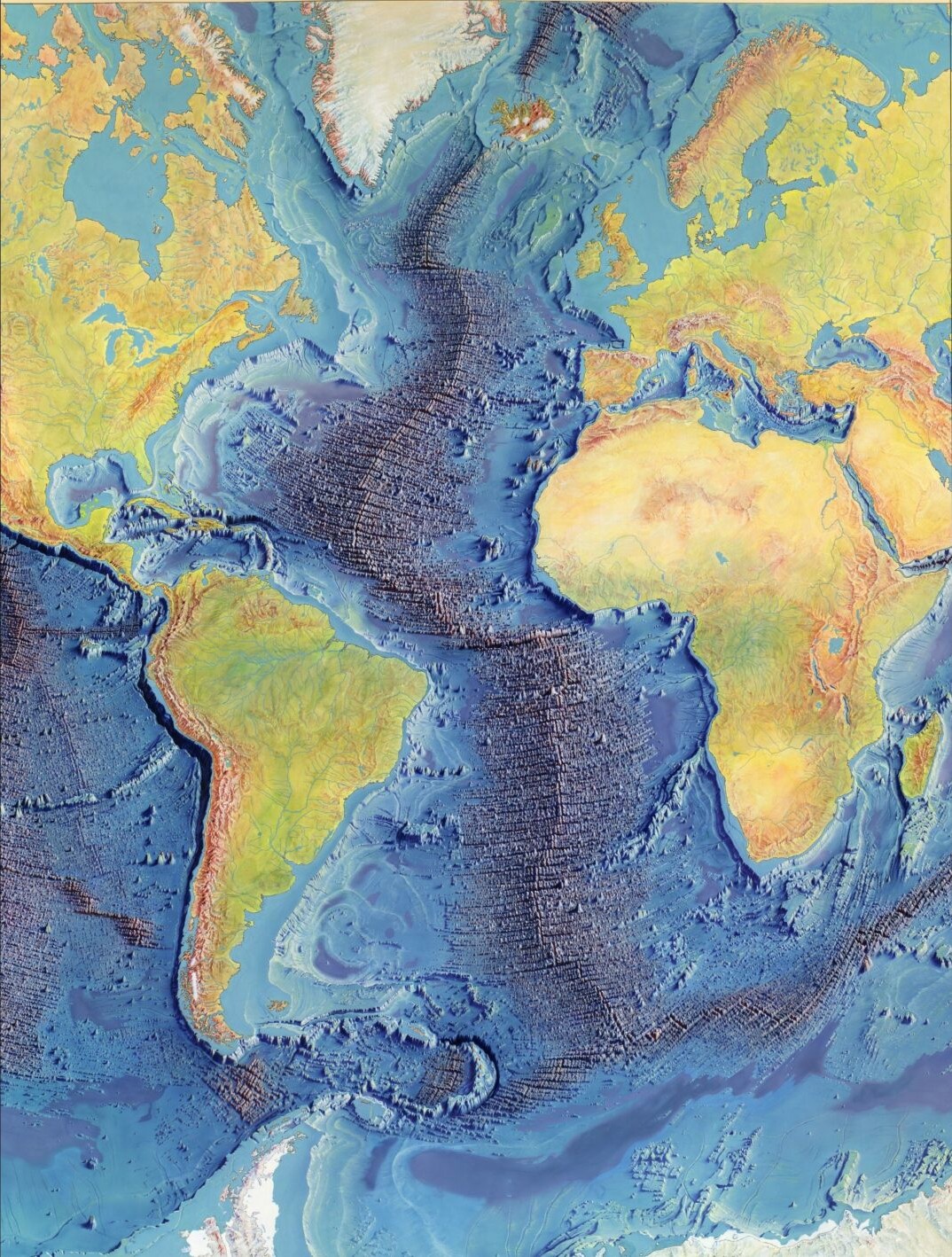
- Mid ocean ridges and the topography of the sea-floor
- Boundary layer model
- Plate model
- How do we map the seafloor today?
Boundary Layer Model (cooling of an infinite half-space)
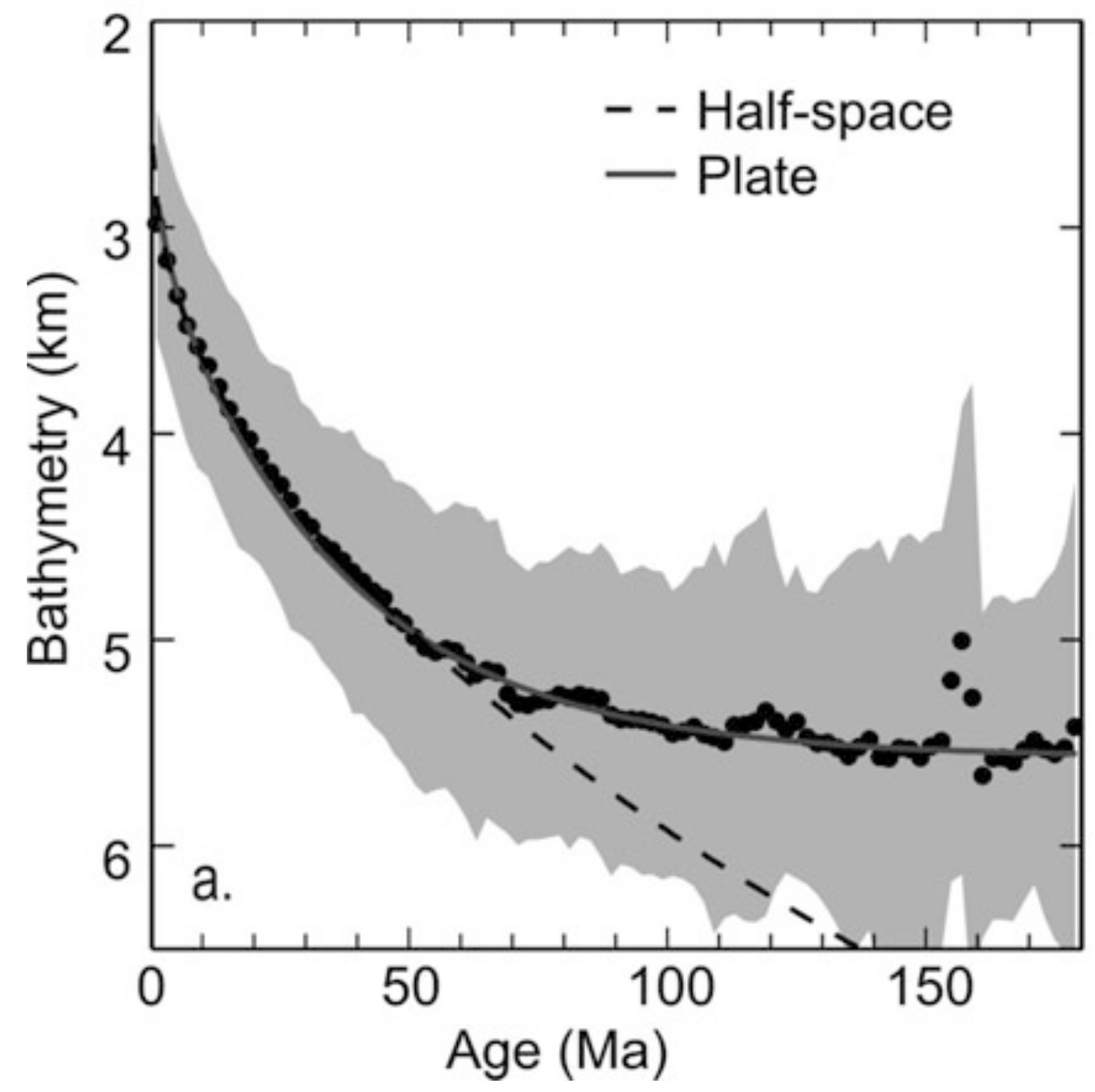
Boundary Layer Model (cooling of an infinite half-space)
Boundary Layer Model (cooling of an infinite half-space)
- Calculate the thickness of the lithosphere
- at 0 Ma (3 km bathymetry)
- at 20 Ma (4 km bathymetry)
- at 50 Ma (5 km bathymetry)
- Using the following densities:
- Cool peridotite (lithosphere): 3400 kg/m$^3$
- Hot peridotite (asthenosphere): 3300 kg/m$^3$
- Water: 1000 kg/m$^3$
Boundary Layer Model (cooling of an infinite half-space)
The denser lithosphere thickness stops increasing (maximum plate thickness). Why?
Plate model
Plate model
Plate model
As the plate cools, both the mechanical and thermal boundary layers increase in thickness
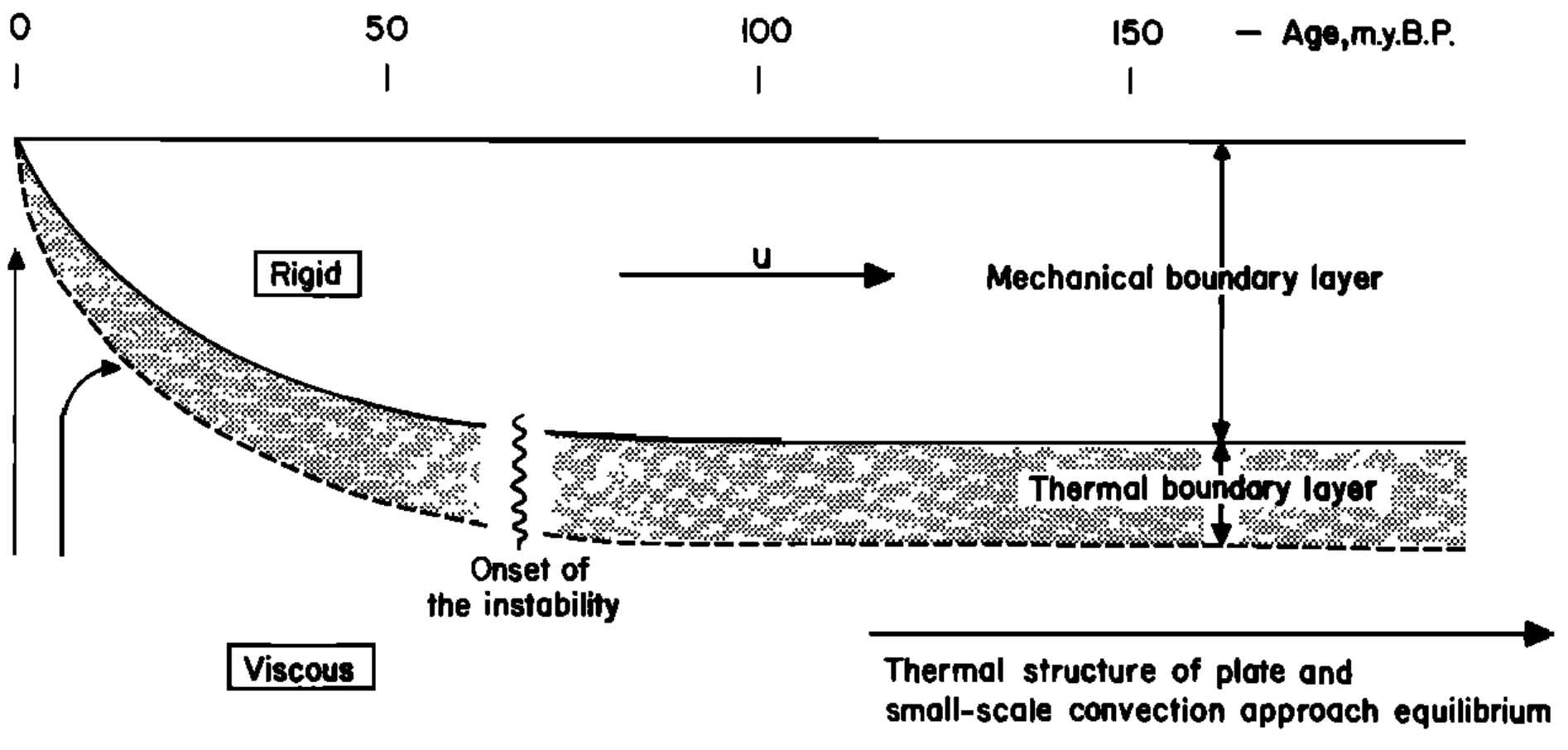
What exactly is this thermal boundary layer?
- Rayleigh number describes how heat is transferred in a material with non-uniform density (often due to temperature differences, ie a function of $\Delta T$)
- Low Rayleigh number: conduction
- High Rayleigh number: convection
Parsons and McKenzie are specifically describing a layer near the lithosphere-asthenosphere boundary where the combined viscosity contrasts and temperature contrasts lead to small scale convection.
Thermal boundary layers
What exactly is this thermal boundary layer?
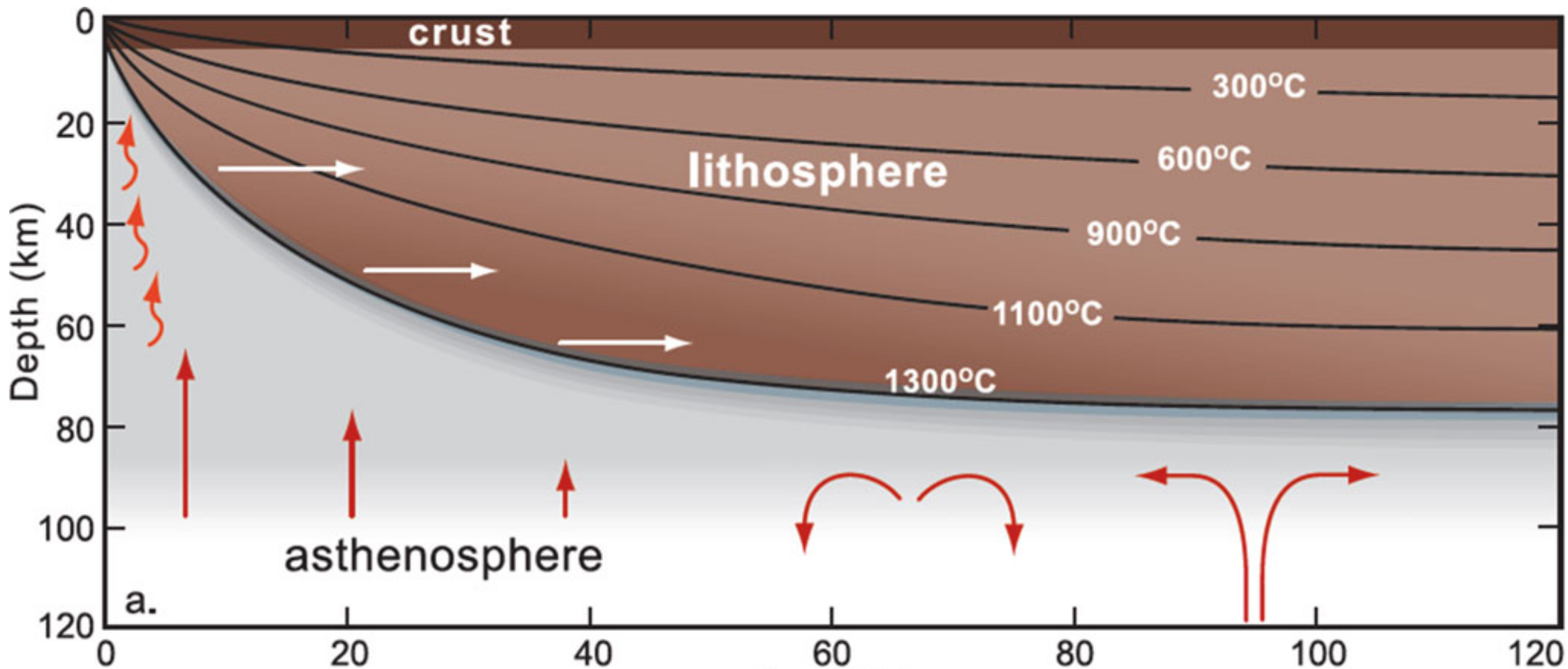
Thermal boundary layers
What exactly is this thermal boundary layer?
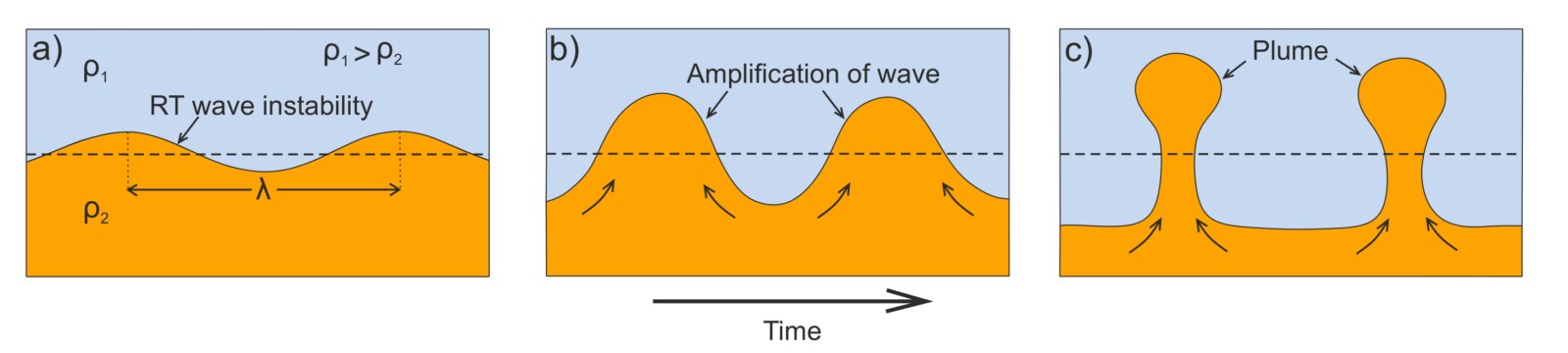
Thermal boundary layers
What exactly is this thermal boundary layer?
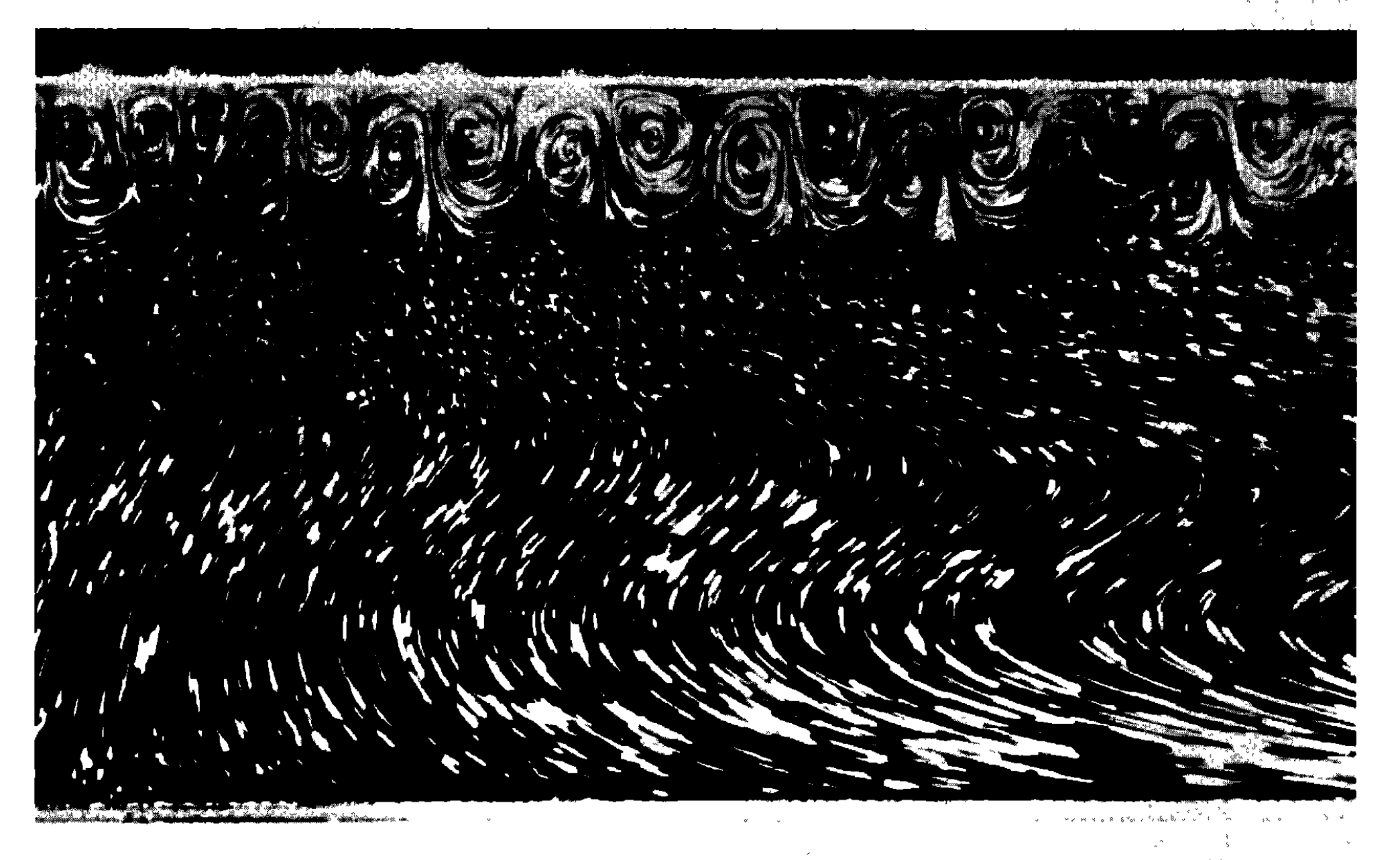
Thermal boundary layers
How does this thermal instability effect plate (lithosphere) thicknesses?
Does convection increase or decrease heat flux rates?
Higher heat flux to the base of the lithosphere after the instability forms, resulting in a near constant temperature at the base of the lithosphere (the instability delivers heat as fast as conductive cooling above can remove it, a steady state).
Recall our drawings of thermal profiles earlier, how does a fixed boundary condition at 100 km change the temperature profile in the lithosphere?
Mapping the sea-floor
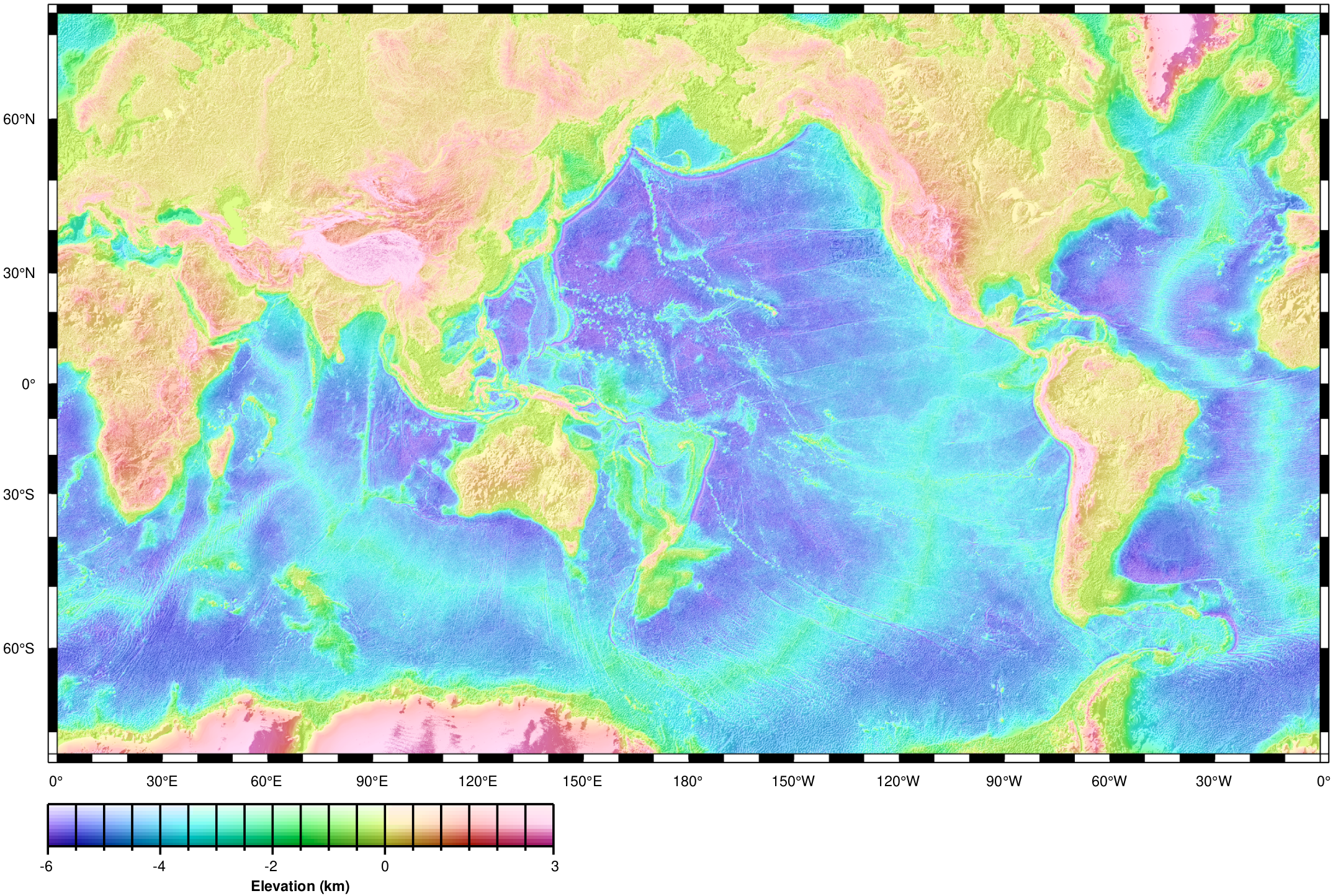
Mapping the sea-floor
- A combination of:
- Depth Soundings
- Satellite Altimetry
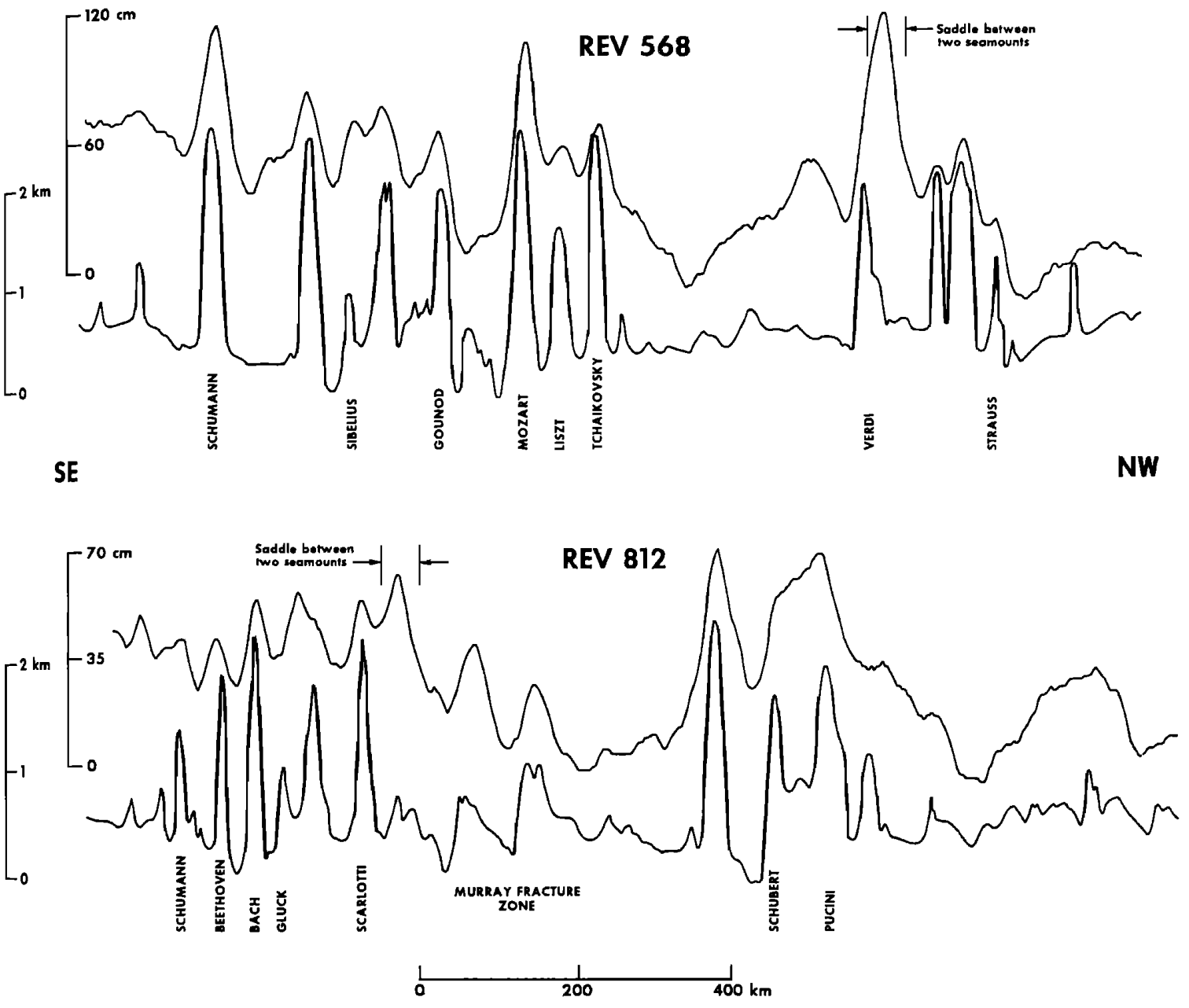
Bathymetric Prediction From SEASAT Altimeter Data (Dixon et al. 1983)
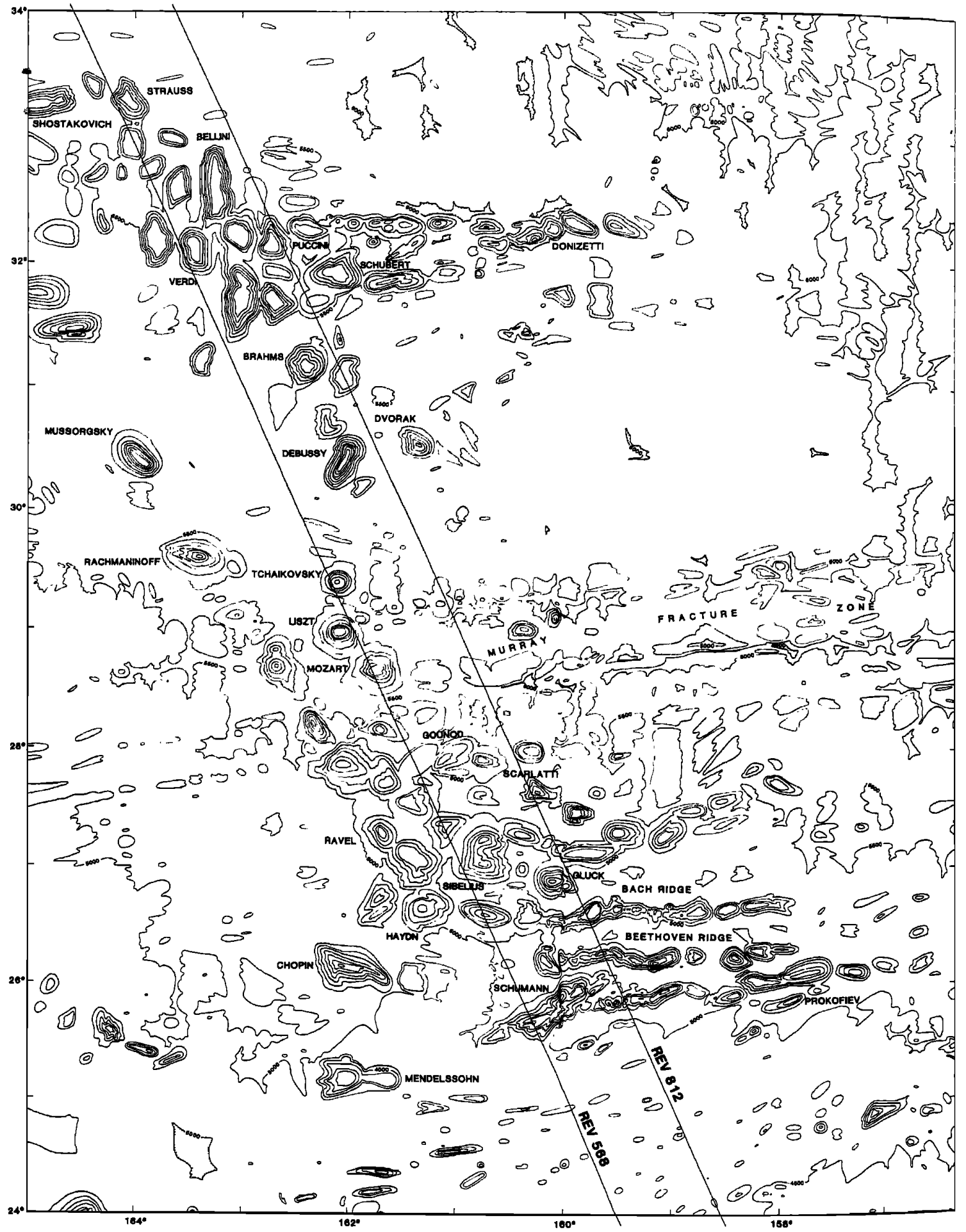
Bathymetric Prediction From SEASAT Altimeter Data (Dixon et al. 1983)
Gravitational potential
Gravitational potential is the the work (energy transferred) per unit mass that would be needed to move an object to that point from a distance infinitely far away. Recall that: $\mathrm{work = force~\times~displacement}$
The acceleration due to gravity is constant along an equipotential surface. One such surface on Earth is commonly referred to as the geoid. What is the geoid?
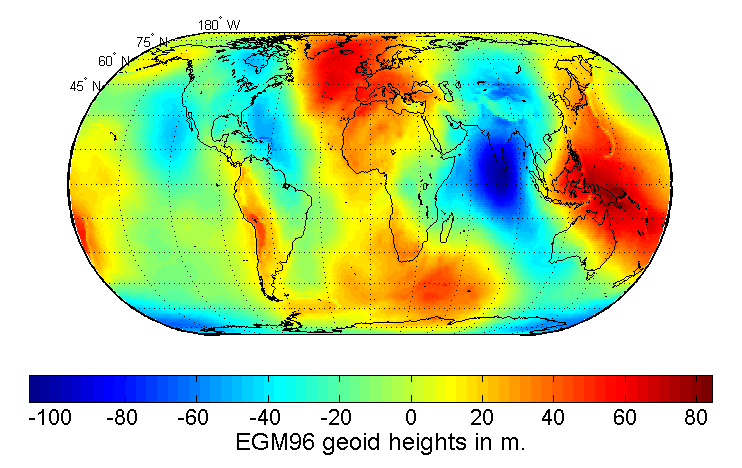
The geoid (a model) is the ocean surface elevation if winds and tides were absent.