Lecture 7: Hot spots, seamounts, and ridges

The topography and geology of the seafloor offers some of the only clues we have to understanding the hidden workings of the mantle below. We have discussed some of the largest features of ocean basins, and today we consider the small seamounts and their critical role in this story.

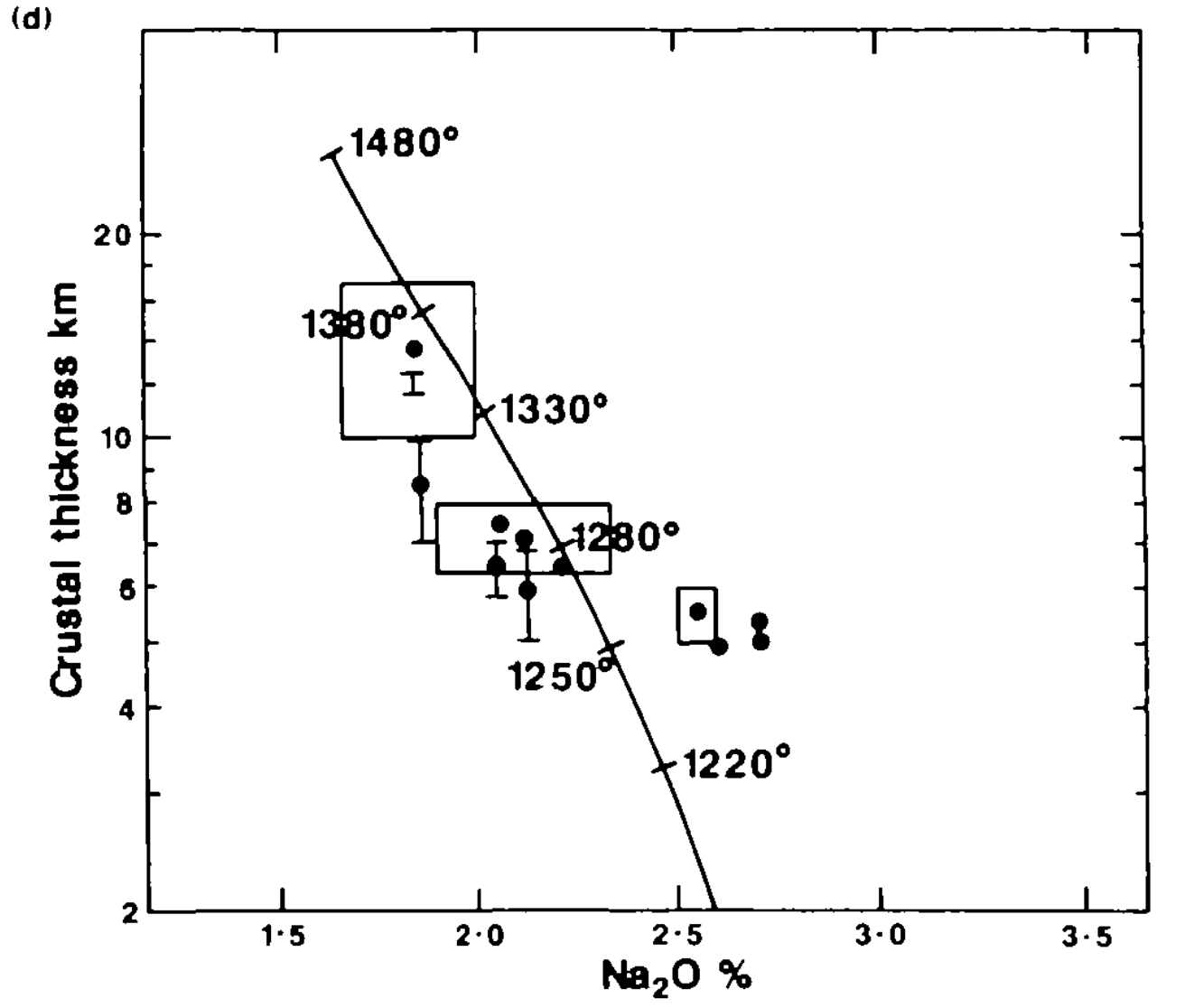
  • Axial depth and crustal thickness
    • Na$_2$O in MORB
  • Spreading rate vs potential temperatures
  • Trace elements and isotopes in MORB/OIB

No description has been provided for this image

We acknowledge and respect the lək̓ʷəŋən peoples on whose traditional territory the university stands and the Songhees, Esquimalt and W̱SÁNEĆ peoples whose historical relationships with the land continue to this day.
Review

What evidence do we have for mantle convection?

  • Magnetic anomalies that are symmetric around MOR
  • Elevation of seafloor fits diffusive cooling model (up to ~50 Ma)
  • Constant crustal thickness in the oceanic crust
  • Higher heatflow under MOR than far from MOR
  • Ocean basins are young

What evidence do we have for plumes?

  • Anomalously high elevation swell surrounding active mid-plate (usually) volcanism
  • Often a monotonic age progression of volcanism the youngs in the plate-motion direction

Today we will go into some of the geochemical properties of mid-ocean ridge and ocean island basalts to get a better understanding of how the mantle on Earth works.

Axial depth, crustal thickness, and melting
No description has been provided for this image

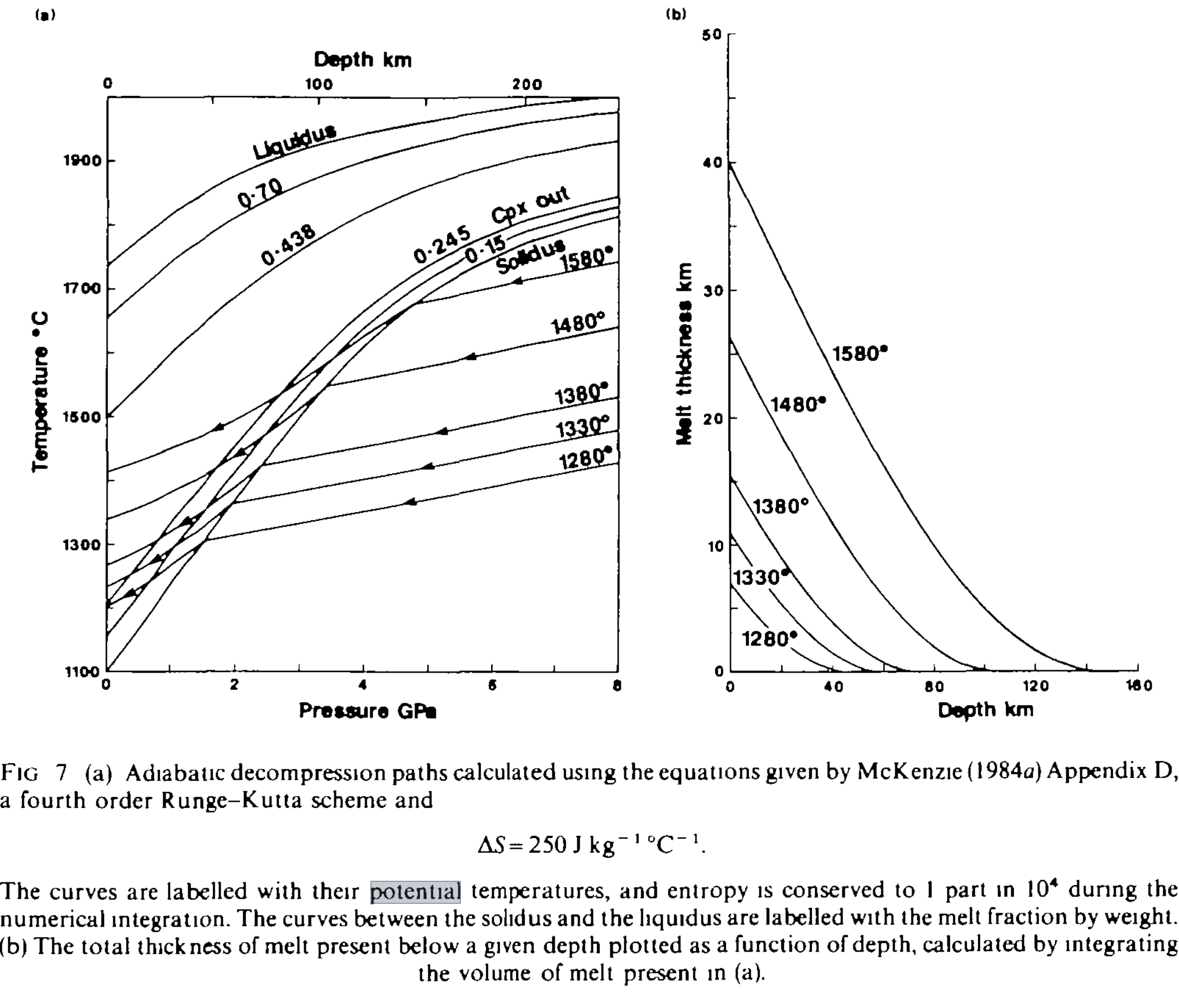
Melting peridotite
No description has been provided for this image

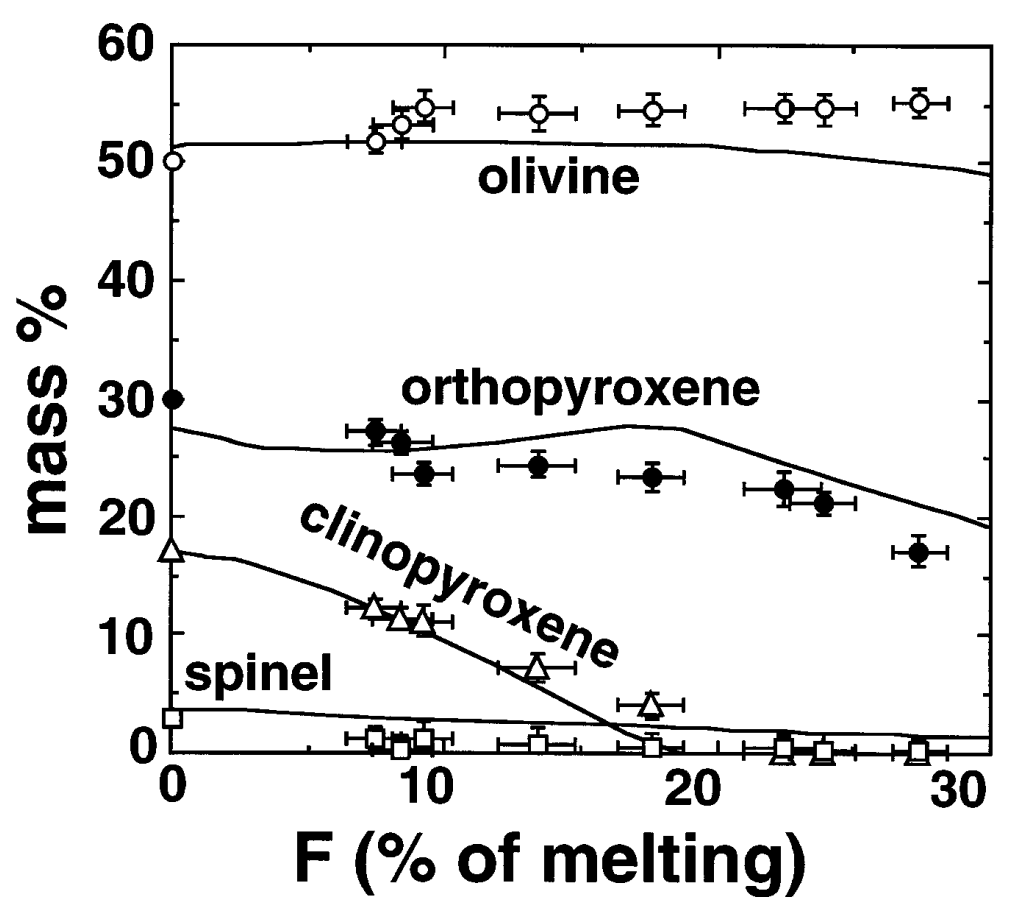
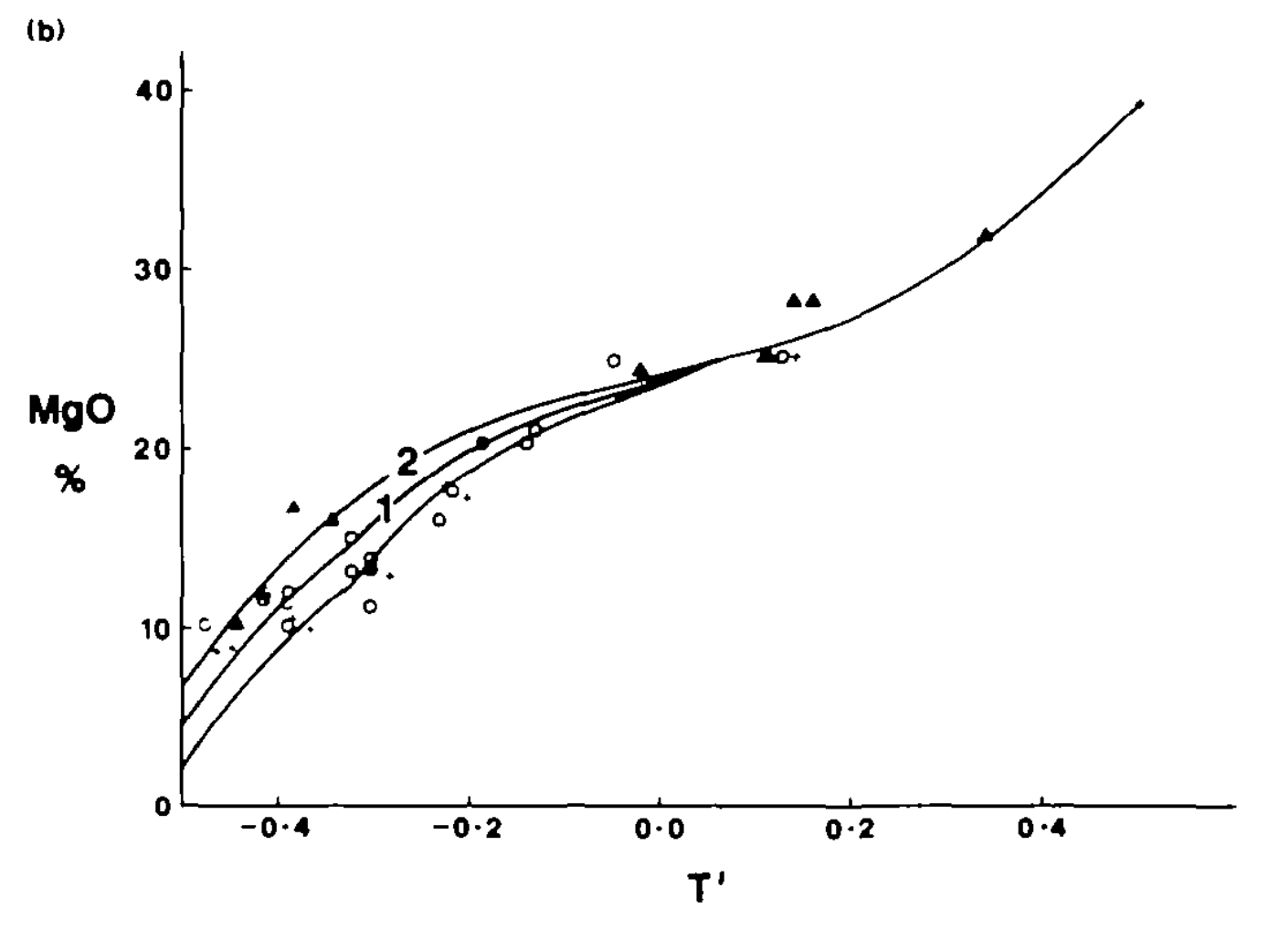
Peridotite melting experiments

(-0.5 is the solidus, 0.5 is the liquidus)
No description has been provided for this image

No description has been provided for this image

Peridotite melting experiments

(-0.5 is the solidus, 0.5 is the liquidus)
No description has been provided for this image

No description has been provided for this image

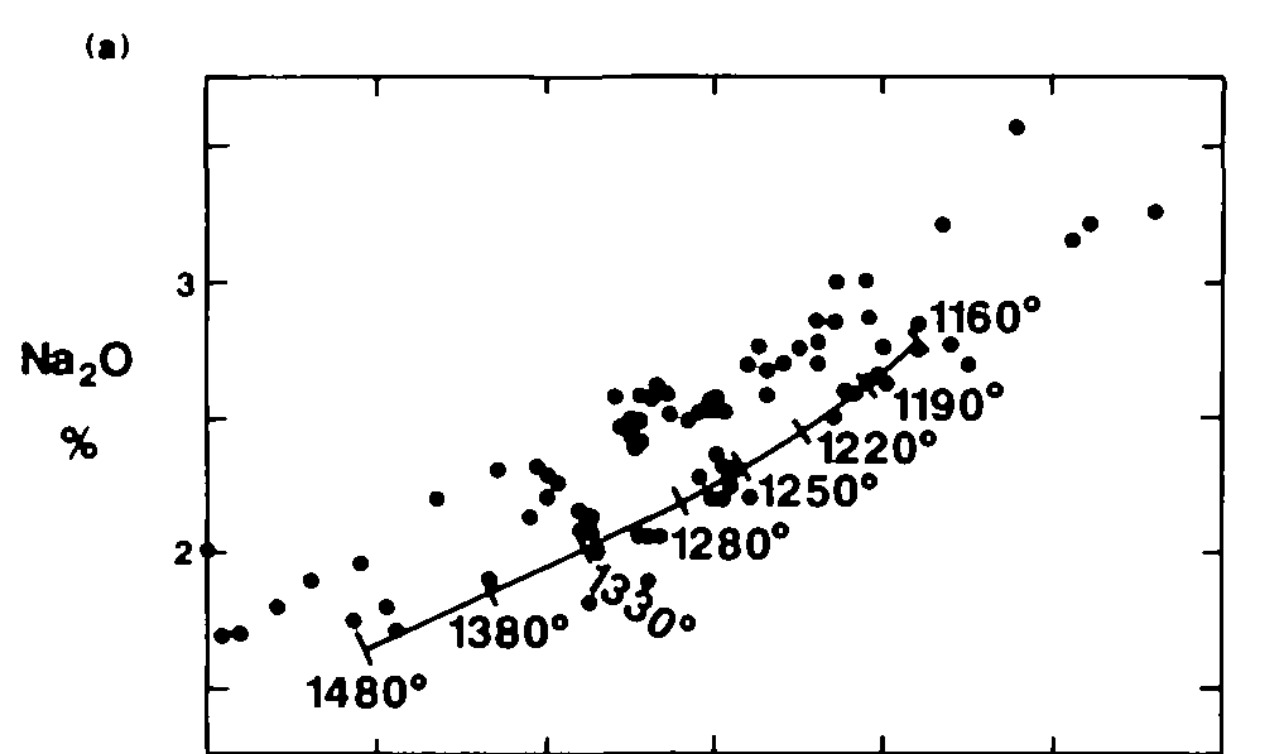
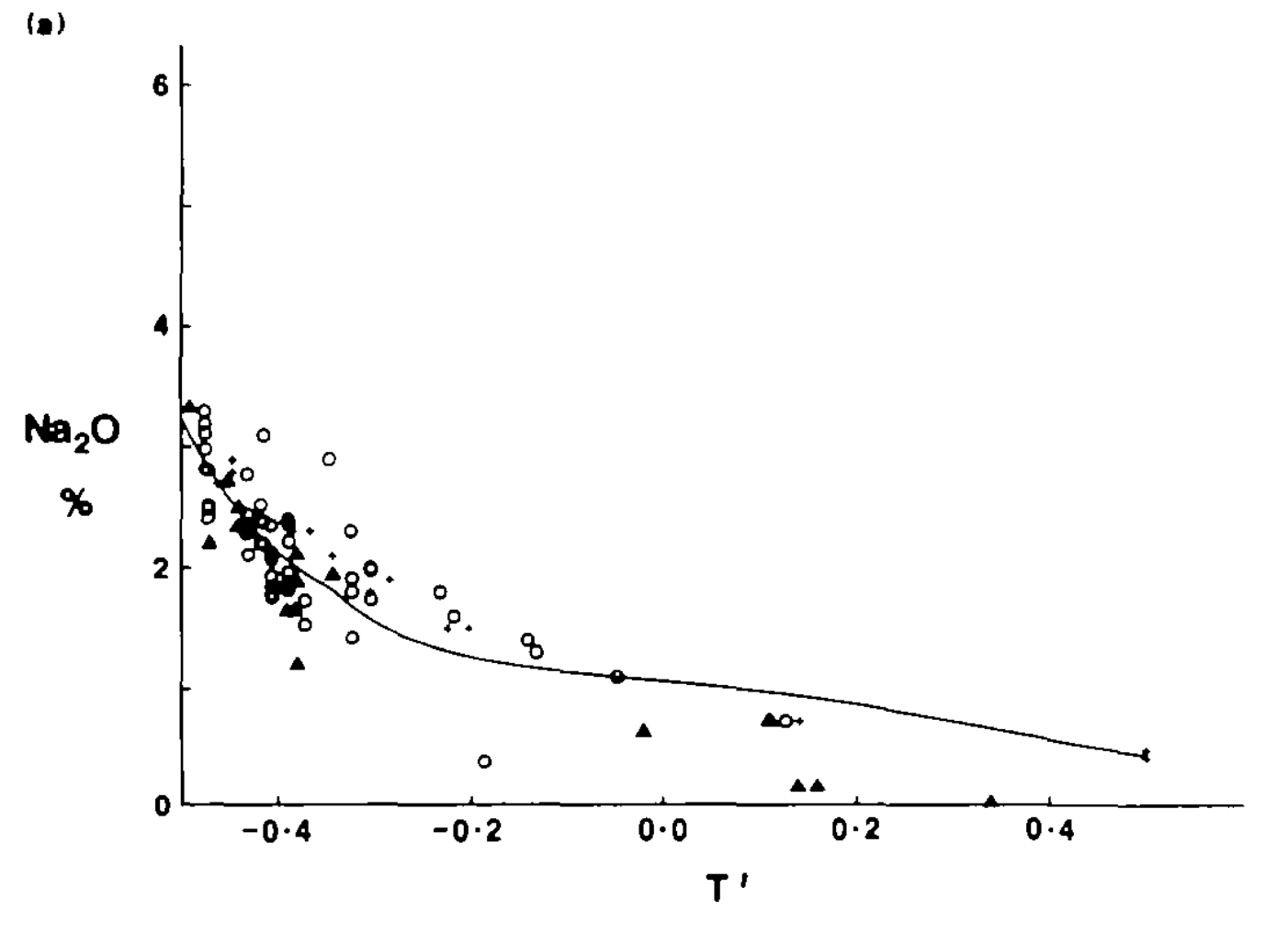
Na2O data from MORB
No description has been provided for this image

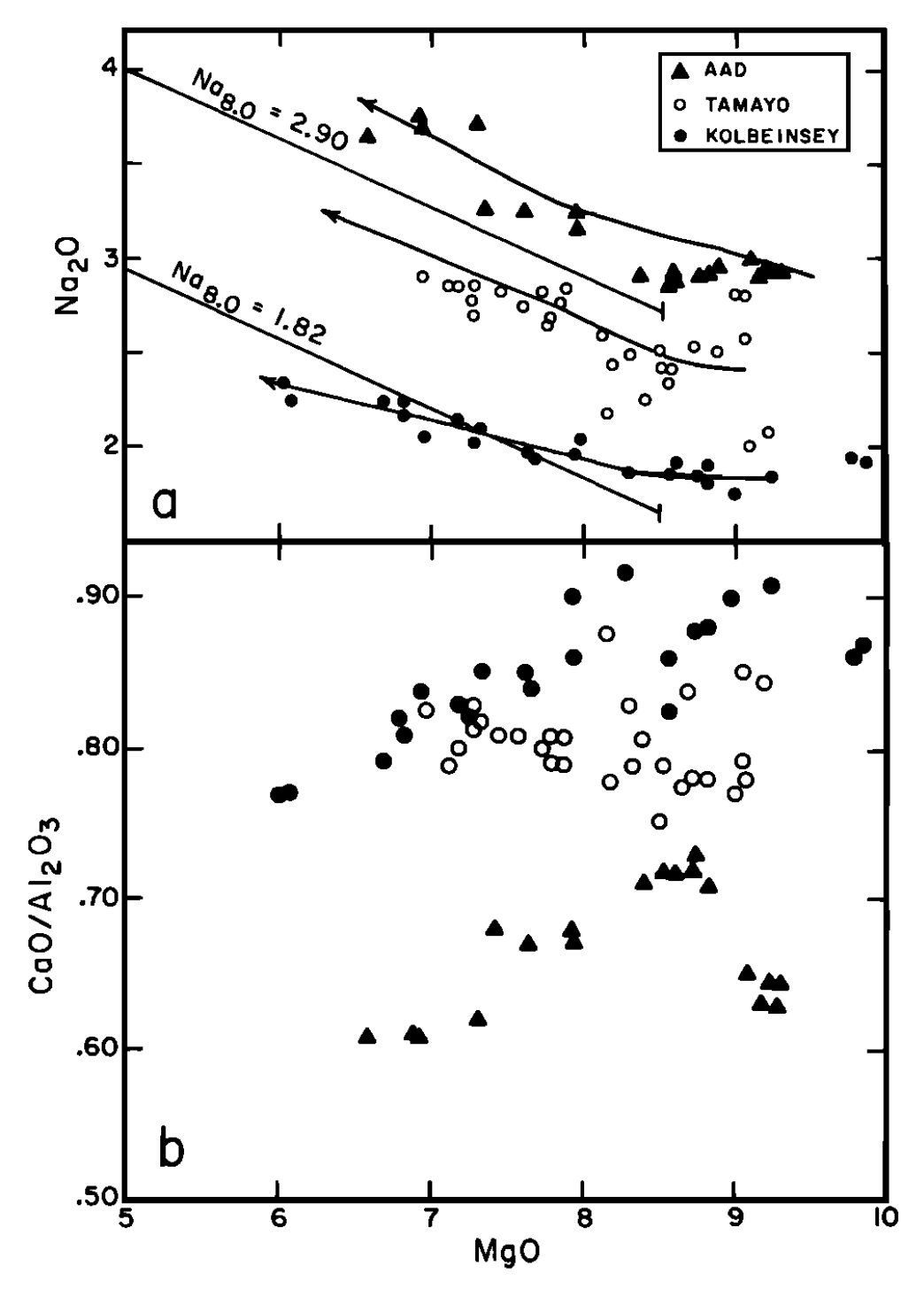
What is controlling the Na to Mg ratio?
Na2O data from MORB
No description has been provided for this image

What is controlling the Na to Mg ratio? Percent melting AND differentiation. Na$_2$O is controlled by percent partial melting but the magmas can lose phases during ascent. Olivines or pyroxenes may literally drop out of the rising magma, changing the major element chemistry. By normalizing Na$_2$O data to a fixed MgO content, percent melting (potential temperature) can be isolated.

Normalized (MgO = 8%) Na$_2$O

No description has been provided for this image 0 Depth to the ridge axis (km) 6

No description has been provided for this image


Variations in spreading rate?

If melting is passive, what is the expected relationship between spreading rate and axial depth?
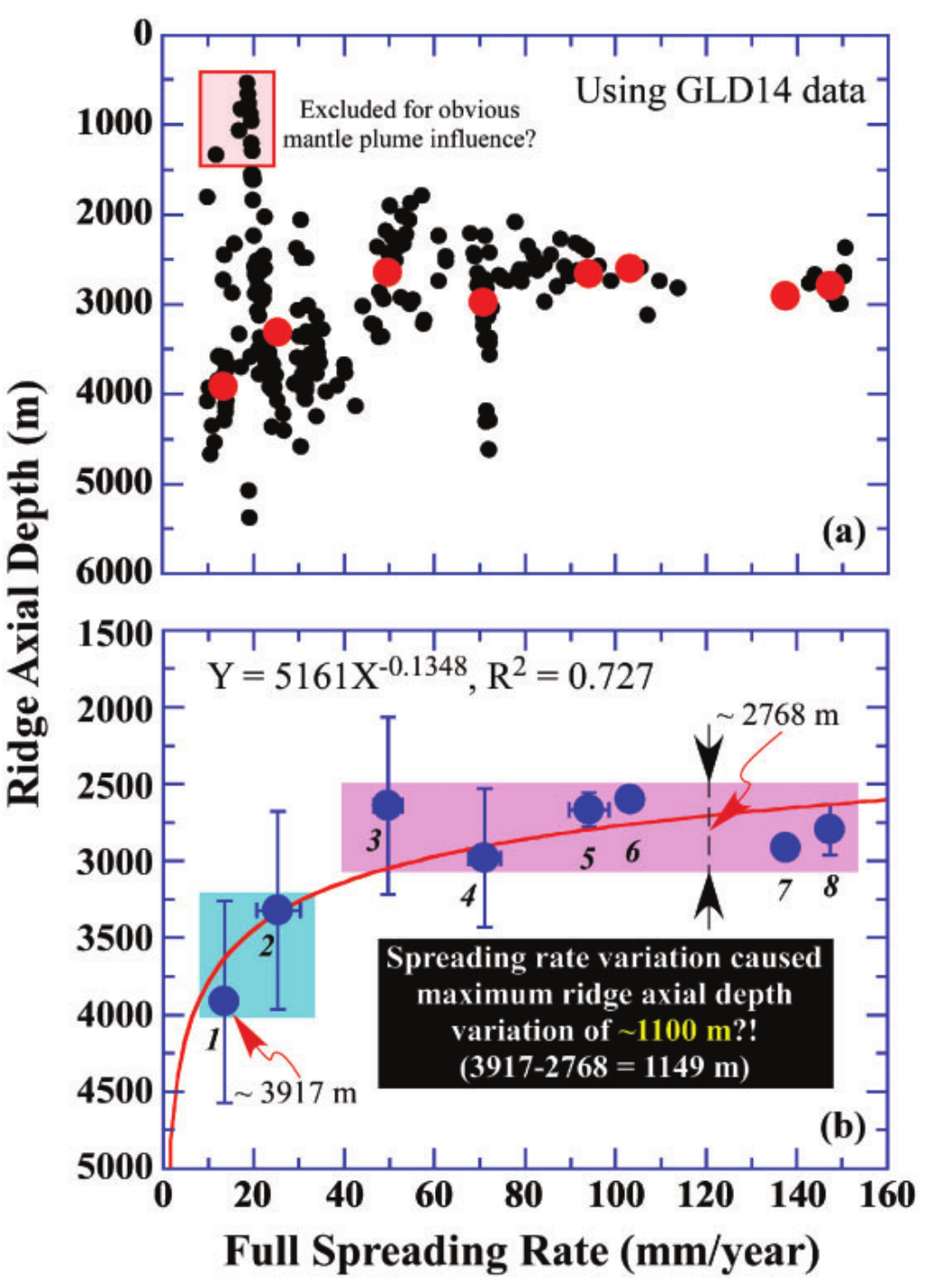
why does the ridge depth tell us anything about passive vs active?

higher potential temperature means more melting because you cross the solidus deeper. as a consequence you get thicker crustal column and that sits higher at equilibrium/when compensated

an 'active' ridge should have no relationship between spreading rate and potential temperature. the melting comes first

a passive ridge the melting is a consequence of the spreading rate.

No description has been provided for this image

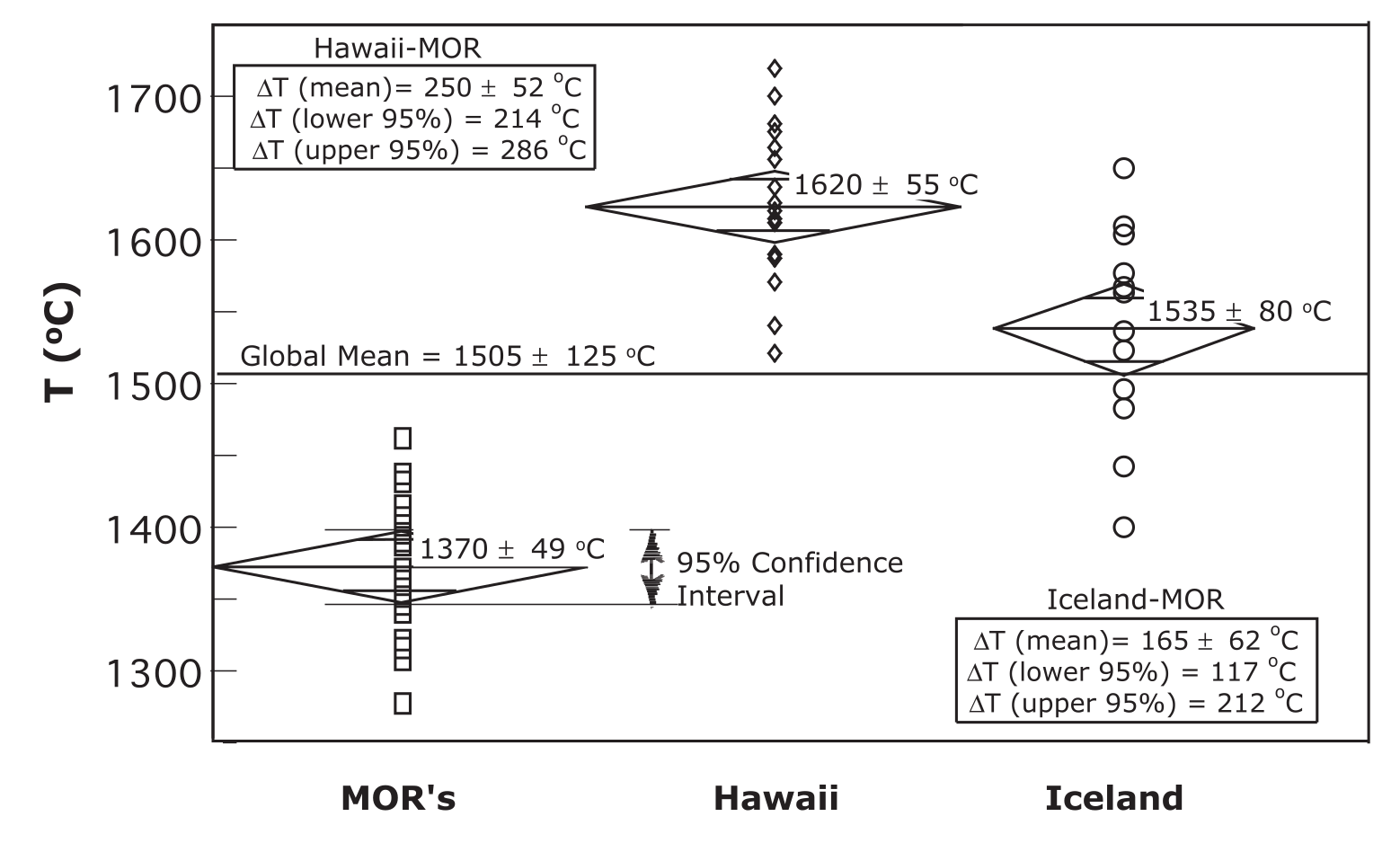
Potential temperatures beneath ridges and oceanic islands

The partitioning of Mg in Olivine is sensitive to temperature while the Fe/Mg partitioning is not
No description has been provided for this image

Strong geochemical evidence for the existence of thermally driven mantle plumes

However, basalts represent a homogenized account of the mantle melting process, and are unlikely to yield the maximum temperatures experienced during melting. And estimates from ocean crust thickness rely on knowledge of melt productivity

This paper presents an alternative method for estimating T, using the forsterite (Fo) contents of olivine phenocrysts and olivine-liquid equilibria. These techniques are used to test the mantle plume hypothesis by determining the thermal anomalies that drive volcanism at Hawaii and Iceland.

Olivine-liquid equilibria are particularly useful for T estimation because (1) the ratio [X Fe /X Mg ] ol / [X Fe /X Mg ] liq (or K D (Fe-Mg) ol-liq ) is nearly constant over a wide range of temperatures, bulk composi- tions and fO 2 conditions [Roeder and Emslie, 1970] (except for a slight increase at high P and T [Herzberg and O’Hara, 1998]) and (2) the ratio liq X ol Mg /X Mg (K d (Mg)) is highly sensitive to temper- ature (X Fe and X Mg are cation fractions of Fe and Mg, respectively; see section 2.2.3).

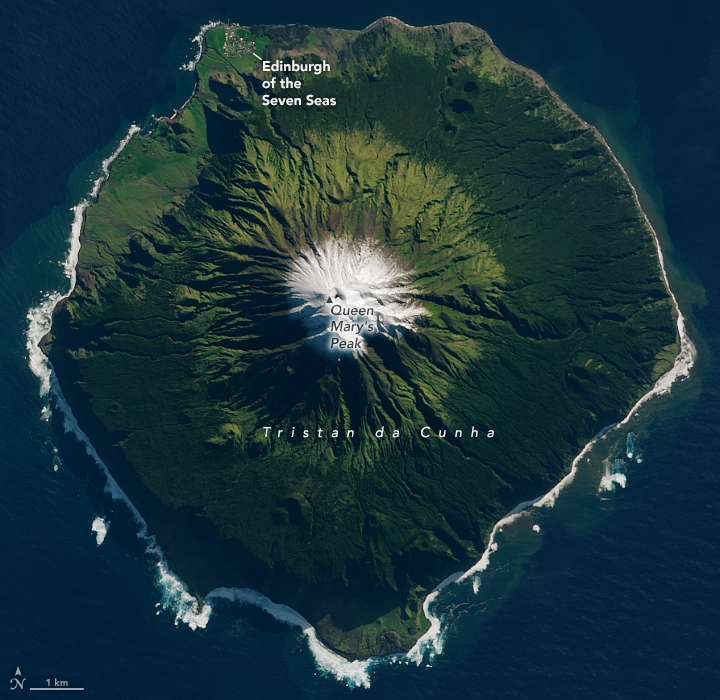
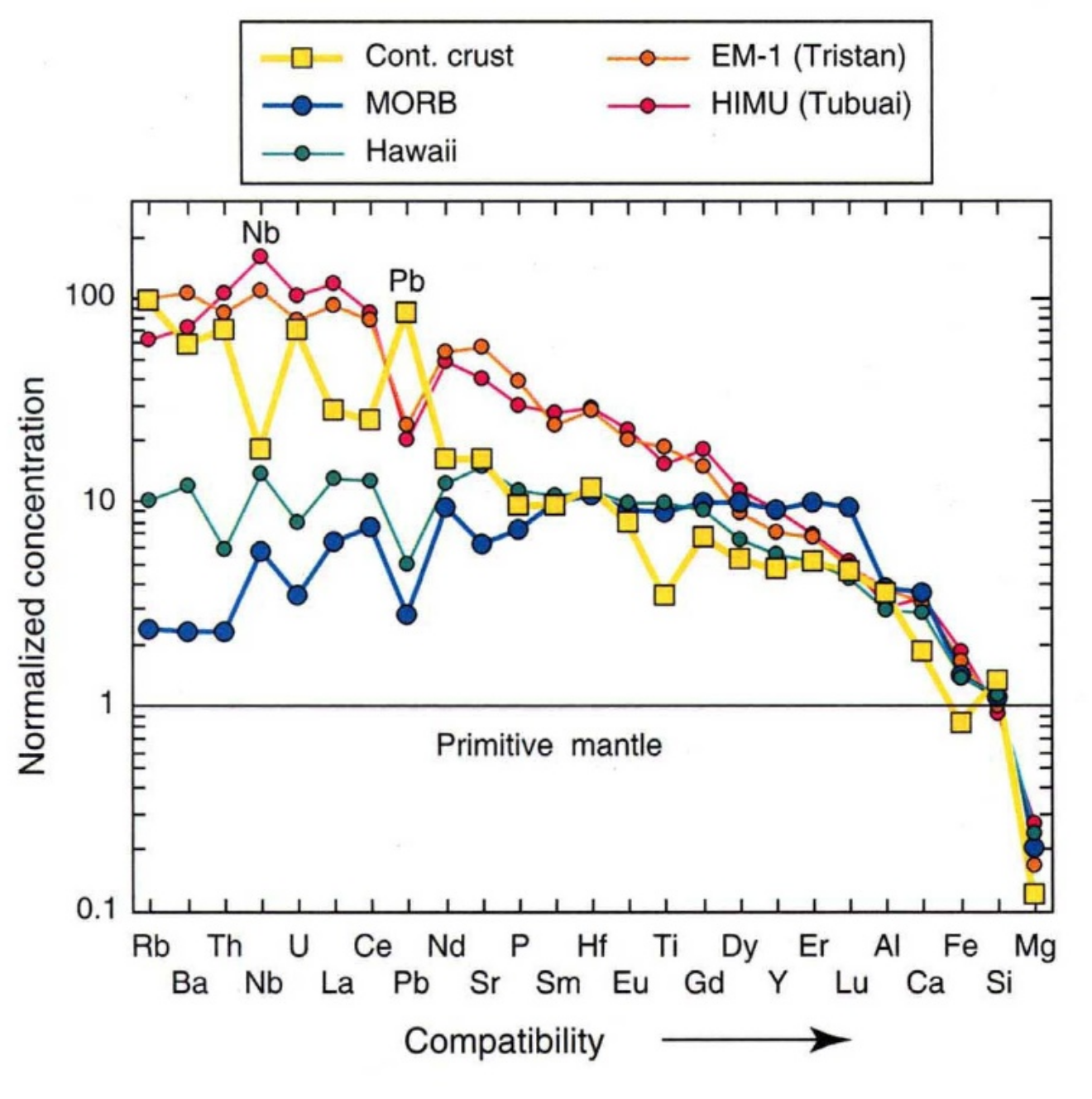
Trace elements in MORB and OIB (review compatibility trends)
No description has been provided for this imageTristan, South Atlantic
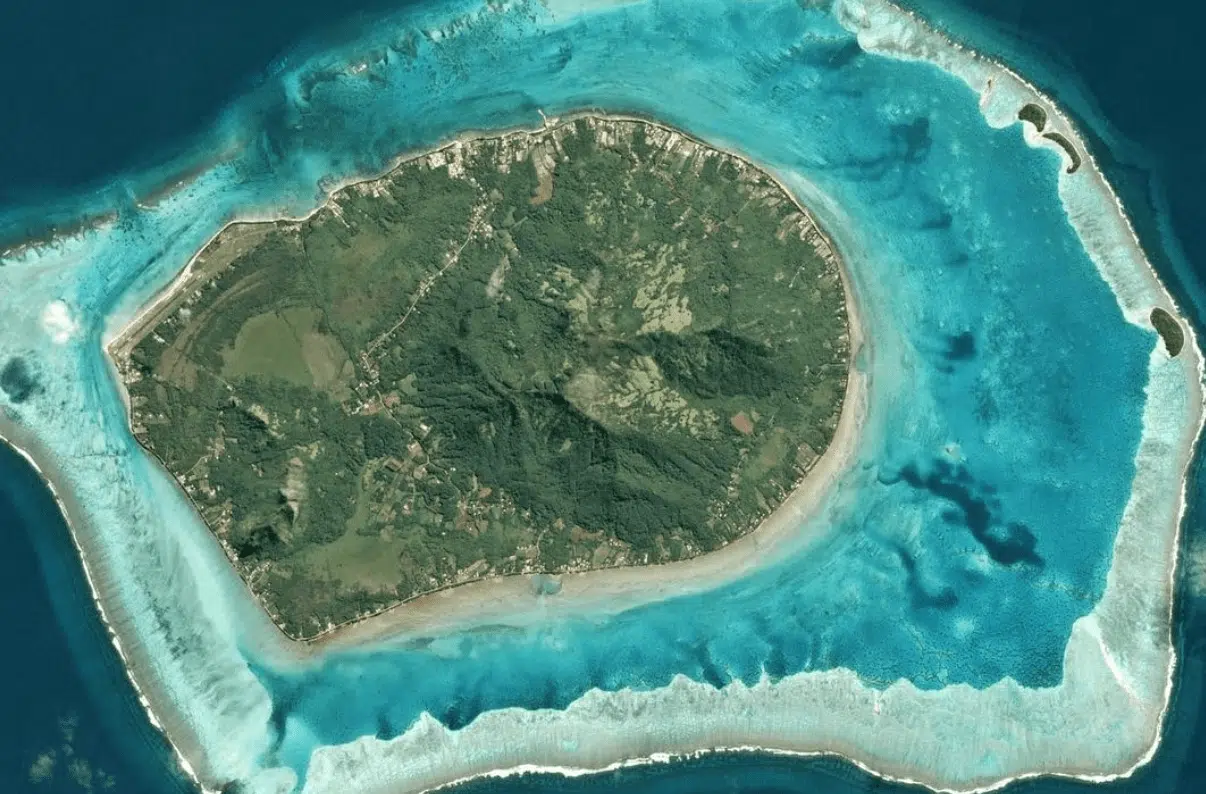
No description has been provided for this imageTubuai, French Polynesia

Trace elements in MORB and OIB (review compatibility trends)
No description has been provided for this image

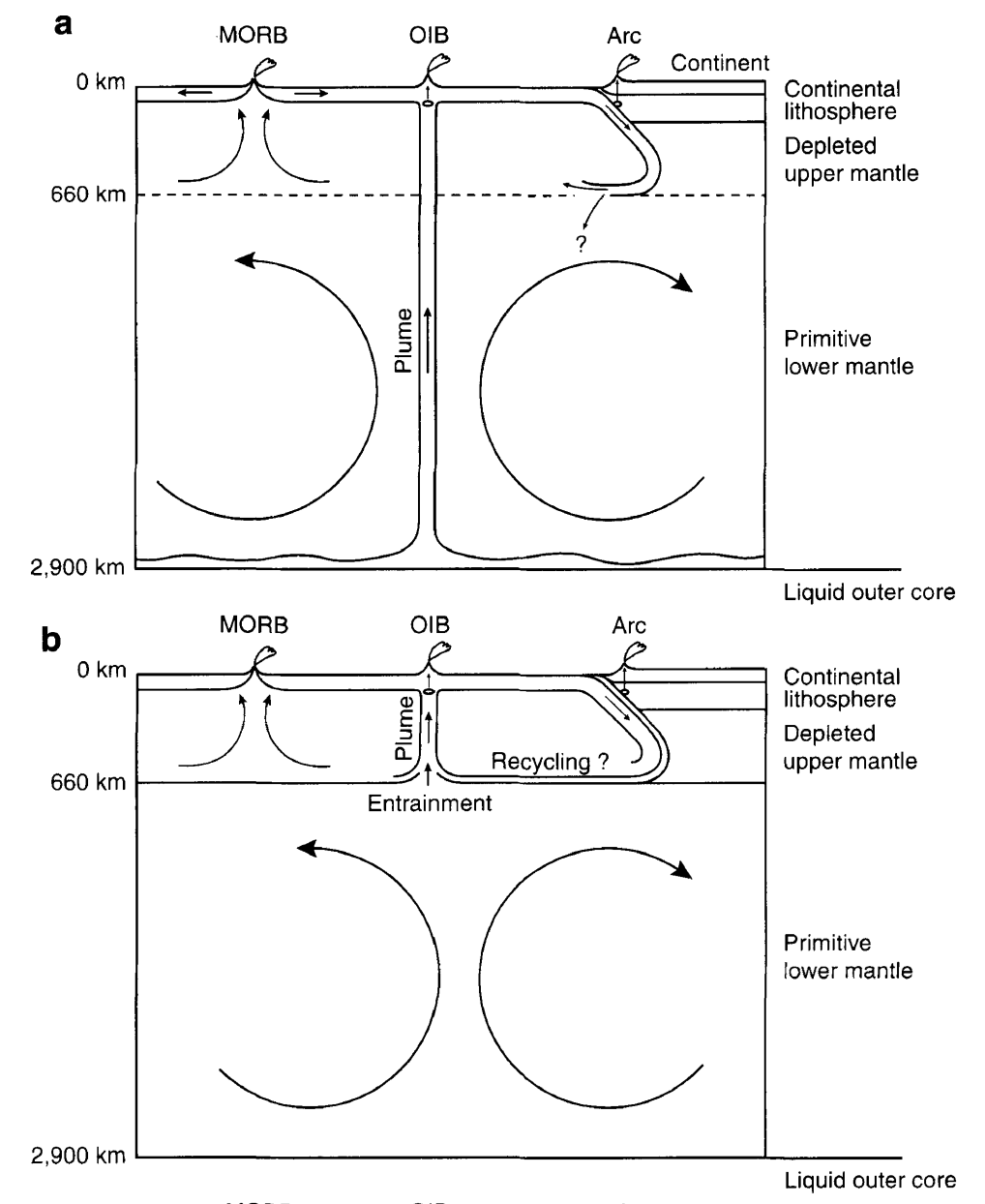
Models of the mantle

No description has been provided for this image

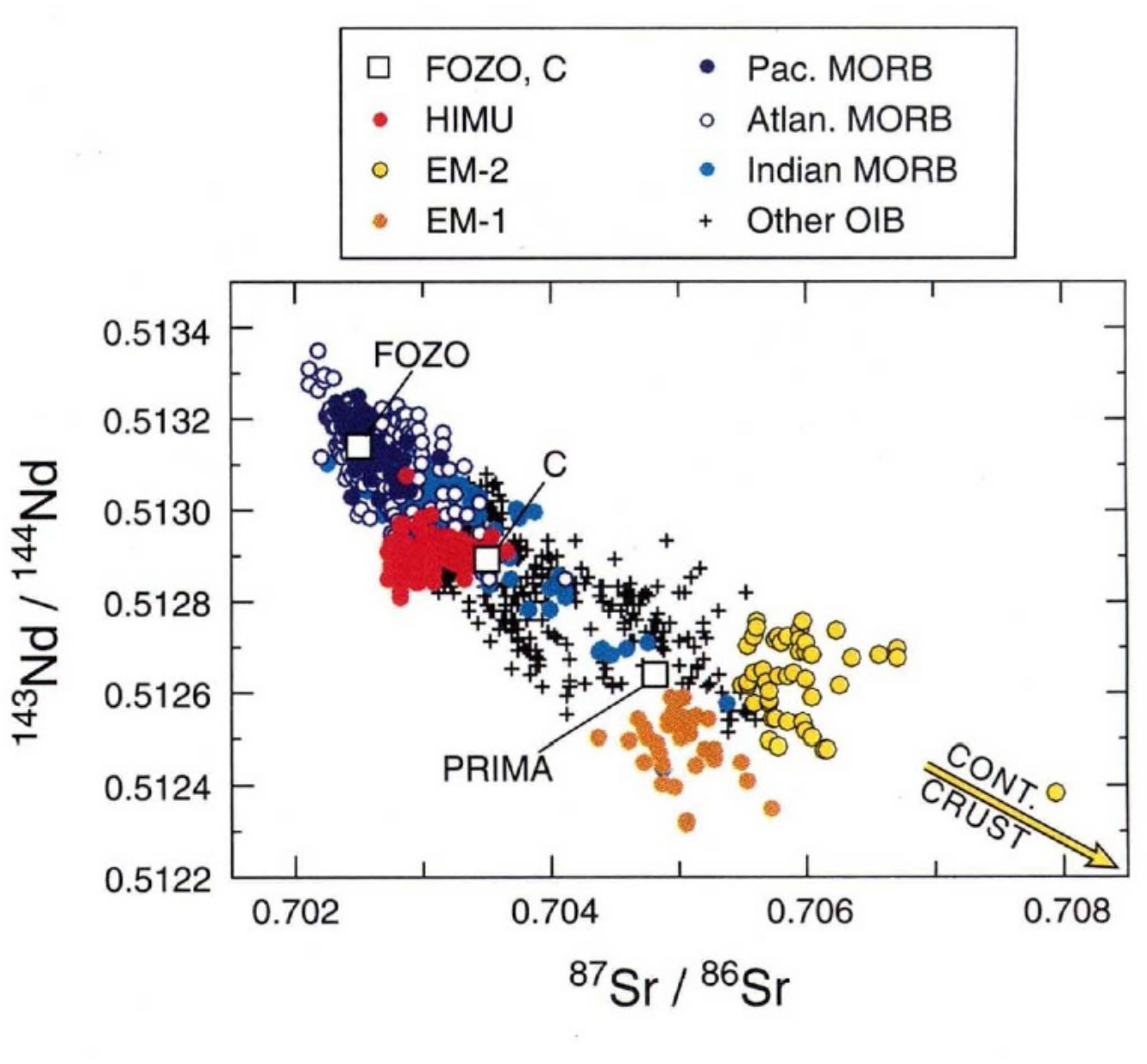
Sm and Rb

  • $^{147}$Sm$\rightarrow^{143}$Nd
    • Sm more compatible than Nd
  • $^{87}$Rb$\rightarrow^{87}$Sr
    • Rb highly incompatible (and more incompatible than Sr)
  • What trends do you expect between primitive mantle, MORB, and continental crust?
    • If plumes sample primitive mantle, what should their radiogenic Nd and Sr look like?
    • sketch: $\frac{^{87}Sr}{^{86}Sr}$ (x) vs $\frac{^{143}Nd}{^{144}Nd}$ (y)
No description has been provided for this image