Lecture 8: Hot spots, seamounts, and ridges
The topography and geology of the seafloor offers some of the only clues we have to understanding the hidden workings of the mantle below. We have discussed some of the largest features of ocean basins, and today we consider the small seamounts and their critical role in this story.
- Trace elements and isotopes in MORB/OIB
- Large low shear velocity provinces (LLSVPs)
- Current models of the mantle
We acknowledge and respect the lək̓ʷəŋən peoples on whose traditional territory the university stands and the Songhees, Esquimalt and W̱SÁNEĆ peoples whose historical relationships with the land continue to this day.
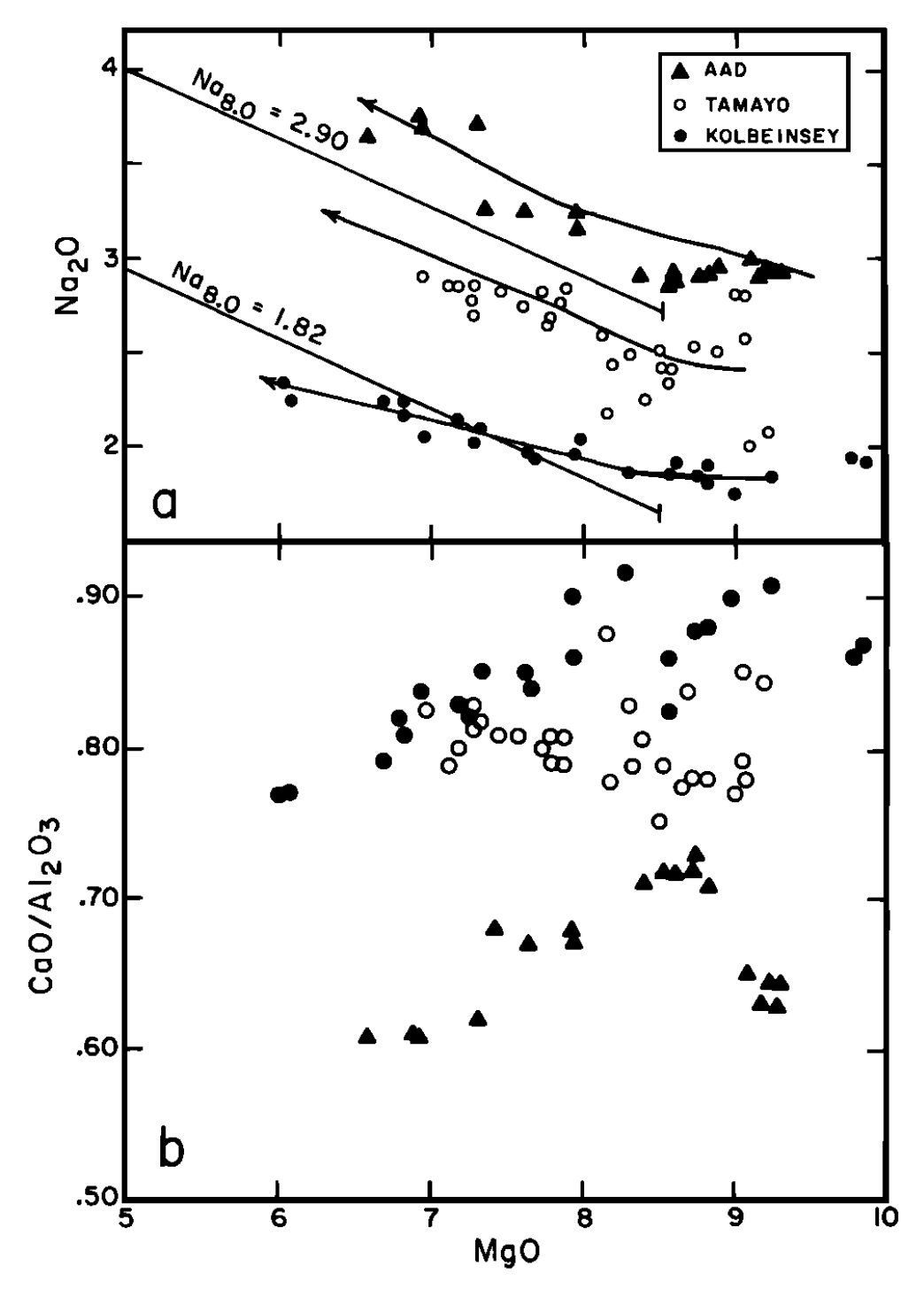
Na2O data from MORB
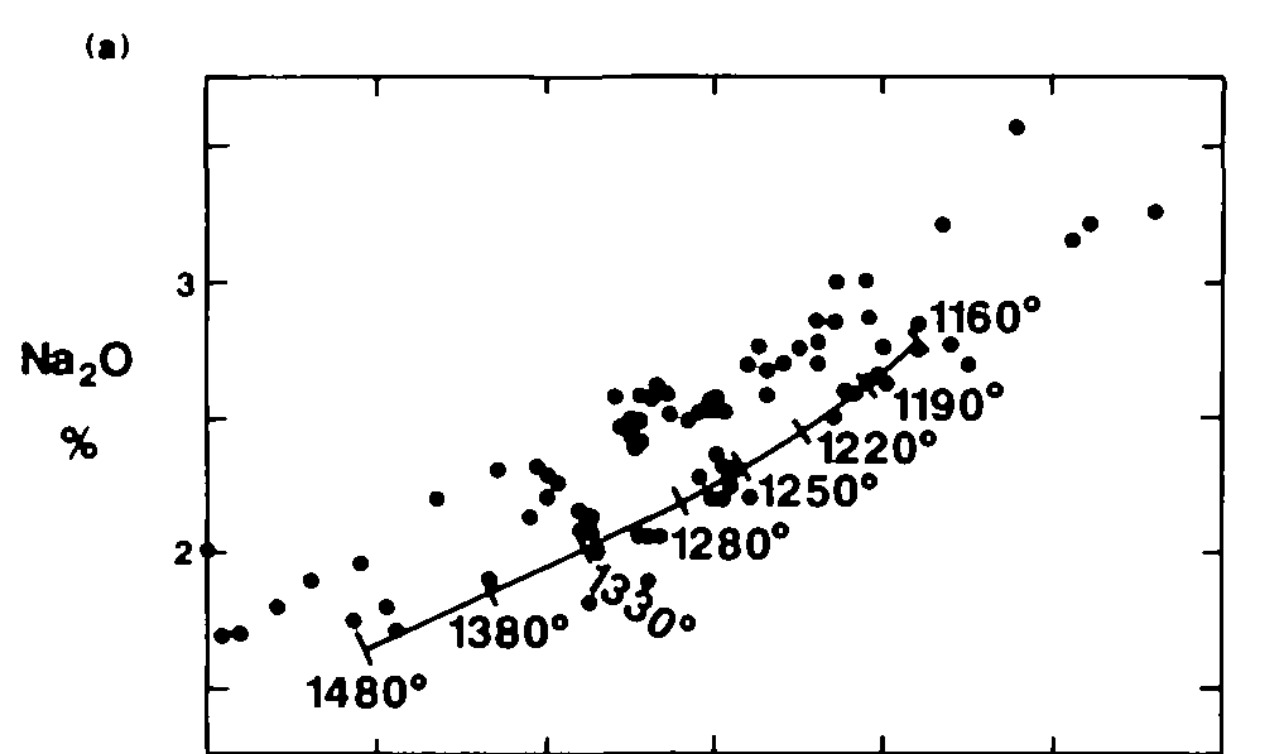
Normalized (MgO = 8%) Na$_2$O
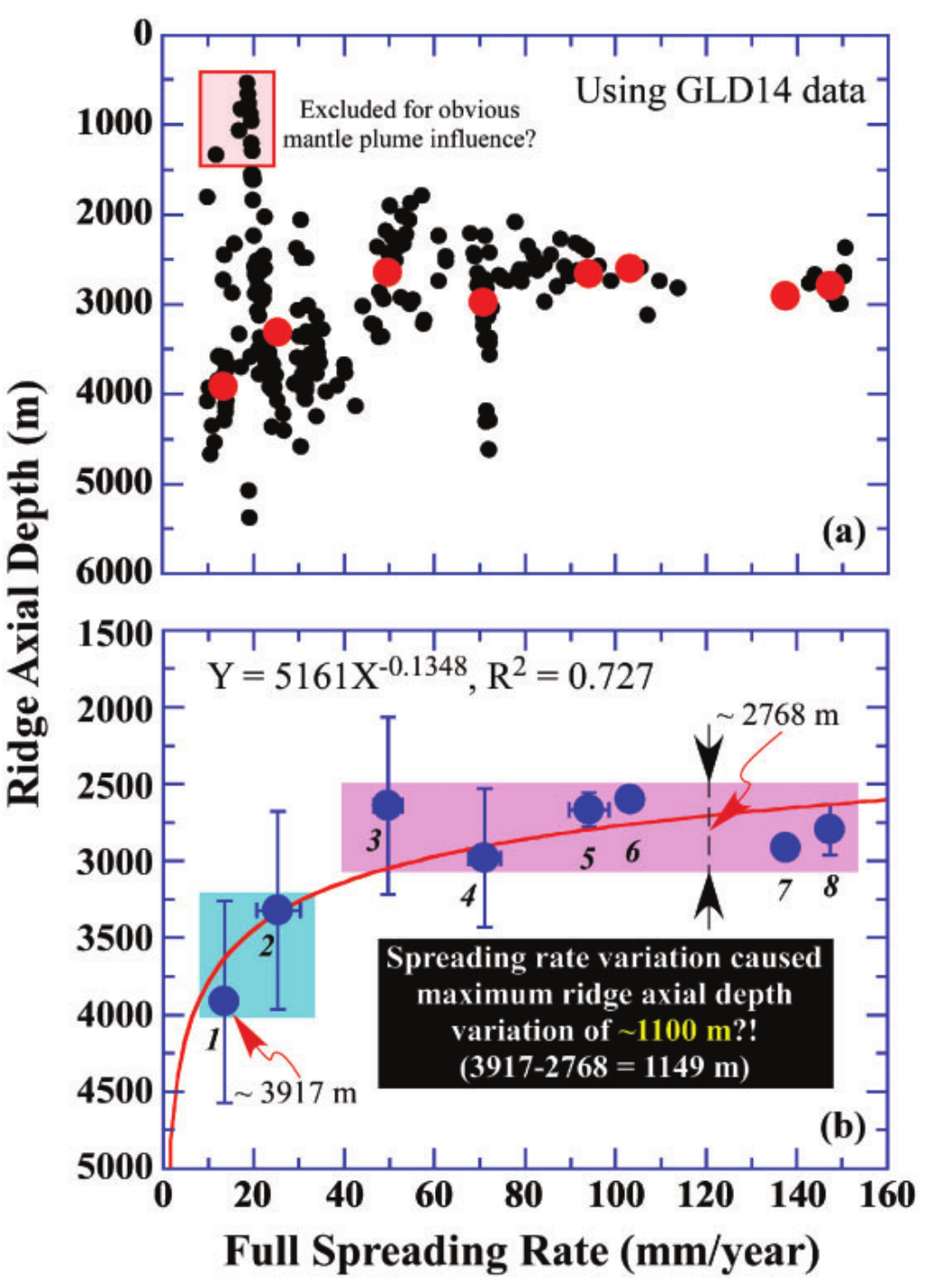
 0 Depth to the ridge axis (km) 6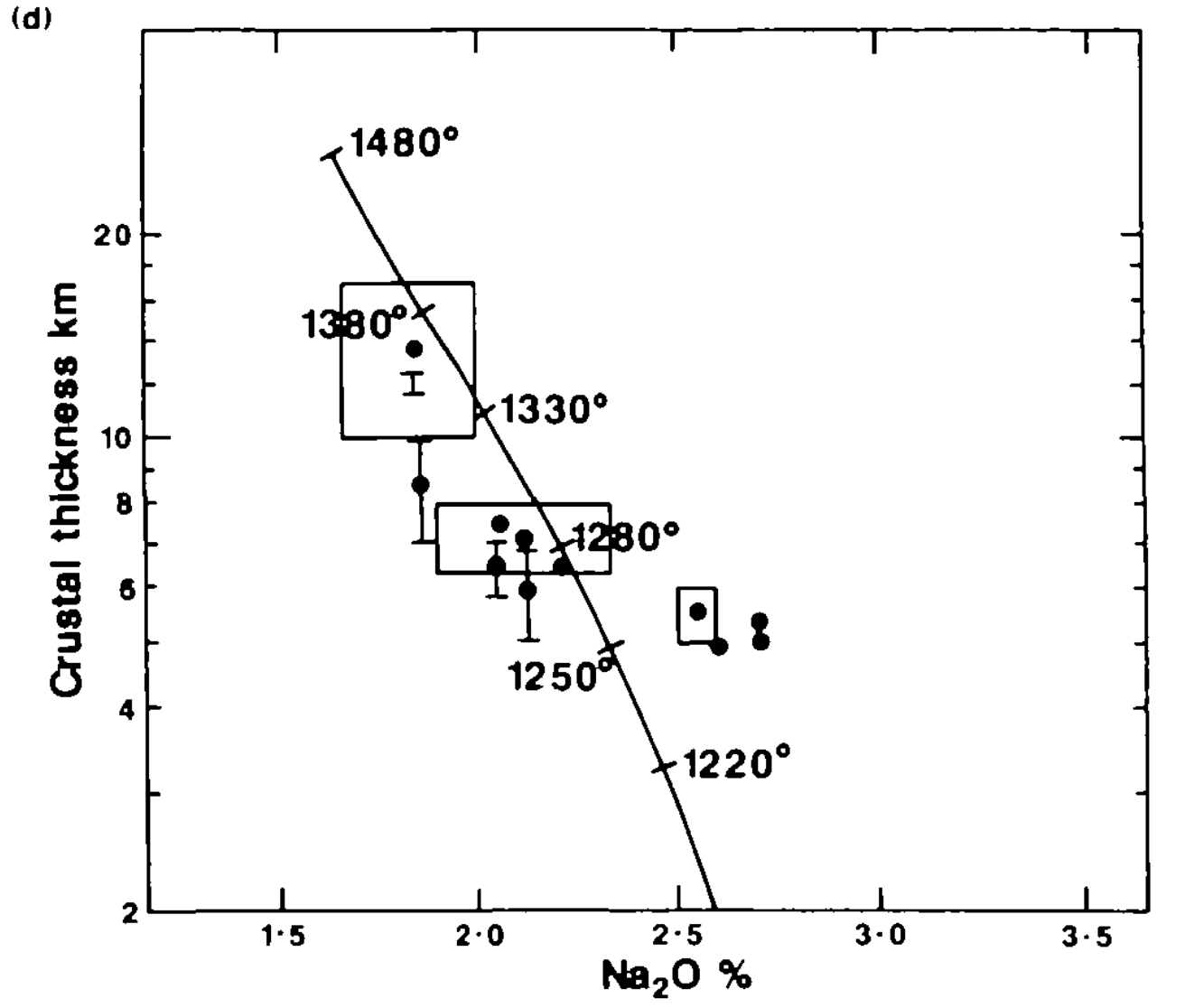
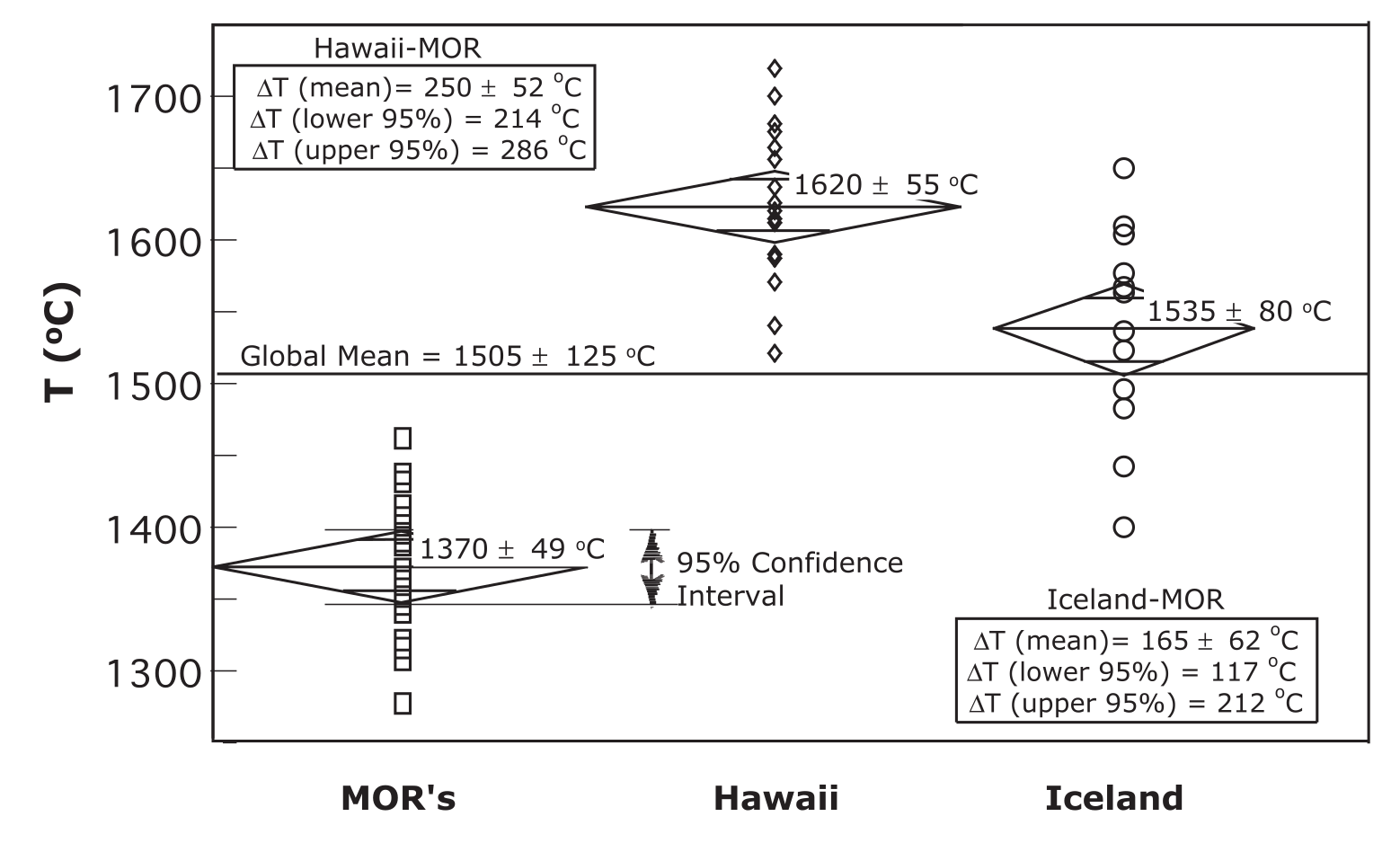
Potential temperatures beneath ridges and oceanic islands
The partitioning of Mg in Olivine is sensitive to temperature while the Fe/Mg partitioning is not
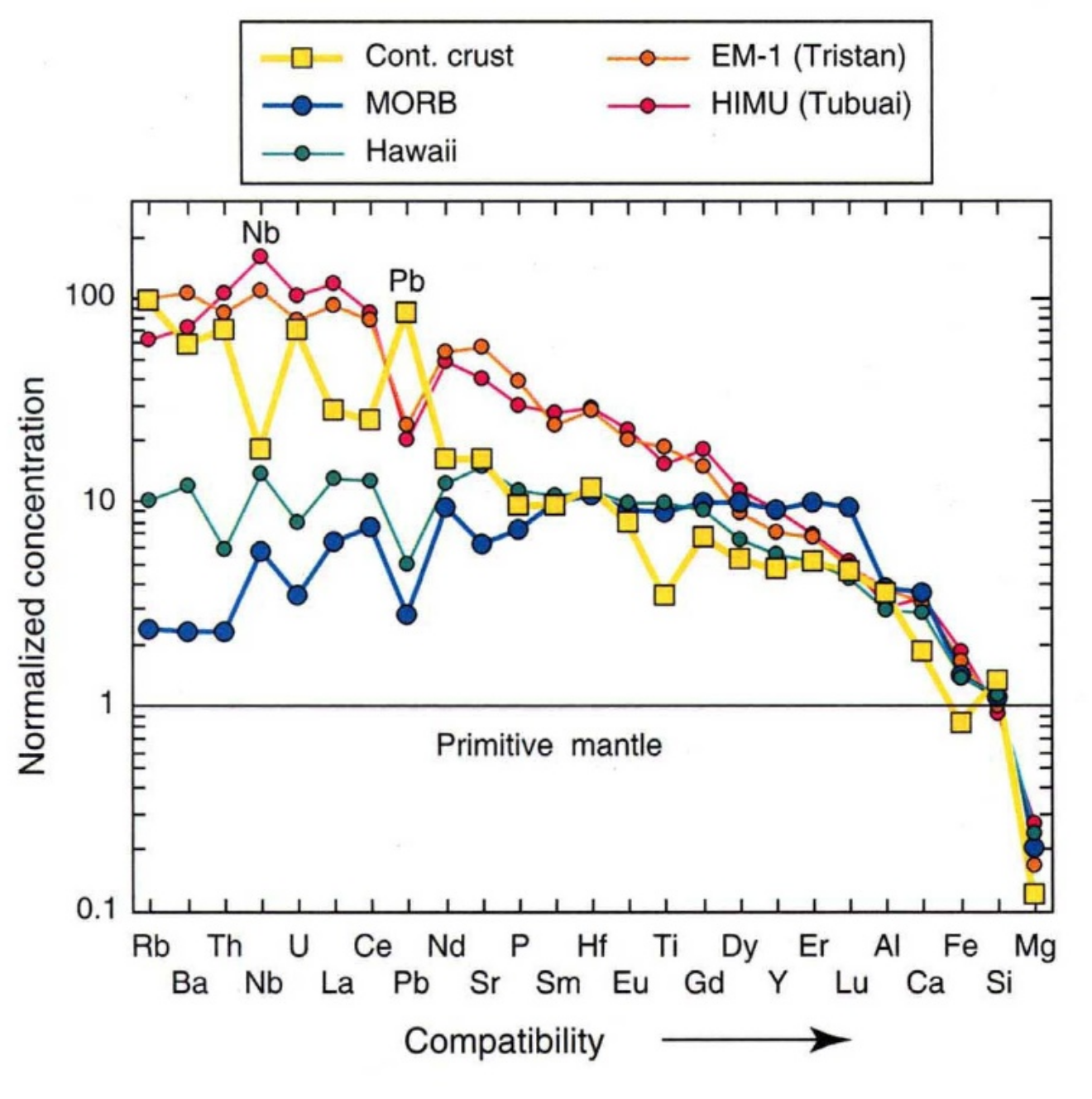
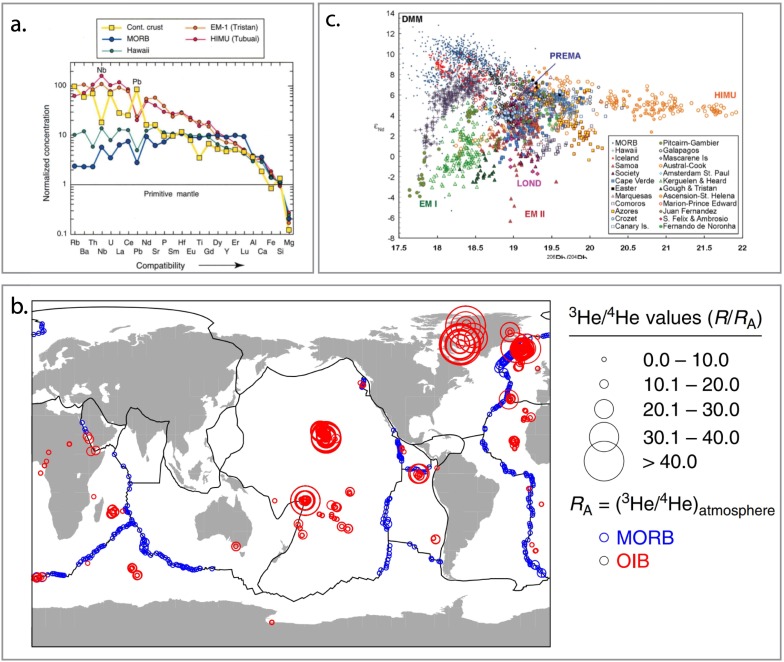
Trace elements in MORB and OIB (review compatibility trends)
 Tristan, South Atlantic
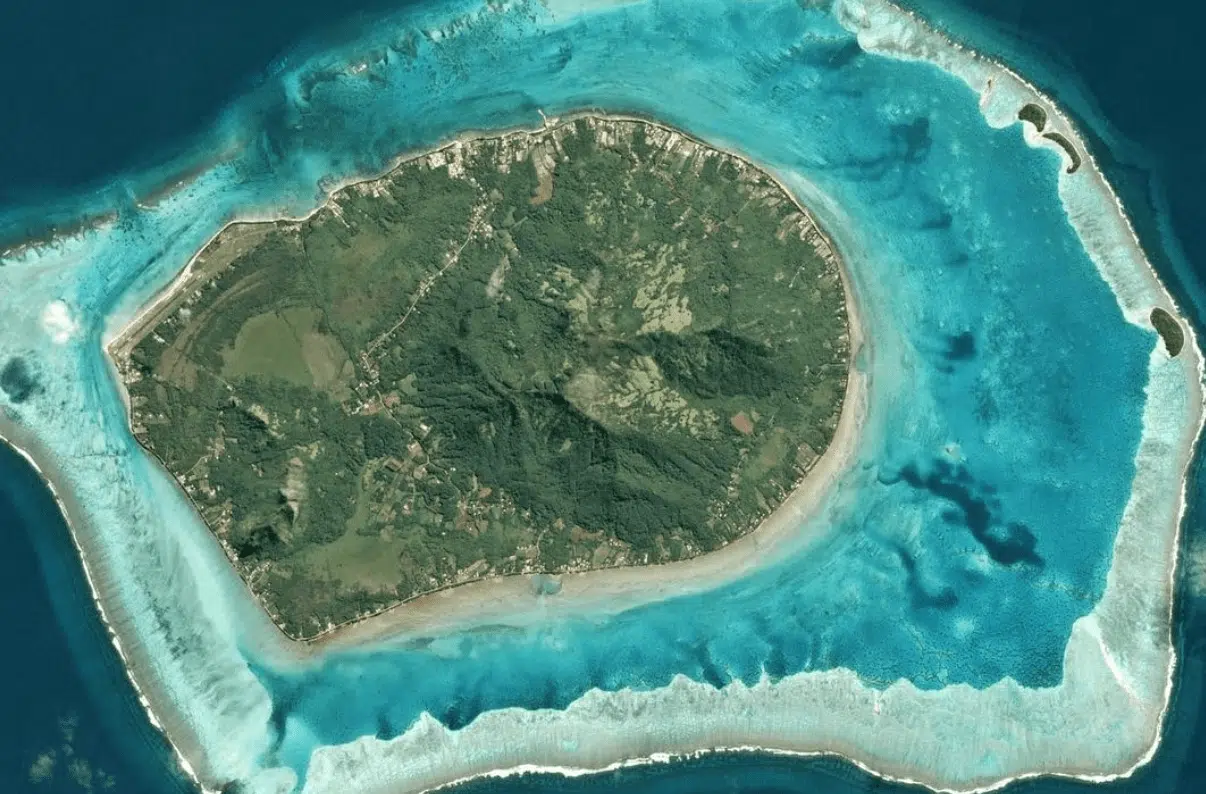 Tubuai, French Polynesia
Trace elements in MORB and OIB (review compatibility trends)
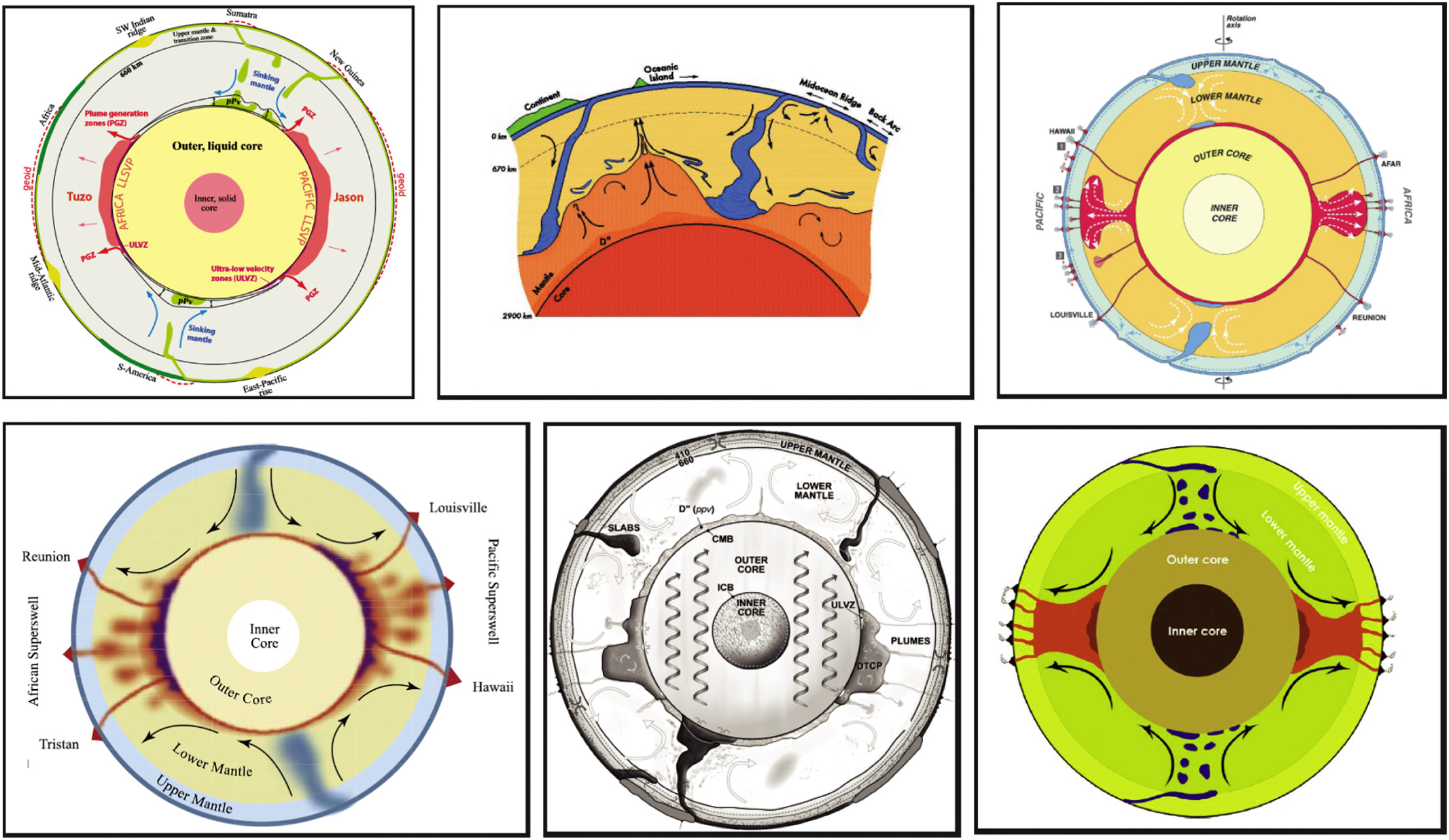
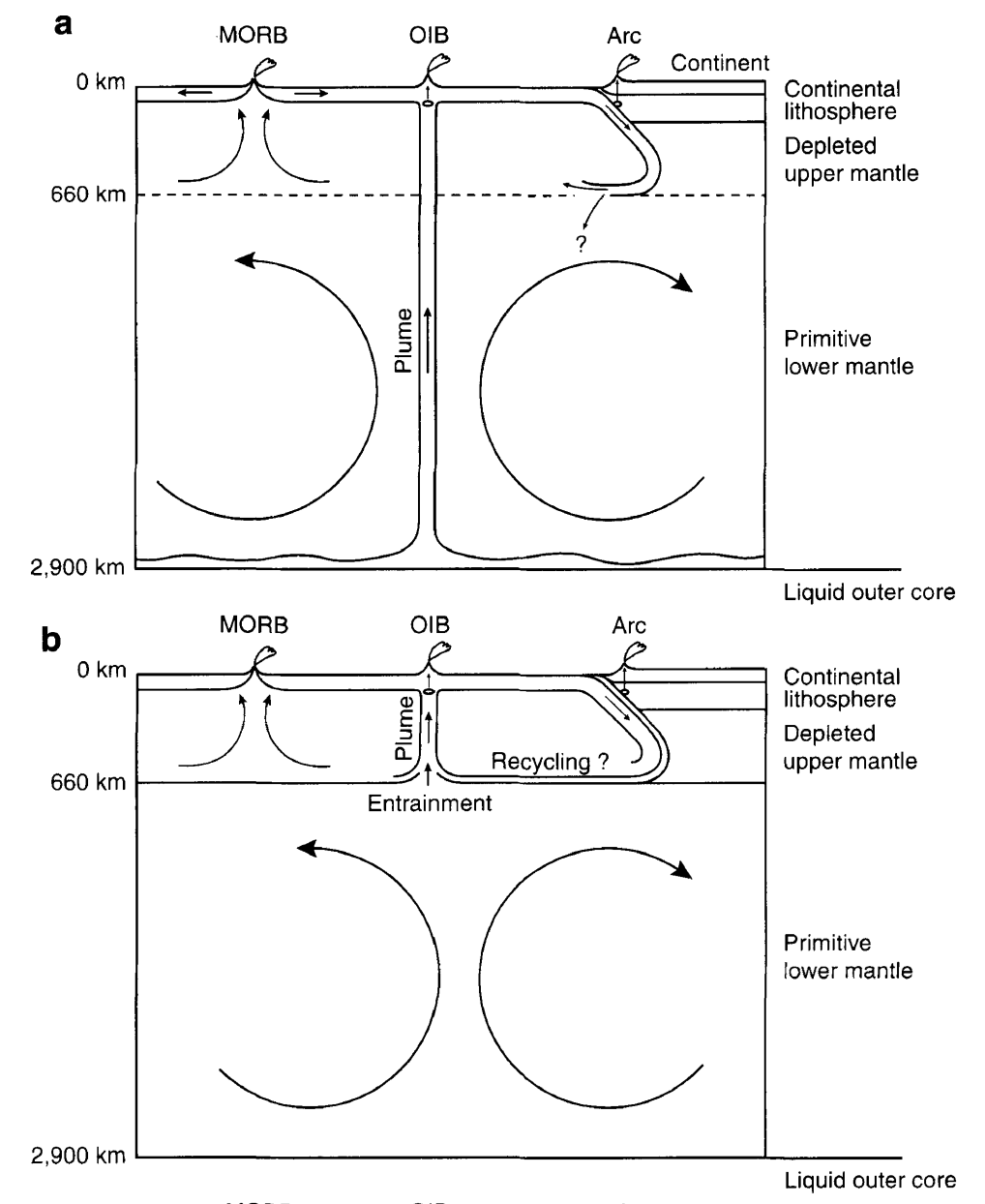
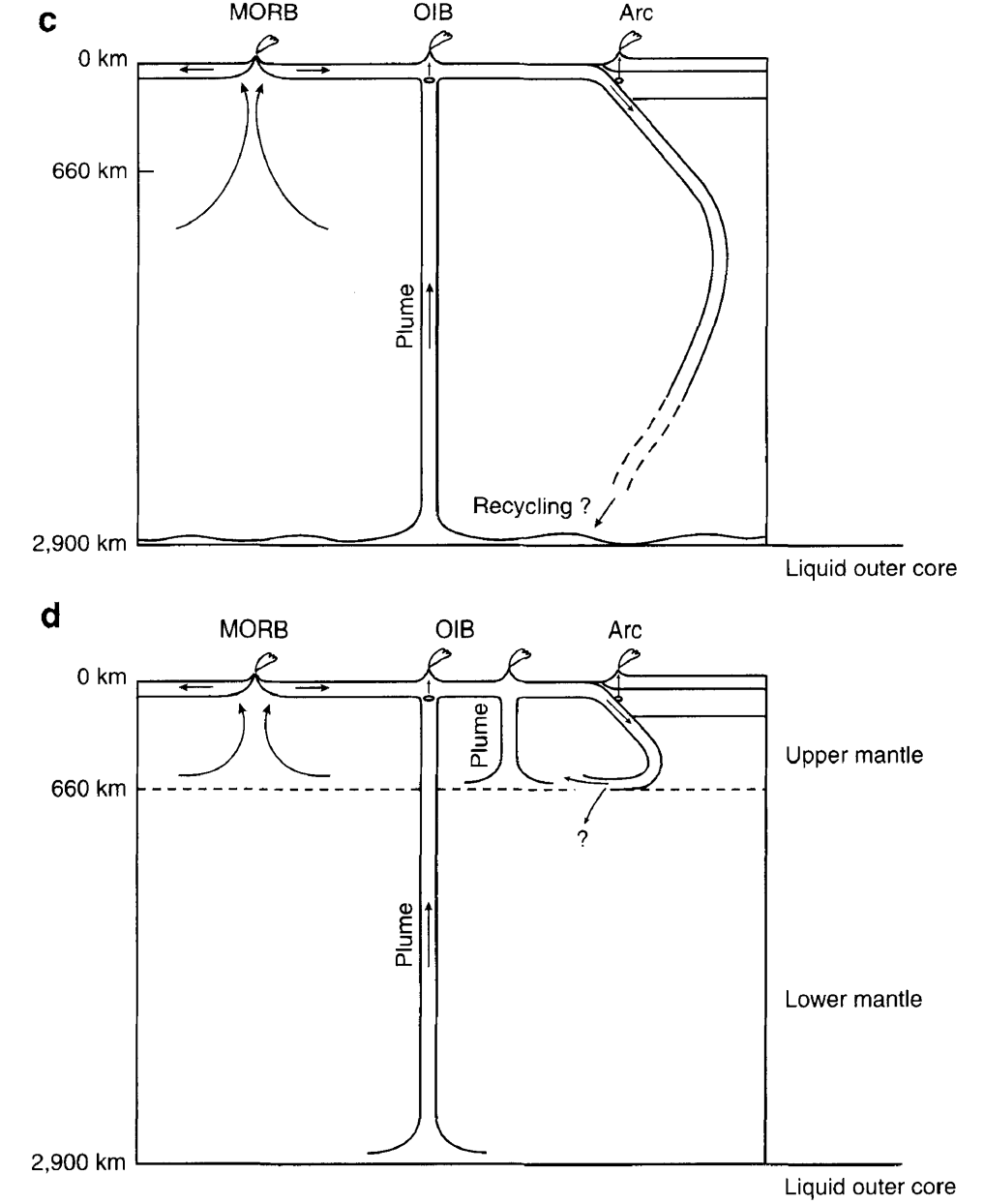
Models of the mantle
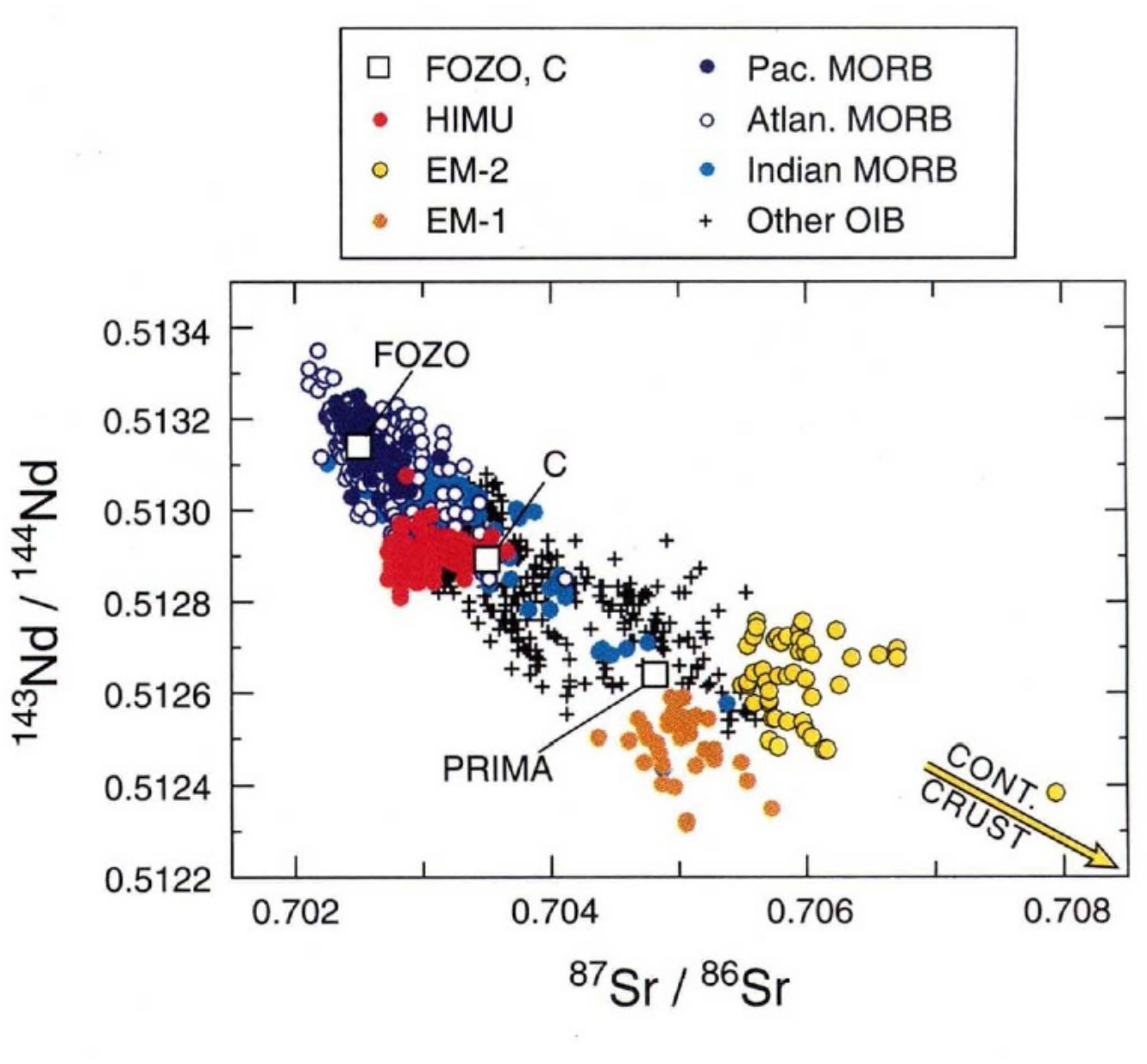
Sm and Rb
- $^{147}$Sm$\rightarrow^{143}$Nd
- Sm more compatible than Nd
- $^{87}$Rb$\rightarrow^{87}$Sr
- Rb highly incompatible (and more incompatible than Sr)
- What trends do you expect between primitive mantle, MORB, and continental crust?
- If plumes sample primitive mantle, what should their radiogenic Nd and Sr look like?
- sketch: $\frac{^{87}Sr}{^{86}Sr}$ (x) vs $\frac{^{143}Nd}{^{144}Nd}$ (y)
Sm and Rb
- $^{147}$Sm$\rightarrow^{143}$Nd
- Sm more compatible than Nd
- $^{87}$Rb$\rightarrow^{87}$Sr
- Rb highly incompatible (and more incompatible than Sr)
- What trends do you expect between primitive mantle, MORB, and continental crust?
- If plumes sample primitive mantle, what should their radiogenic Nd and Sr look like?
- sketch: $\frac{^{87}Sr}{^{86}Sr}$ (x) vs $\frac{^{143}Nd}{^{144}Nd}$ (y)
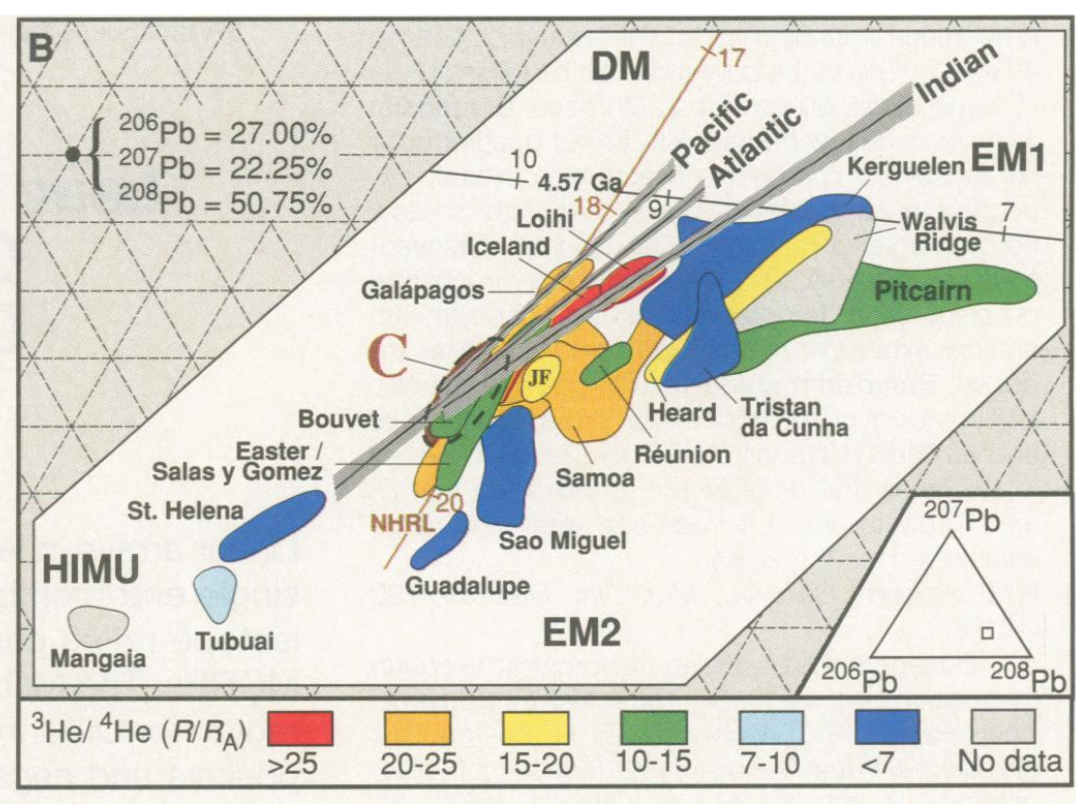
3He/4He
- 3He is primordial, and 4He is generated by alpha decays
- atmospheric 3He/4He ratio = 1.4x10⁻⁶
- continental crust has low ratios 3He/4He = 0.01 R/R$_A$
- MORB have rather uniform values of 8 $\pm$ 1 R/R$_A$
- OIB range from 5 to 30 R/R$_A$
3He/4He
- 3He is primordial, and 4He is generated by alpha decays
- atmospheric 3He/4He ratio = 1.4x10⁻⁶
- continental crust has low ratios 3He/4He = 0.01 RA
- MORB have rather uniform values of 8 $\pm$ 1 RA
- OIB range from 5 to 30
Models of the mantle
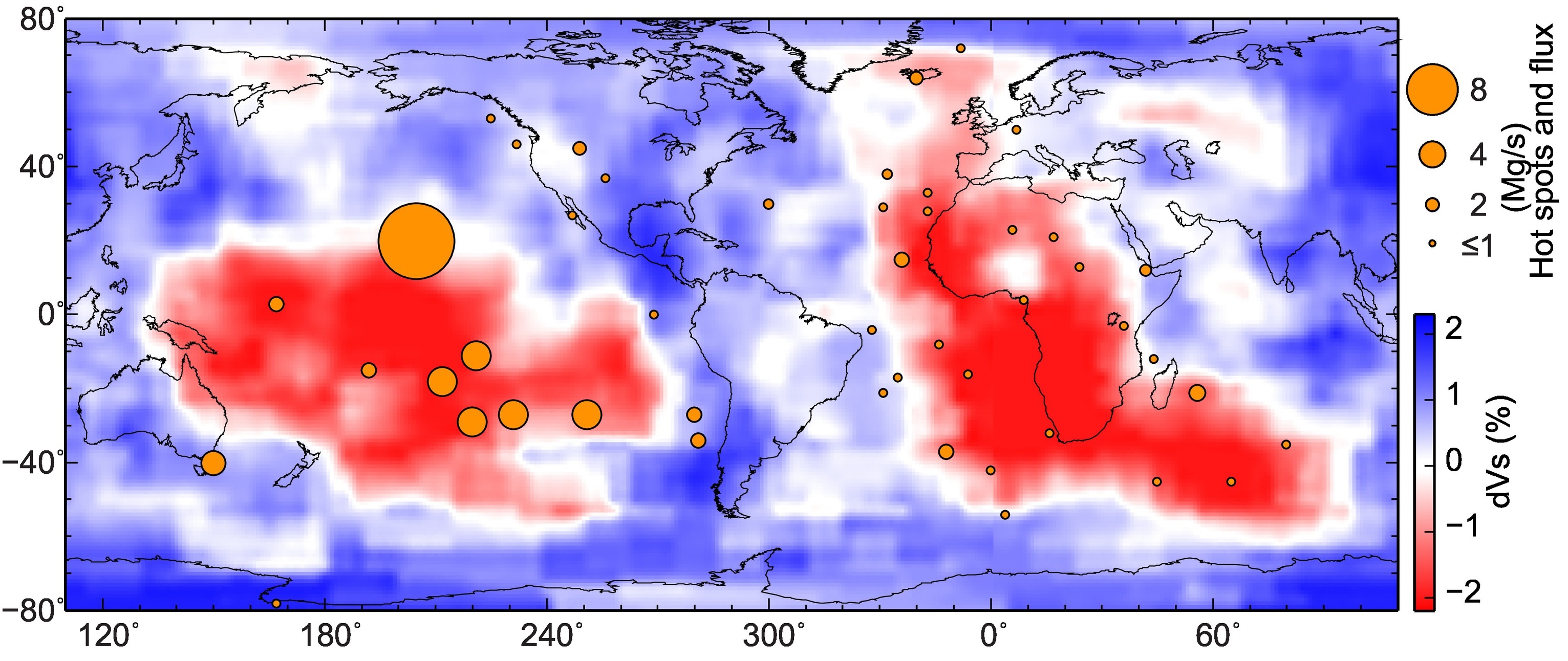
Large low shear velocity provinces (Tuzo and Jason)
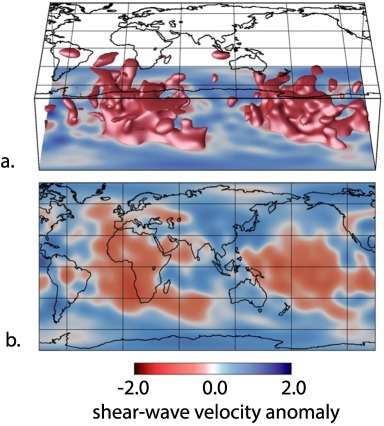
Large low shear velocity provinces (Tuzo and Jason)
The fate of slabs
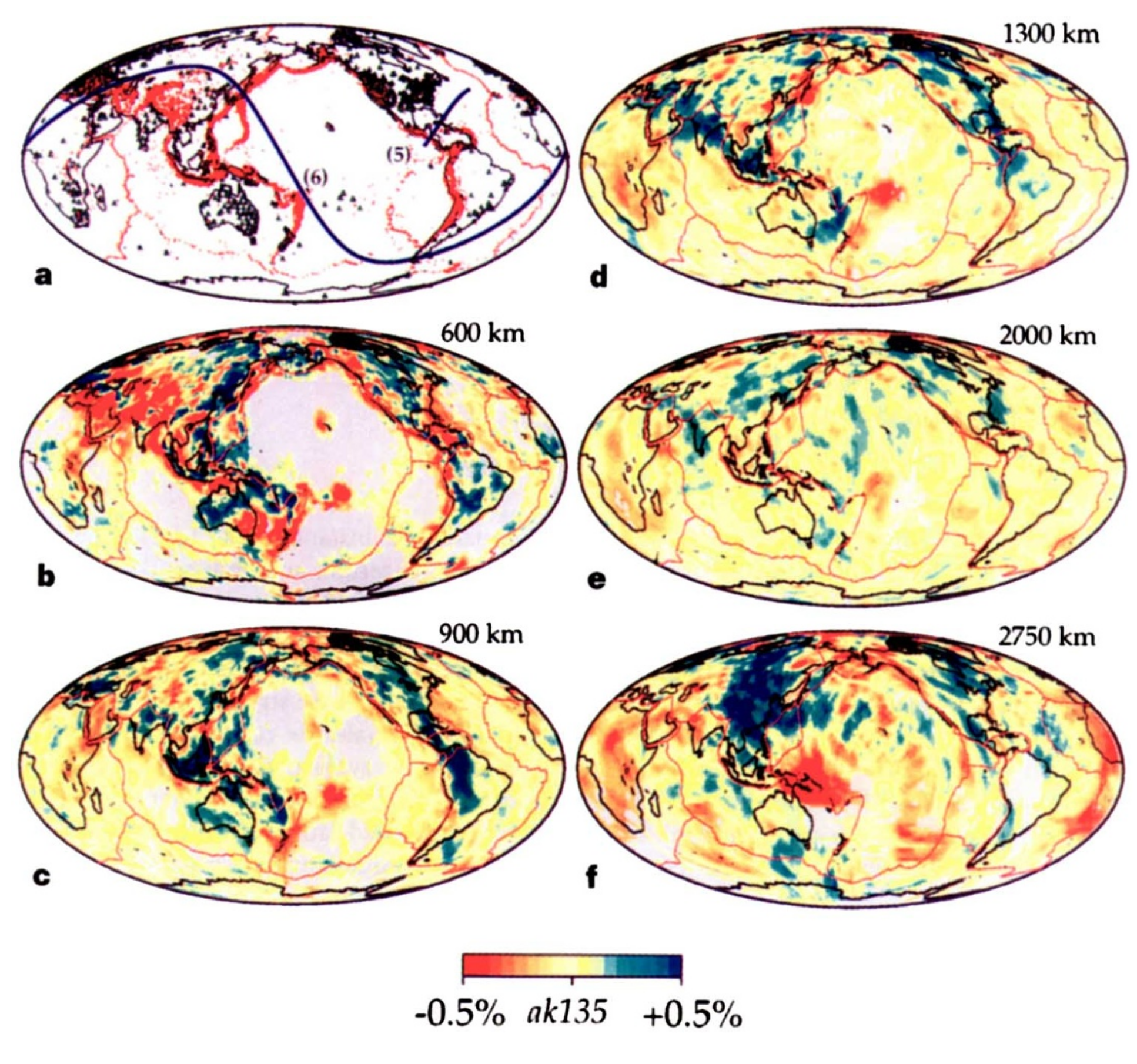
The fate of slabs
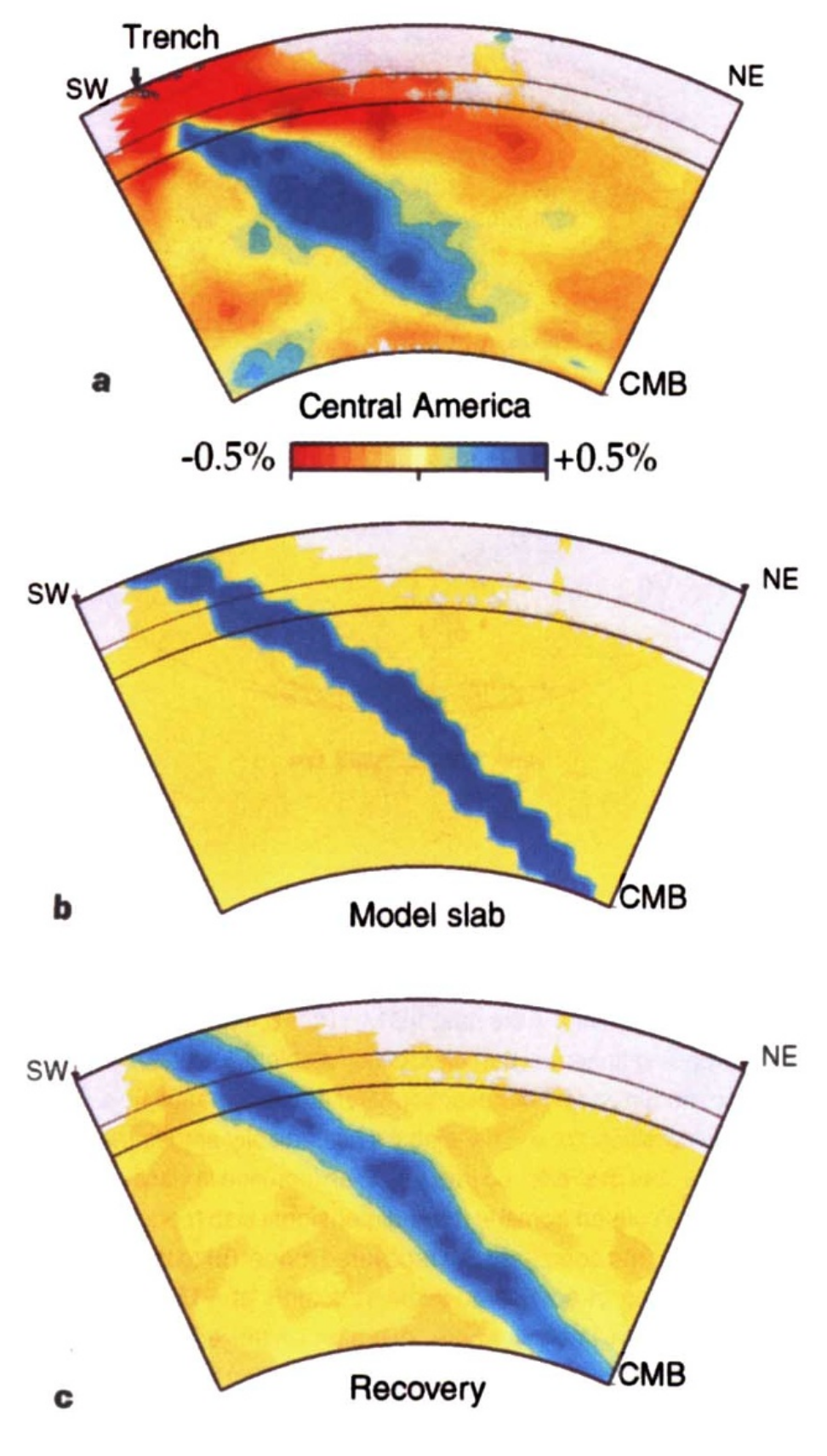
Models of the mantle
What do you think the source of plumes is? Where do plumes come from?