Lecture 4: Condensation
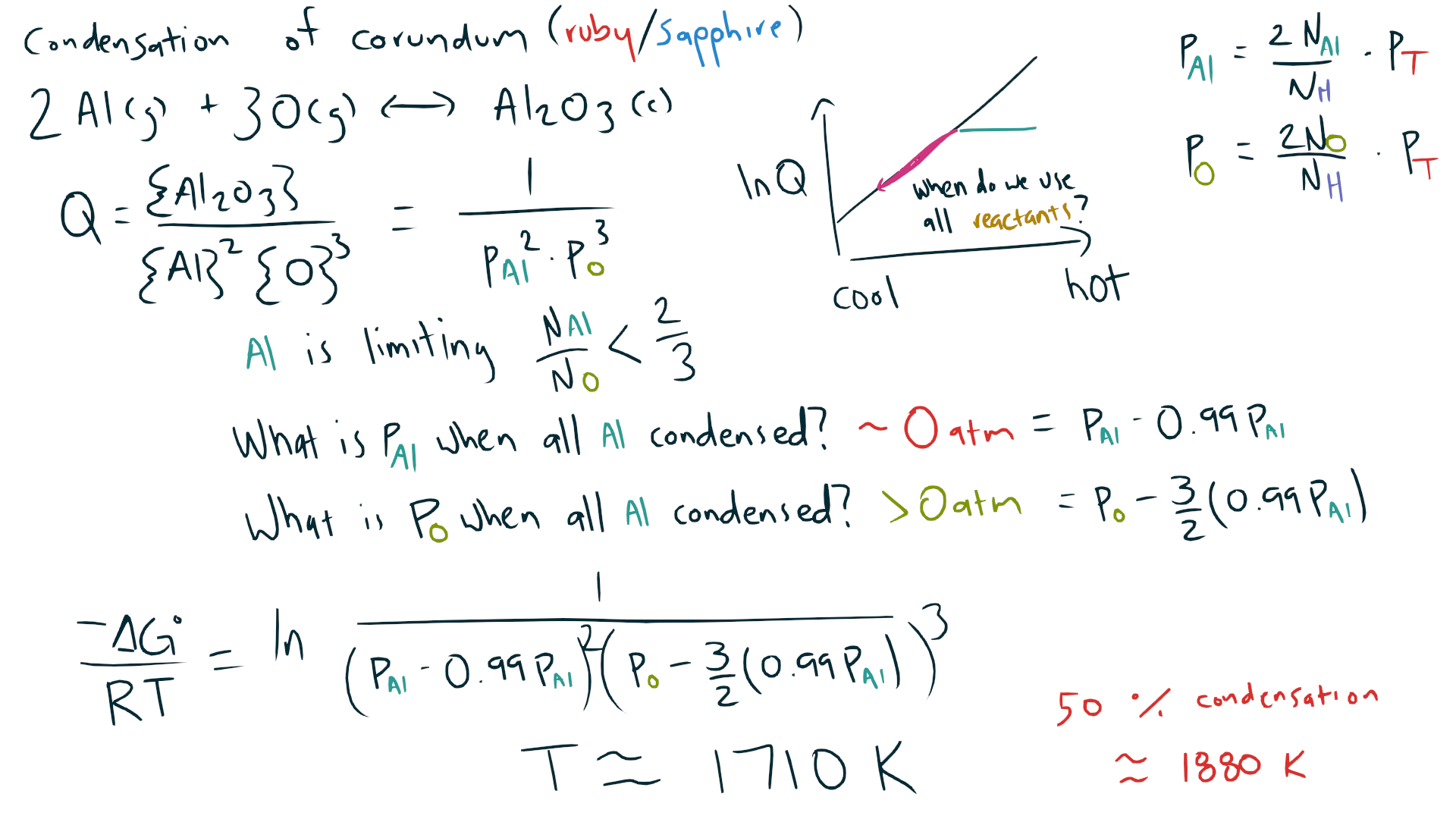
- Condensation of corundum
- Condensation temperatures
- Refractory vs volatile elements
- Planet formation
- Goldschmidt classification
- The primitive mantle
We acknowledge and respect the lək̓ʷəŋən peoples on whose traditional territory the university stands and the Songhees, Esquimalt and W̱SÁNEĆ peoples whose historical relationships with the land continue to this day.
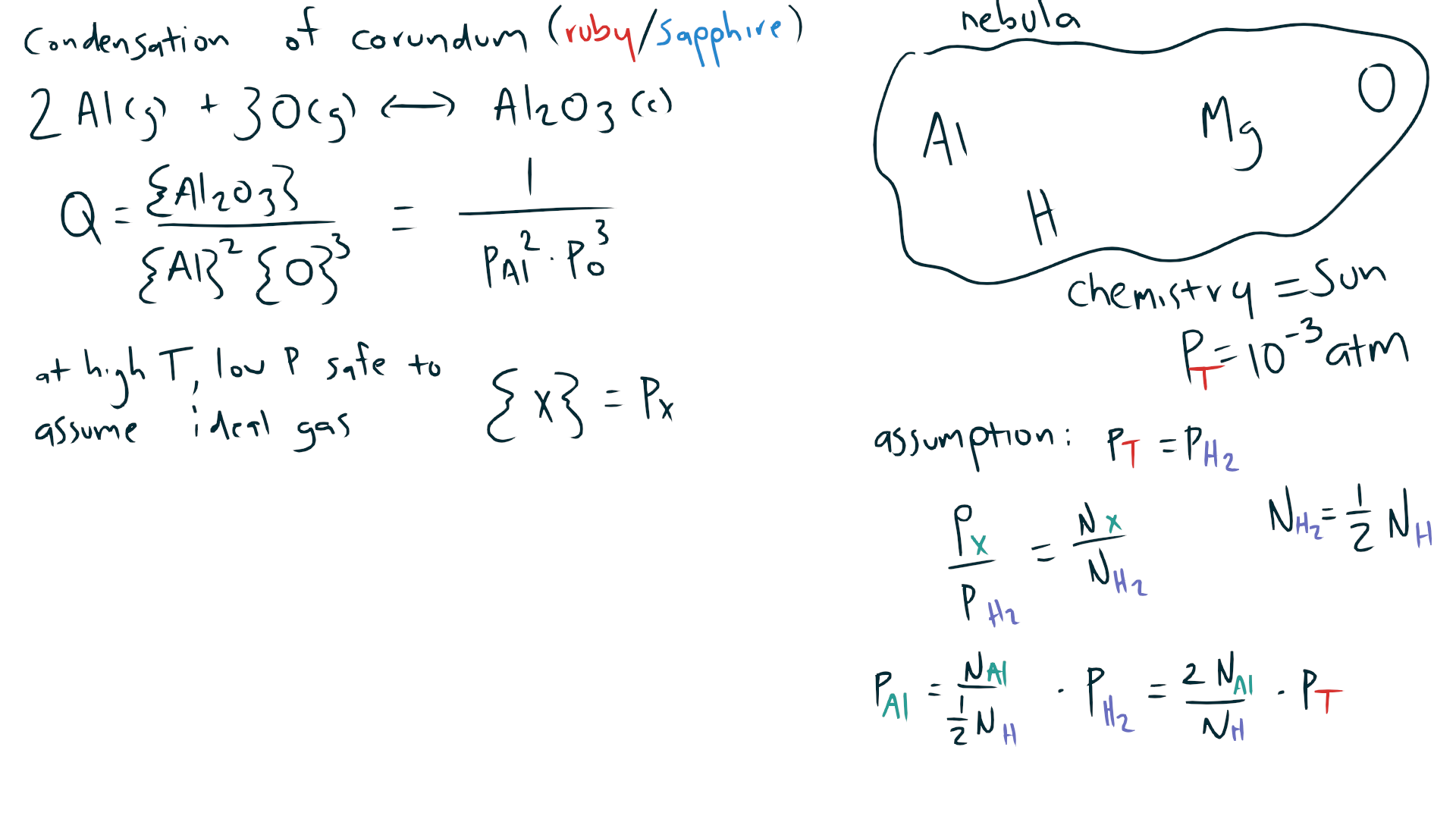
Practice Problem: Condensation of Corundum from the Solar Nebula
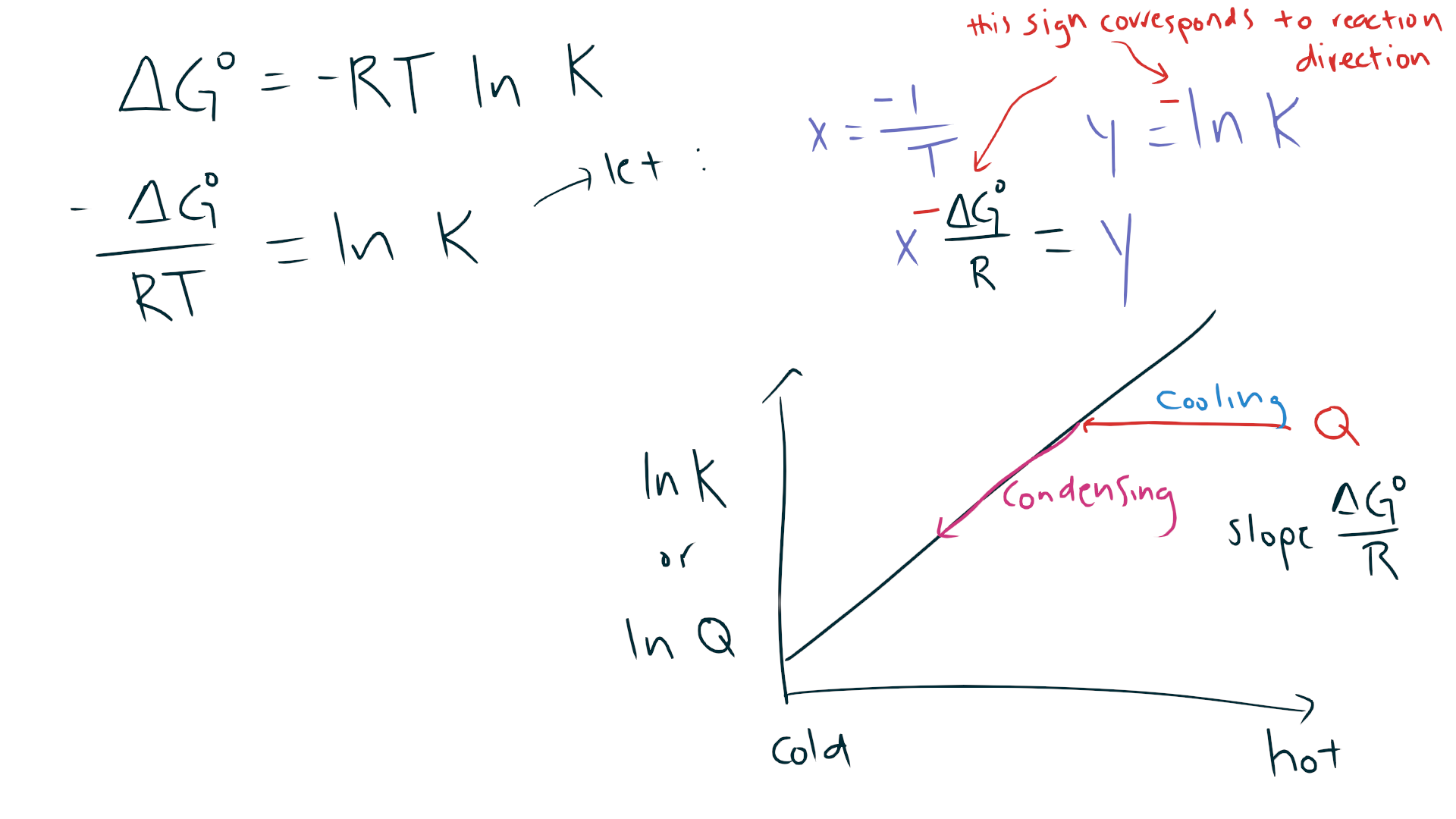
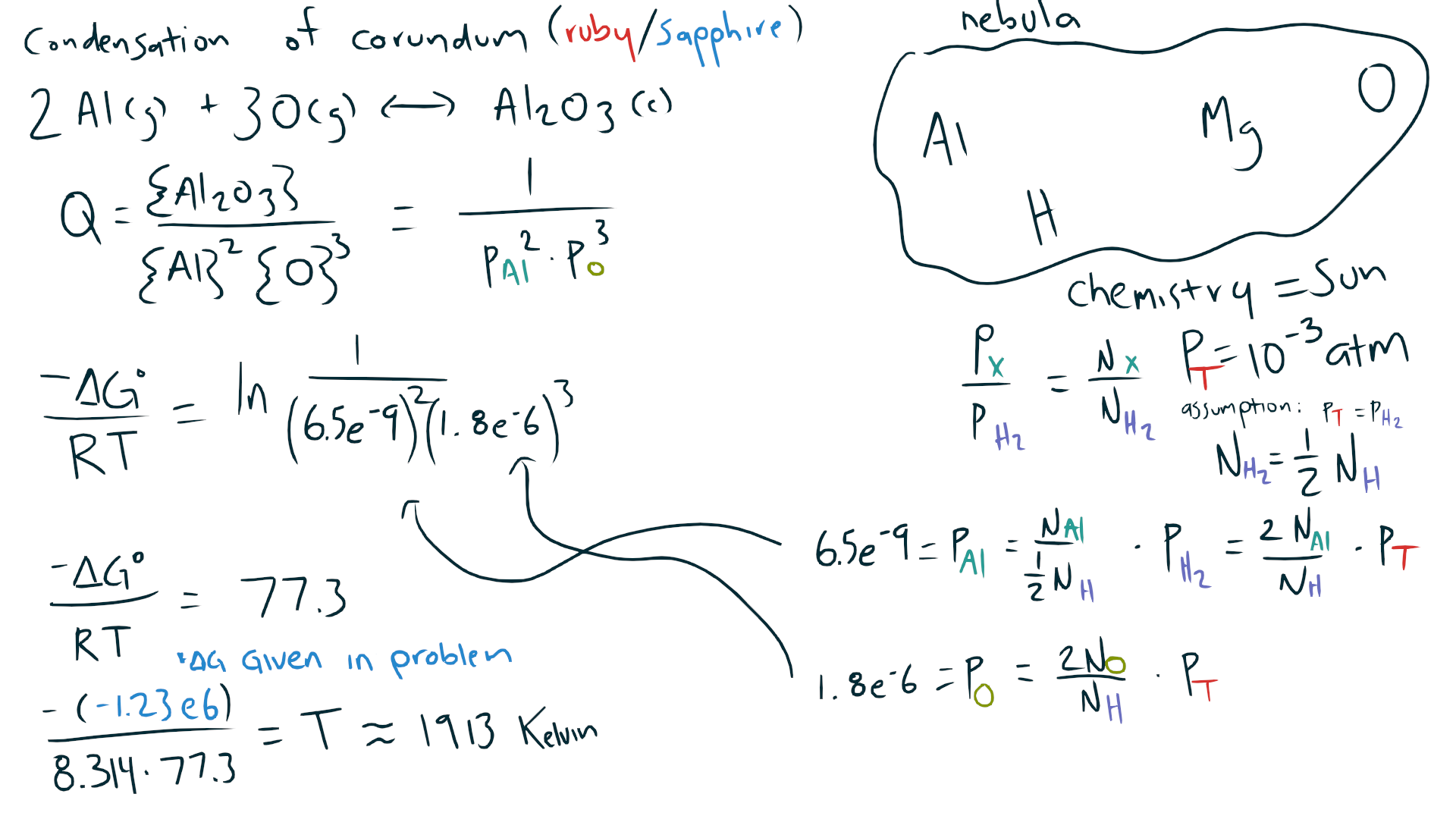
Q1: Calculate the temperature that Corundum (Al$_2$O$_3$) begins condensing from the solar nebula using the following values (assume no other reactions):
$$ \mathrm{2Al + 3O \leftrightarrow Al_2O_3} $$- Solar abundance (molar abundance) of Al: 8.51 x 10$^4$
- Solar abundance (molar abundance) of O: 2.36 x 10$^7$
- Solar abundance (molar abundance) of H: 2.6 x 10$^{10}$
- Pressure in the nebula: 10$^{-3}$ atm
- Gas constant (R): 8.314 J/mol K
- $\Delta$G$^\circ$ (standard free energy of reaction) for condensation of Al$_2$O$_3$: -1.23 x 10$^6$ J/mol
Q2: At what temperature will this reaction finish condensing all of the Aluminum in the nebula?
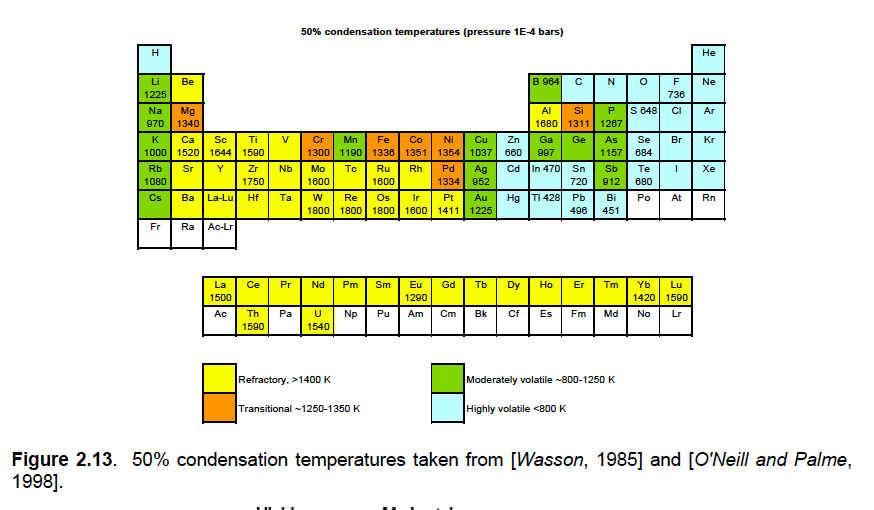
Not quite as simple as our example..
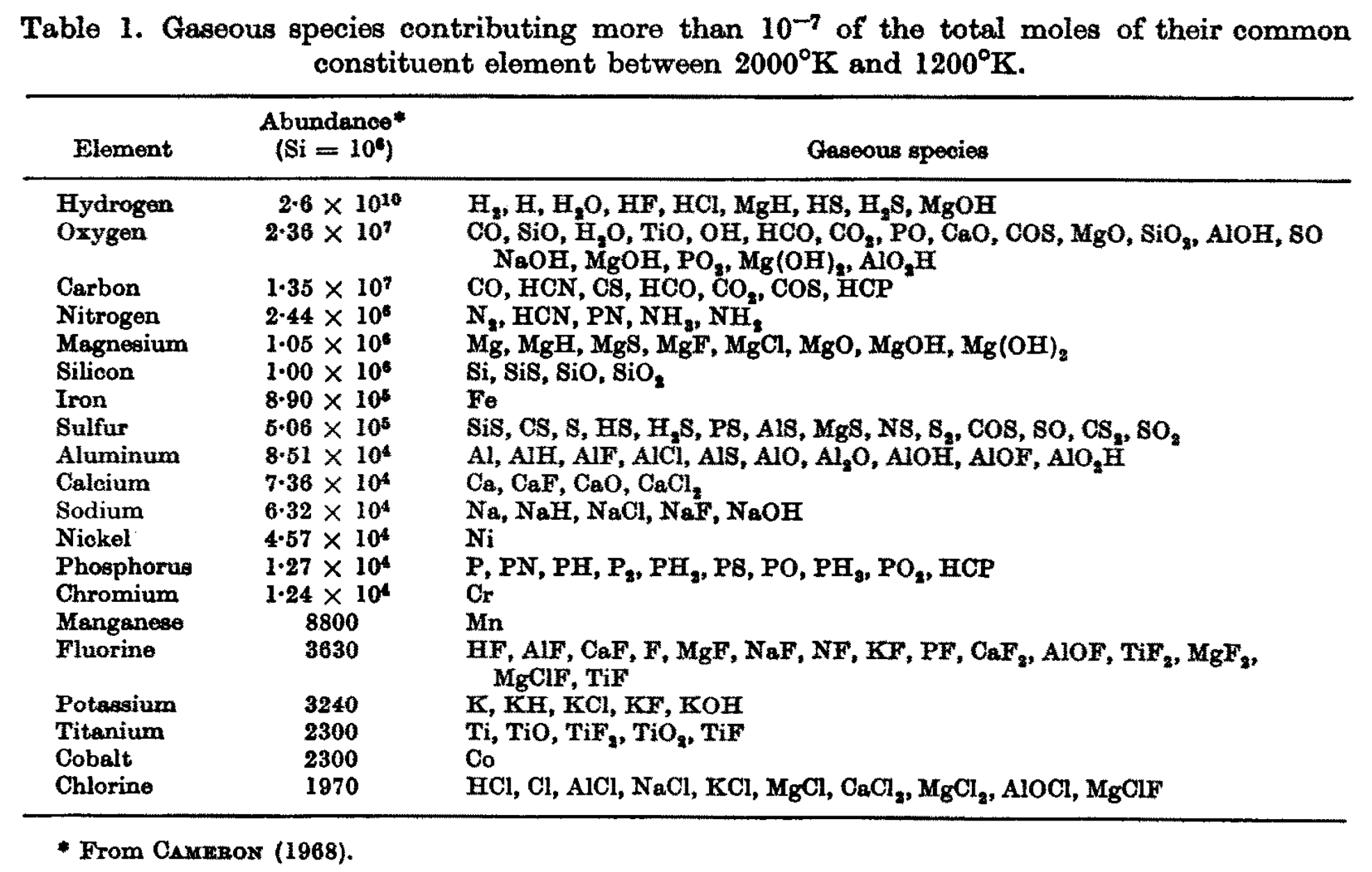
table from Condensation in the primitive solar nebula by Lawrence Grossman in GCA (1972)
Not quite as simple as our example..
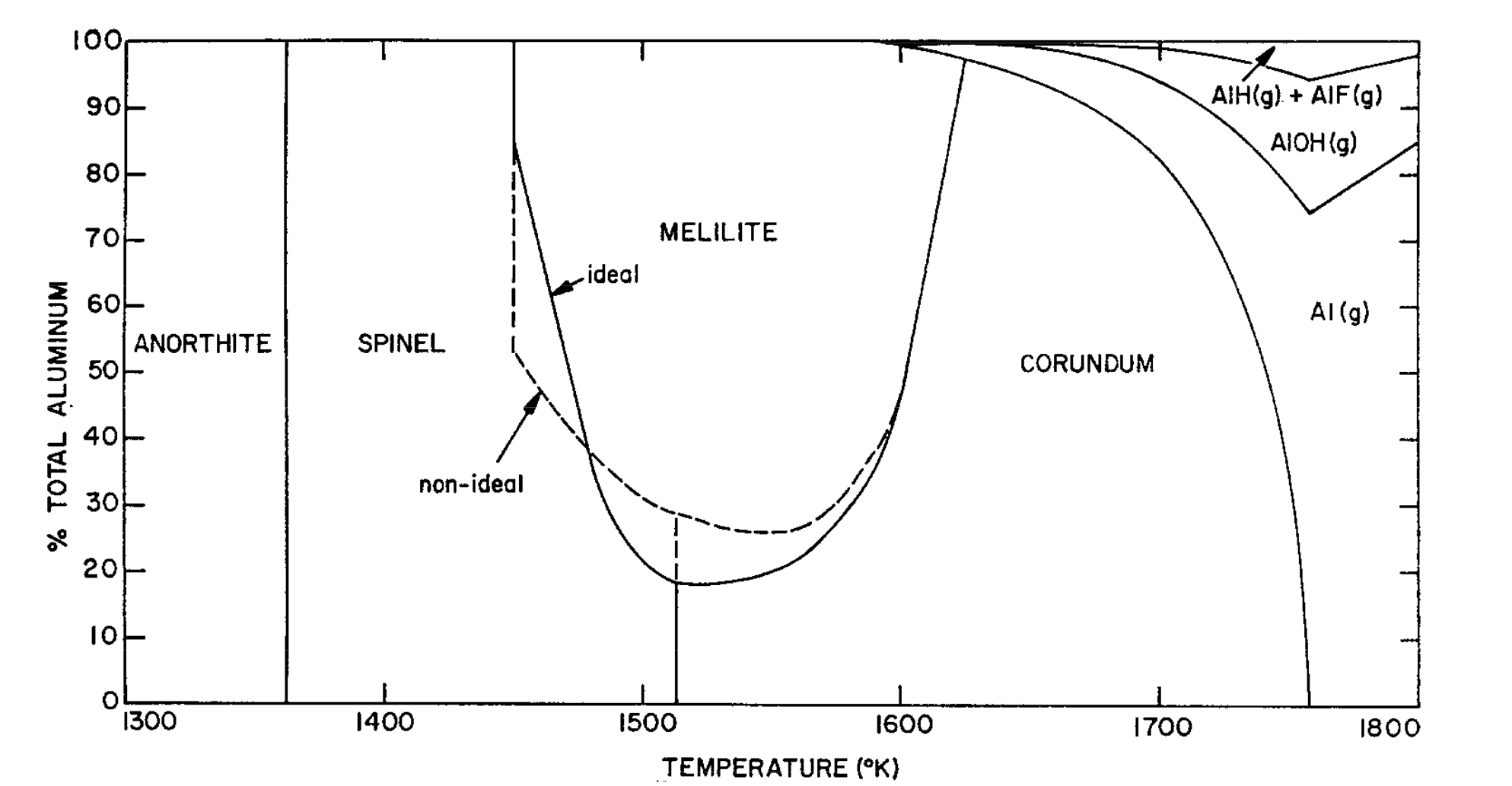
figure from Condensation in the primitive solar nebula by Lawrence Grossman in GCA (1972)
Olivine Solid Solution Phase Diagram.