Lecture 5: Making the Earth
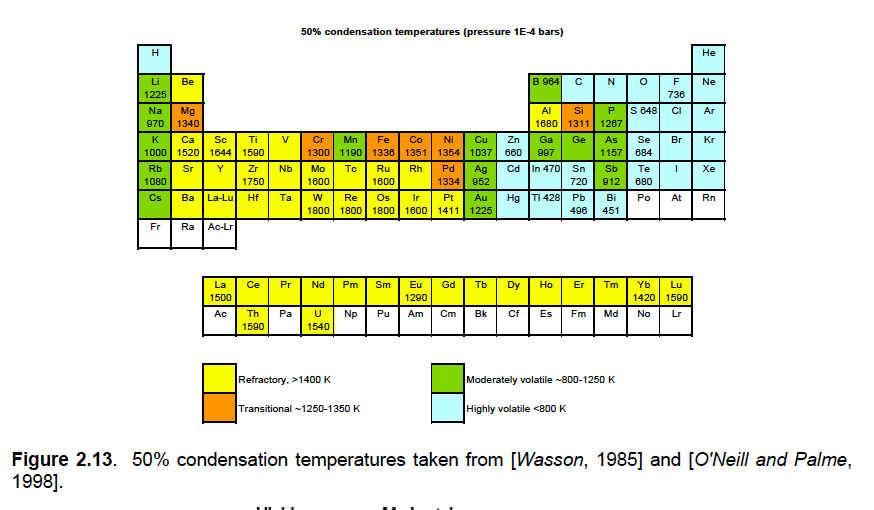
- Condensation temperatures
- Goldschmidt classification
- The primitive mantle
Define Goldschmidt classification.
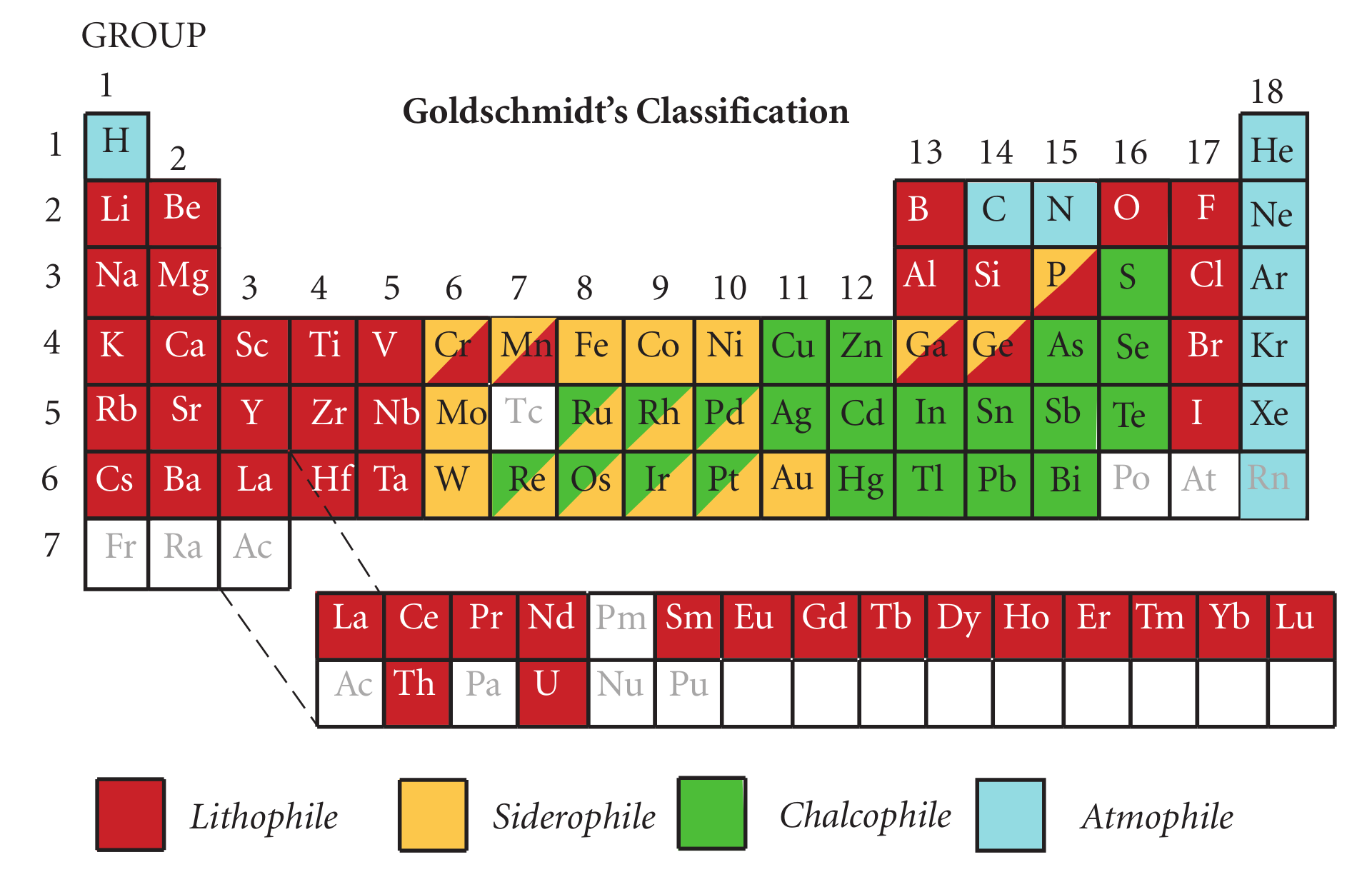
Describe the arrangement of Lithophile vs Siderophile elements in the periodic table. What might explain this arrangement?
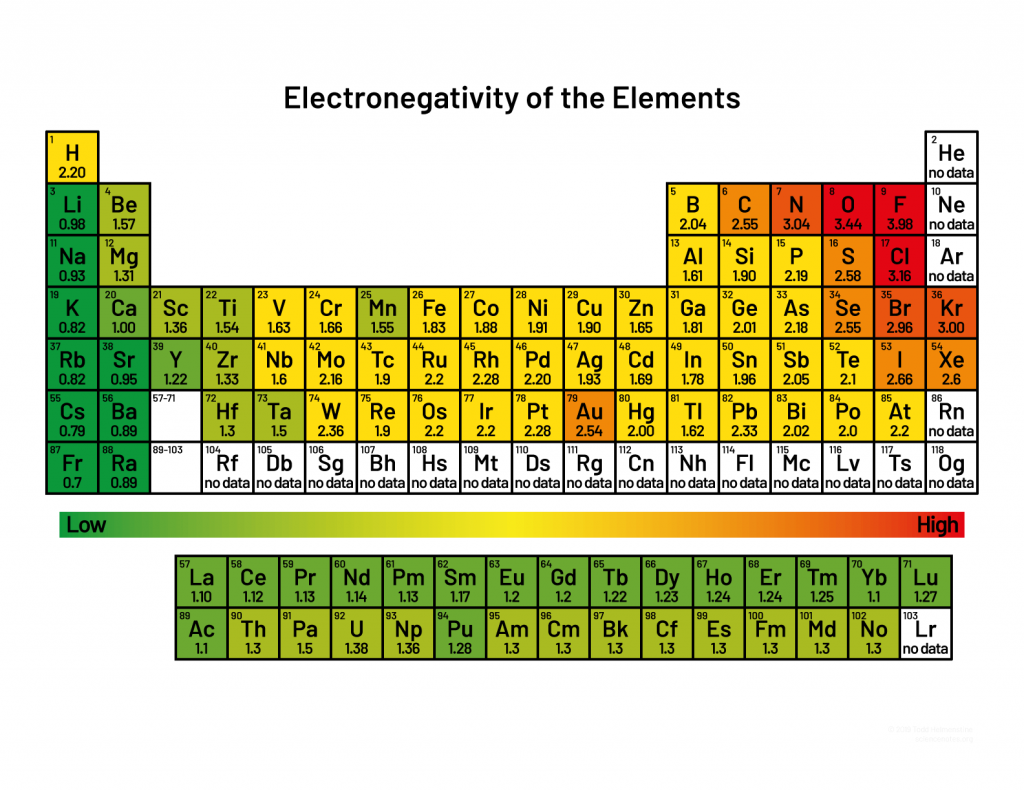
Electronegativity
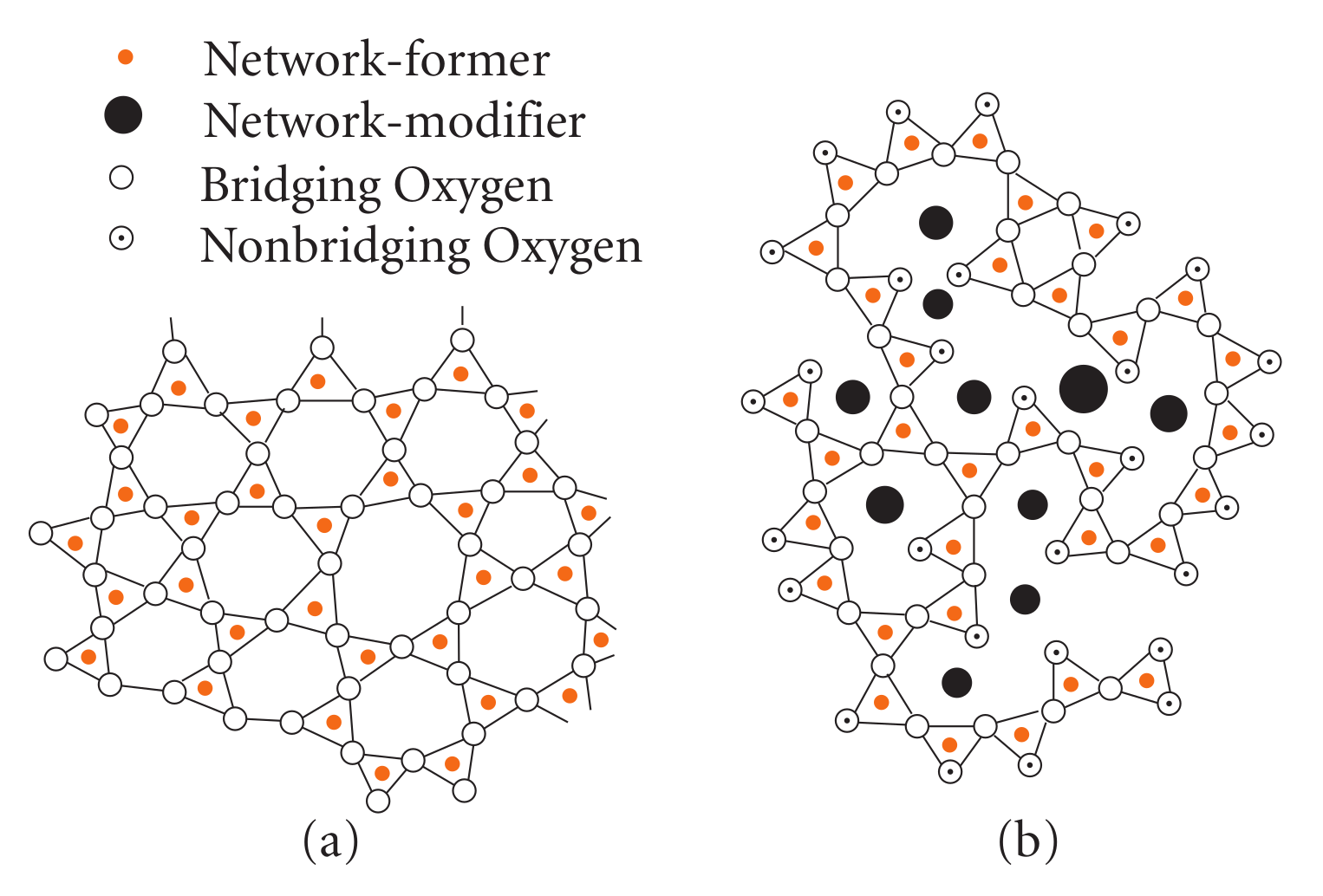
Silicate melt structure, is oxyphile a better word?
In Geochemistry, we often use the word fractionate to indicate that the original mass (the nebula) led to one or more smaller fractions of mass (different planets) that have compositional variations. Through our understanding of condensation temperatures and Goldschmidt's classification scheme, planet formation and planetary differentiation lead to predictable fractionations, and so the chemistry of a rock can tell us a lot about how it came to be.
Some review questions to consider:
- How does the Ca/Al ratio change from the inner solar system to the outer? (draw a figure showing this ratio vs distance from the Sun)
- How does the Na/Al ratio change from the inner solar system to the outer? (draw a figure showing this ratio vs distance from the Sun)
- Is the weight % of CaO on Bulk Earth higher or lower than the weight % of CaO on Bulk Jupiter?
- Is the Si/Fe ratio higher in an undifferentiated meteorite or the Earth's mantle?
Define Primitive Mantle. What do we know about the modern mantle?
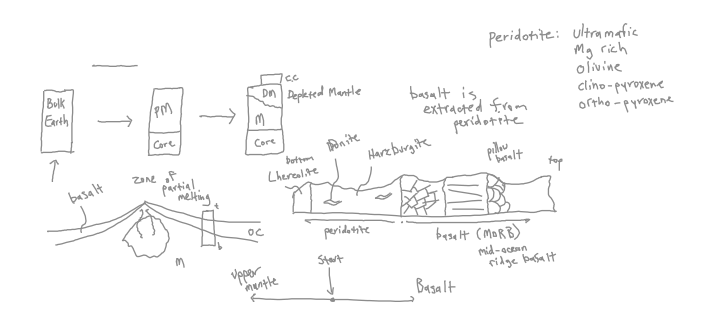
Olivine Solid Solution Phase Diagram.
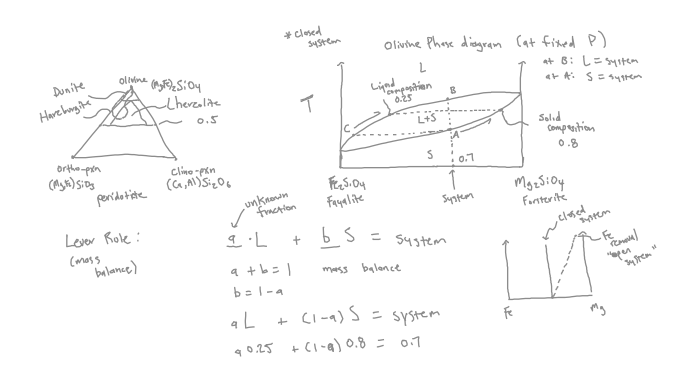
Melting trends.
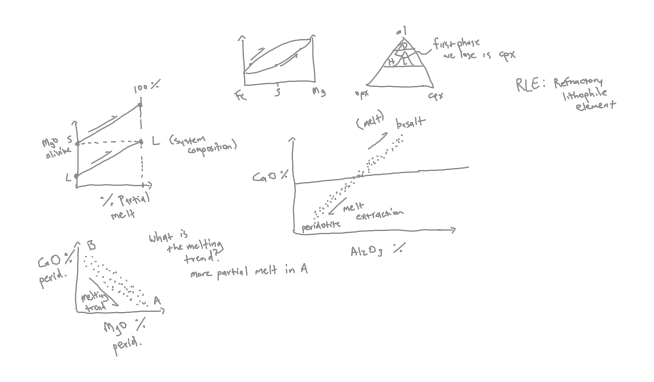
Pyrolite Model: Ringwood, A.E., 1962. A model for the upper mantle. Journal of Geophysical Research.
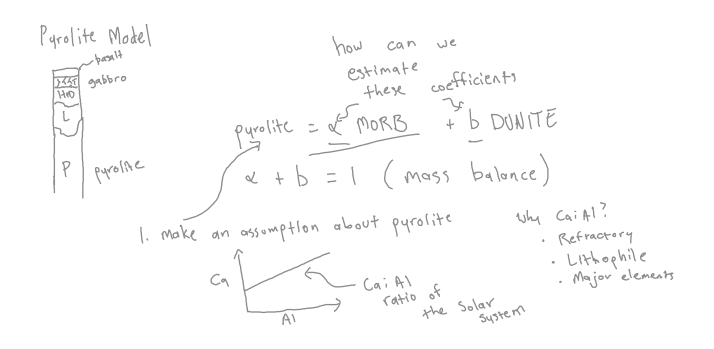
Pyrolite Model: Ringwood, A.E., 1962. A model for the upper mantle. Journal of Geophysical Research.
Chondrites
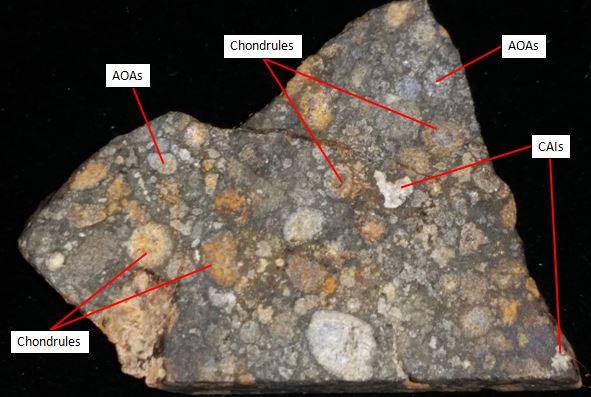
Chondrules: molten 'droplets' of nebular dust
AOAs: Ameboidal Olivine Aggregates ~100% olivine
CAIs: Calcium Aluminum Inclusions are the first condensates
Mineralogy of Chondrite phases
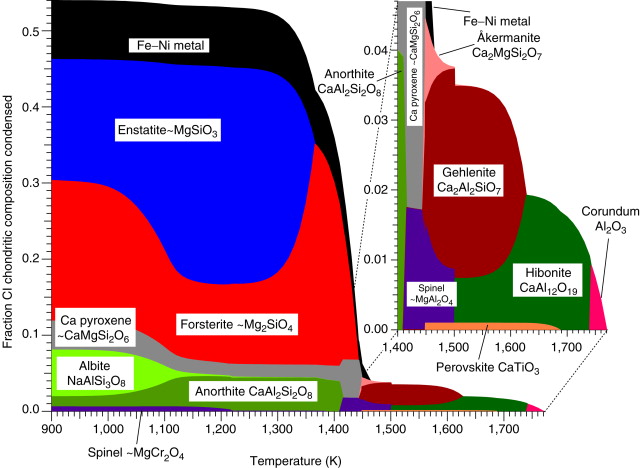
Chondrites have variable composition
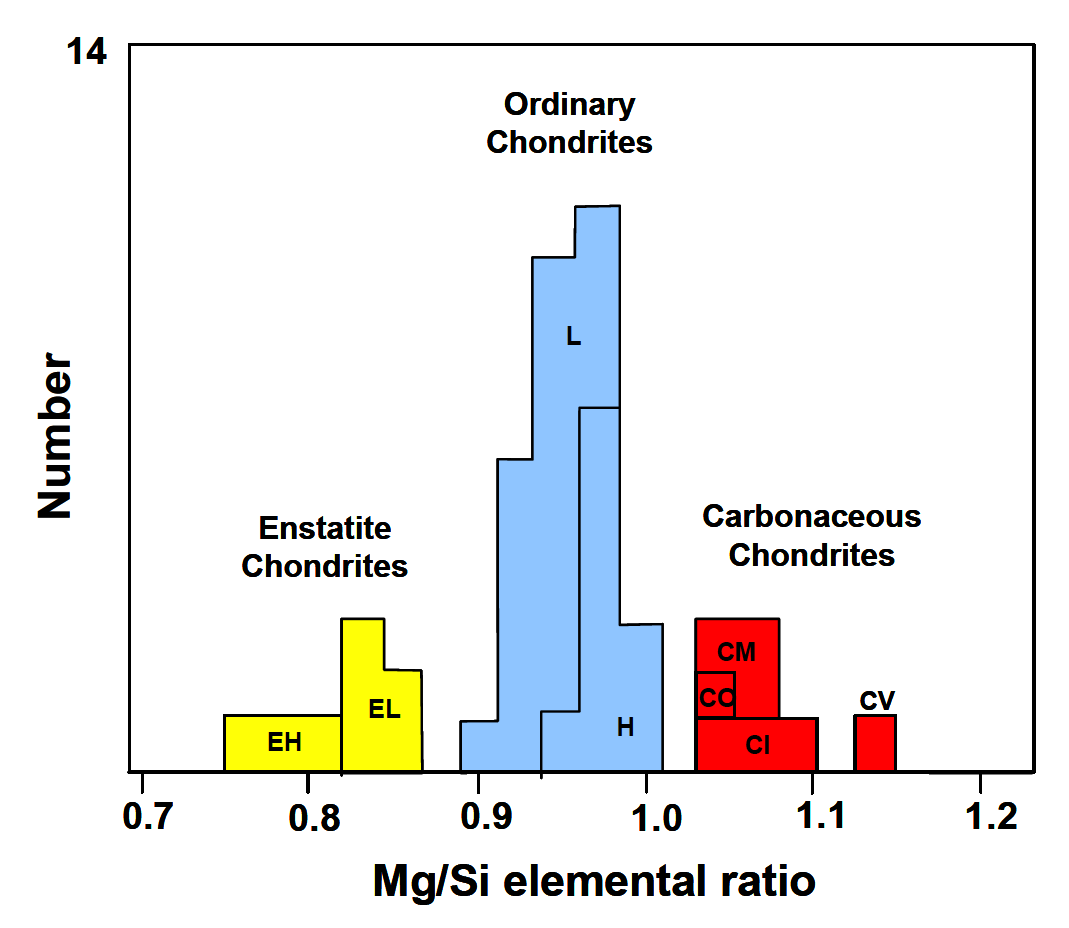
Practice problem
The observed chondritic mass abundances for Calcium and Aluminum are:
| Element | wt % in Chondrite | Atomic Mass |
|---|---|---|
| Ca | 0.92 | 40.1 |
| Al | 0.85 | 27 |
The average wt % of CaO and Al$_2$O$_3$ in Basalt and Harzburgite:
| Oxide | wt % in Basalt | wt % in Harzburgite |
|---|---|---|
| CaO | 11.3 | 6.1 |
| Al$_2$O$_3$ | 15.1 | 5.1 |
What ratio do you need to mix basalt and harzburgite back together to get the composition of the mantle before melt was removed? Assumptions:
- Pyrolite is a combination of melt (basalt) and melted mantle (harzburgites)
- Earth has the same Refractory Lithophile Elemental (RLE) abundances as Chondrites