Lecture 6: Making the Earth (Trace elements edition)
- The primitive mantle (pyrolite model)
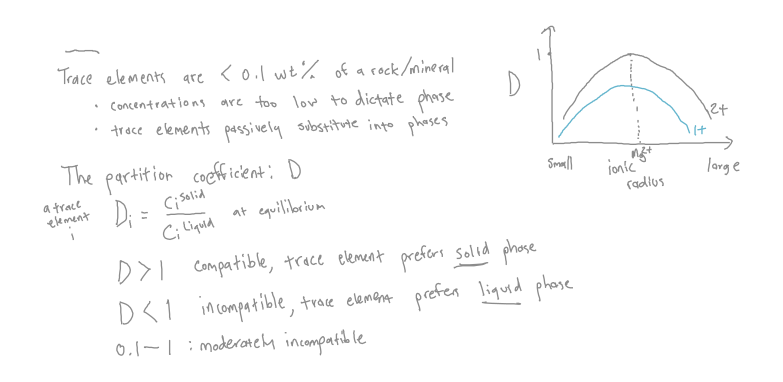
- Trace element definitions
- Compatibility and partition coefficients
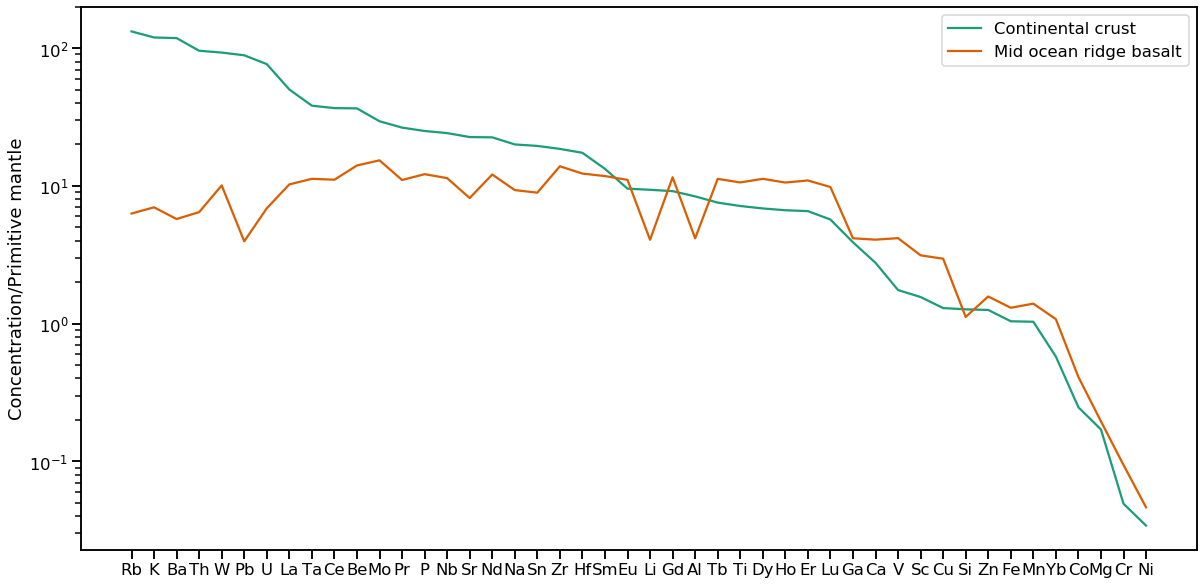
- General trends in compatibility
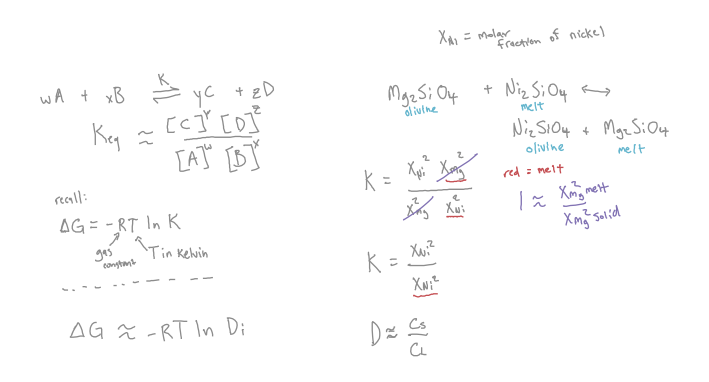
- The relationship between partition coefficients and equilibrium constants
- Thermodynamic basis for compatibility
We acknowledge and respect the lək̓ʷəŋən peoples on whose traditional territory the university stands and the Songhees, Esquimalt and W̱SÁNEĆ peoples whose historical relationships with the land continue to this day.
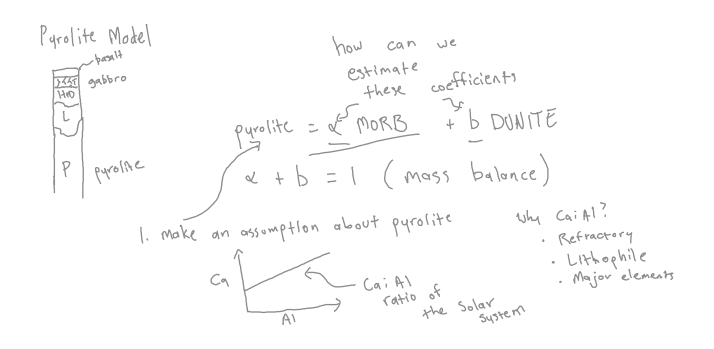
Pyrolite Model: Ringwood, A.E., 1962. A model for the upper mantle. Journal of Geophysical Research.
Practice problem
The observed chondritic mass abundances for Calcium and Aluminum are:
| Element | wt % in Chondrite | Atomic Mass |
|---|---|---|
| Ca | 0.92 | 40.1 |
| Al | 0.85 | 27 |
| O | 16 |
The average wt % of CaO and Al$_2$O$_3$ in Basalt and Harzburgite:
| Oxide | wt % in Basalt | wt % in Harzburgite |
|---|---|---|
| CaO | 11.3 | 6.1 |
| Al$_2$O$_3$ | 15.1 | 5.1 |
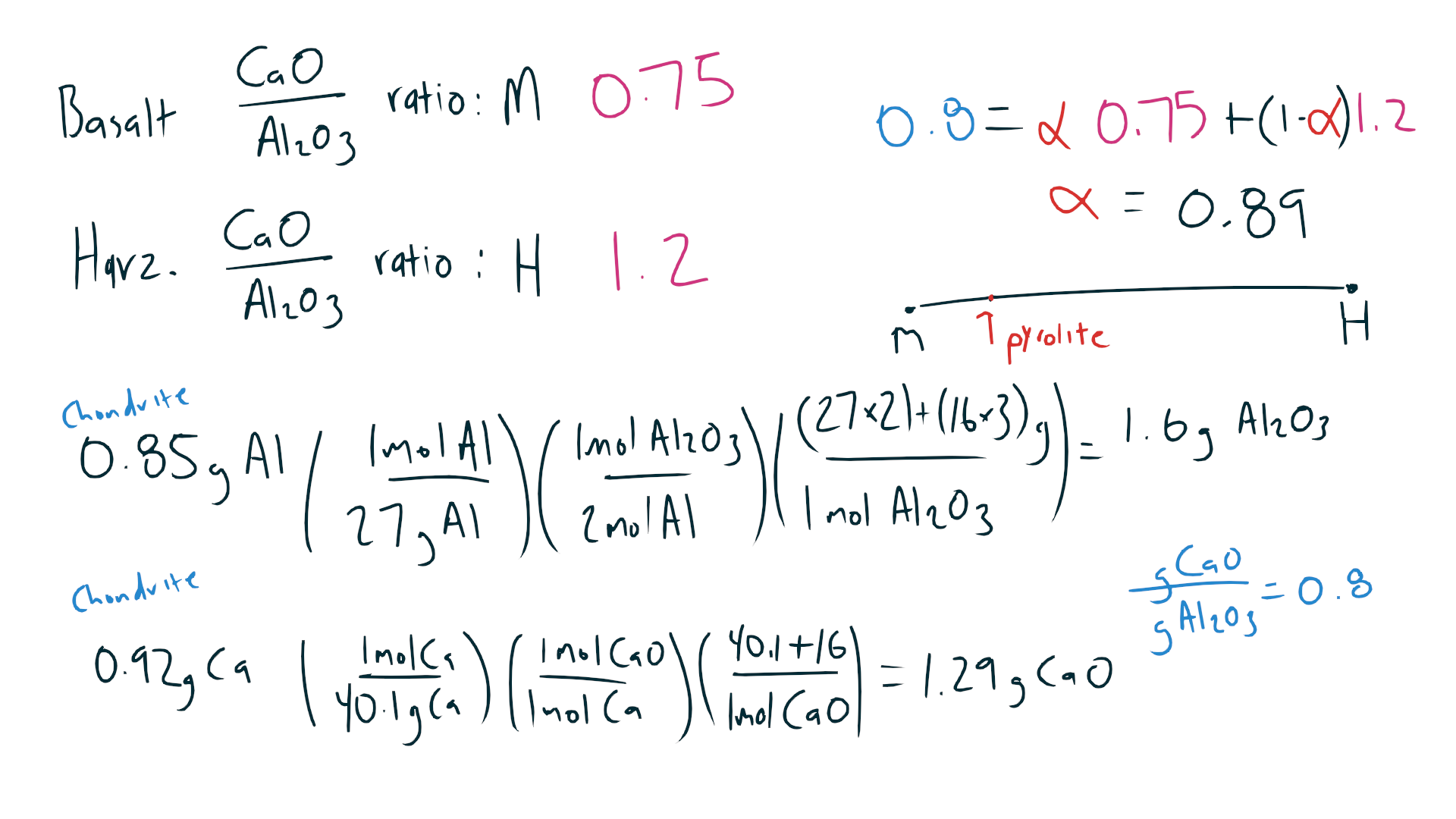
What ratio do you need to mix basalt and harzburgite back together to get the composition of the mantle before melt was removed? Assumptions:
- Pyrolite is a combination of melt (basalt) and melted mantle (harzburgites)
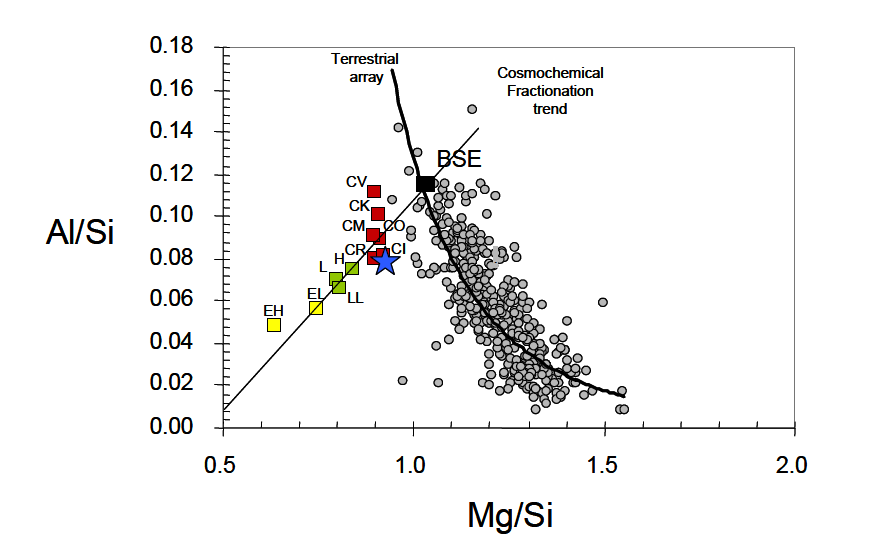
- Earth has the same Refractory Lithophile Elemental (RLE) abundances as Chondrites
Solution.
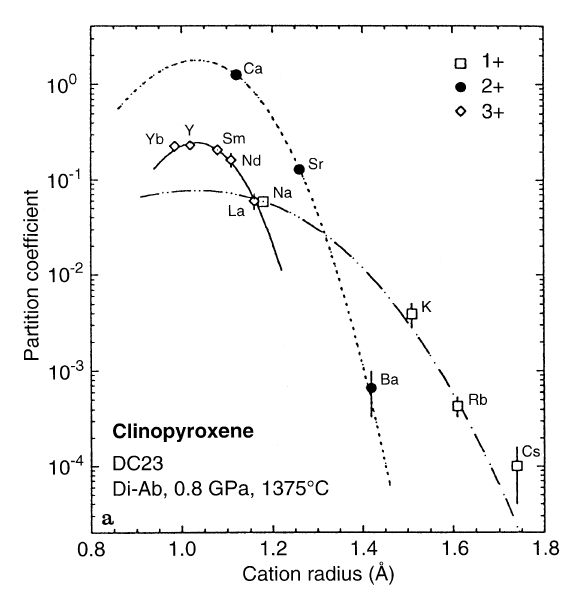
Trace elements, compatibility, and general trends.
Equilibrium constants and partition coefficients. Ni exchange in olivine.
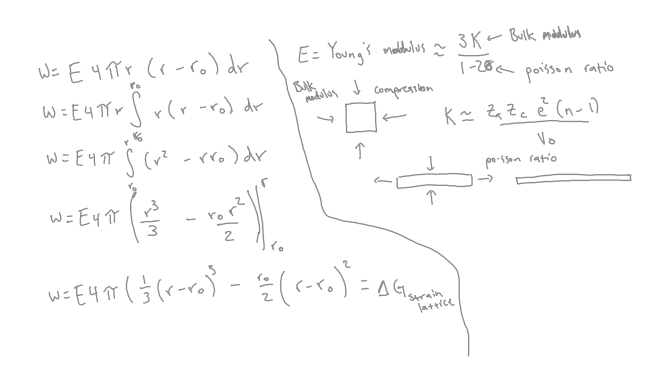
Thermodynamic model for compatibility. Energy to displace lattice:
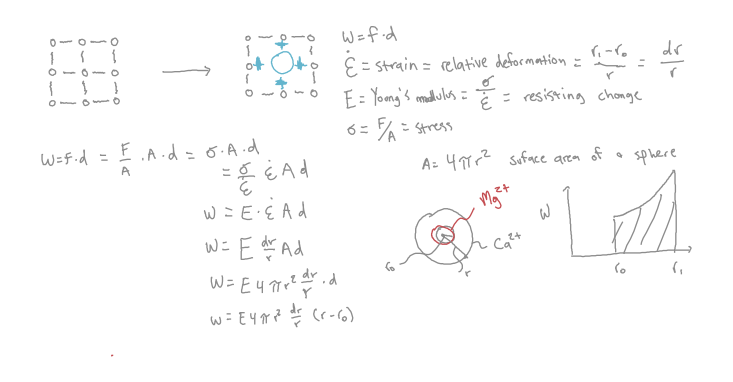
Integral.
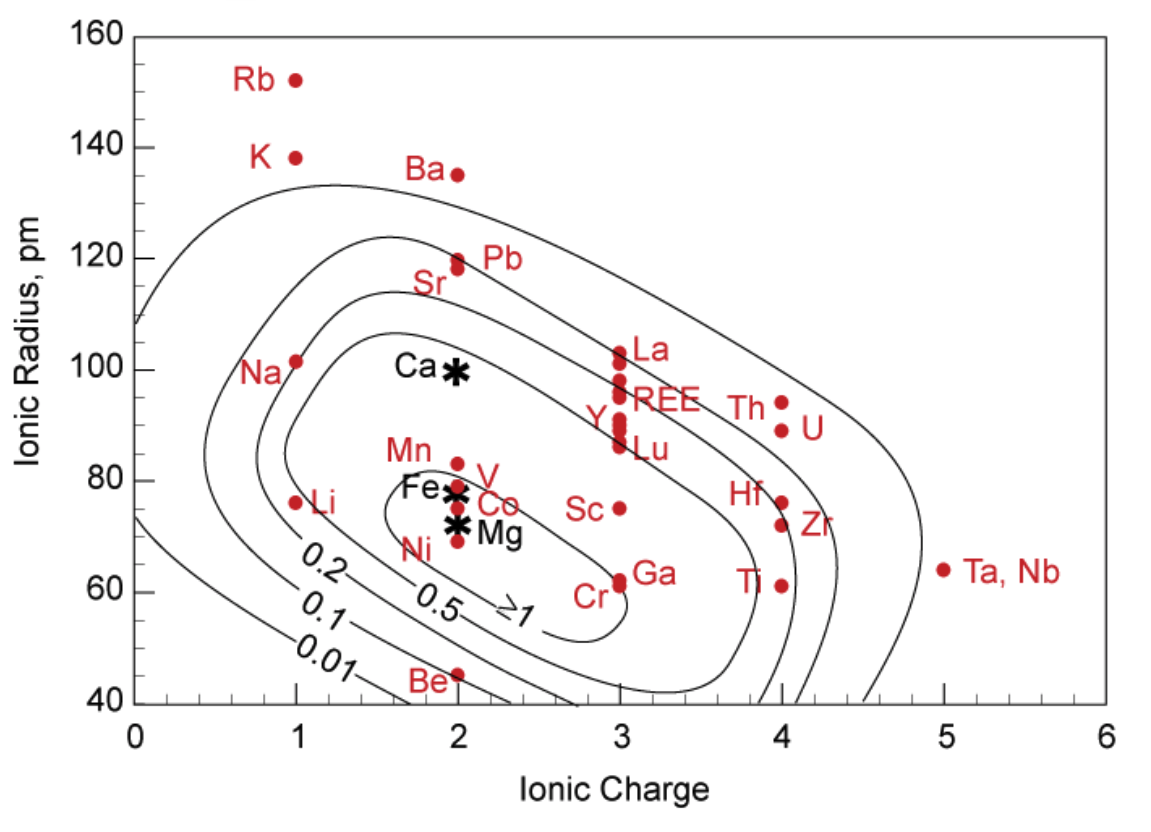
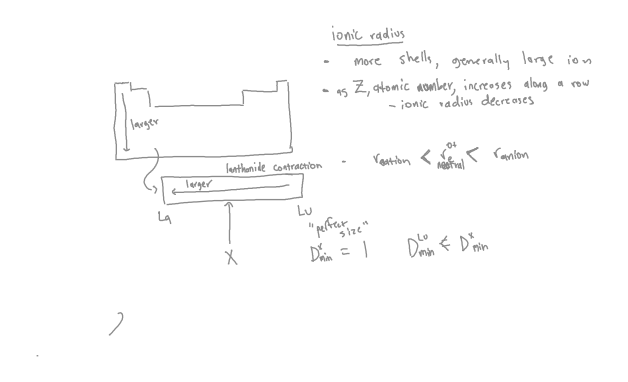
Periodic table, general patterns in ion size