Lecture 16: Stable isotopes
- Equilibrium fractionation of stable isotopes
- Pleistocene climate
We acknowledge and respect the lək̓ʷəŋən peoples on whose traditional territory the university stands and the Songhees, Esquimalt and W̱SÁNEĆ peoples whose historical relationships with the land continue to this day.

"Before the discovery of isotopes, it was generally assumed that all atoms of an element were identical in all respects. With their discovery it was evident that such atoms may differ in atomic weights, but it was believed that their chemical and physical properties were identical except for those properties directly related to mass such as densities of gases and condensed phases, rates of diffusion and evaporation, and others of this kind. As a result of the theoretical and experimental studies reviewed in this paper, we now know that isotopes and isotopic compounds differ in their thermodynamic properties. These differences are small except in the case of the hydrogens and they generally decrease with increasing atomic weight. These small differences... may have important applications as a means of determining the temperatures at which geological formations were laid down."
-Harold Urey, The Thermodynamic Properties of Isotopic Substances, 1947
"Before the discovery of isotopes, it was generally assumed that all atoms of an element were identical in all respects. With their discovery it was evident that such atoms may differ in atomic weights, but it was believed that their chemical and physical properties were identical except for those properties directly related to mass such as densities of gases and condensed phases, rates of diffusion and evaporation, and others of this kind. As a result of the theoretical and experimental studies reviewed in this paper, we now know that isotopes and isotopic compounds differ in their thermodynamic properties. These differences are small except in the case of the hydrogens and they generally decrease with increasing atomic weight. These small differences... may have important applications as a means of determining the temperatures at which geological formations were laid down."
-Harold Urey, The Thermodynamic Properties of Isotopic Substances, 1947
"Before the discovery of isotopes, it was generally assumed that all atoms of an element were identical in all respects. With their discovery it was evident that such atoms may differ in atomic weights, but it was believed that their chemical and physical properties were identical except for those properties directly related to mass such as densities of gases and condensed phases, rates of diffusion and evaporation (kinetics), and others of this kind. As a result of the theoretical and experimental studies reviewed in this paper, we now know that isotopes and isotopic compounds differ in their thermodynamic properties. These differences are small except in the case of the hydrogens and they generally decrease with increasing atomic weight. These small differences... may have important applications as a means of determining the temperatures at which geological formations were laid down."
-Harold Urey, The Thermodynamic Properties of Isotopic Substances, 1947
"Before the discovery of isotopes, it was generally assumed that all atoms of an element were identical in all respects. With their discovery it was evident that such atoms may differ in atomic weights, but it was believed that their chemical and physical properties were identical except for those properties directly related to mass such as densities of gases and condensed phases, rates of diffusion and evaporation (kinetics), and others of this kind. As a result of the theoretical and experimental studies reviewed in this paper, we now know that isotopes and isotopic compounds differ in their thermodynamic properties (equilibrium). These differences are small except in the case of the hydrogens and they generally decrease with increasing atomic weight. These small differences... may have important applications as a means of determining the temperatures at which geological formations were laid down."
-Harold Urey, The Thermodynamic Properties of Isotopic Substances, 1947
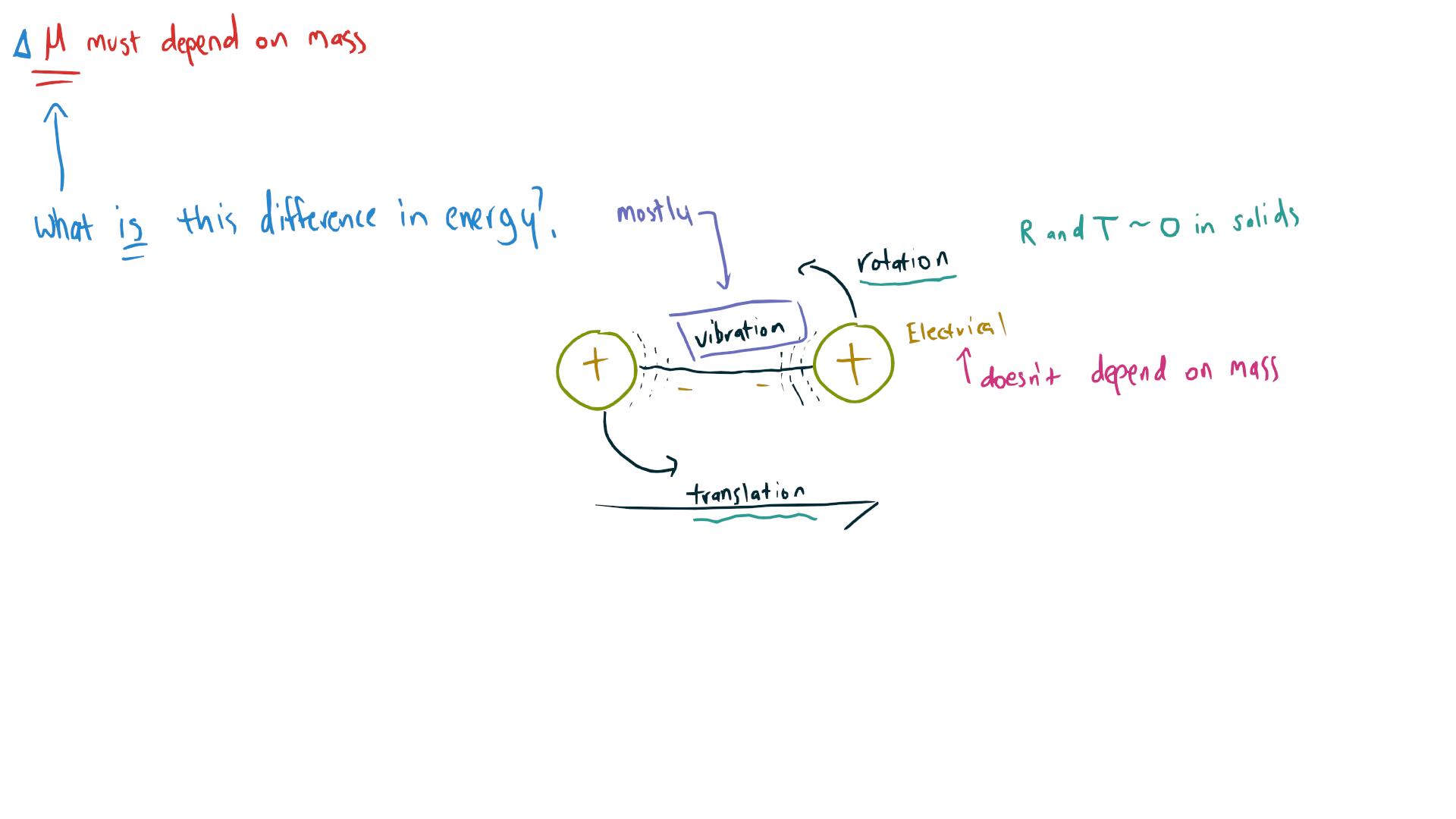
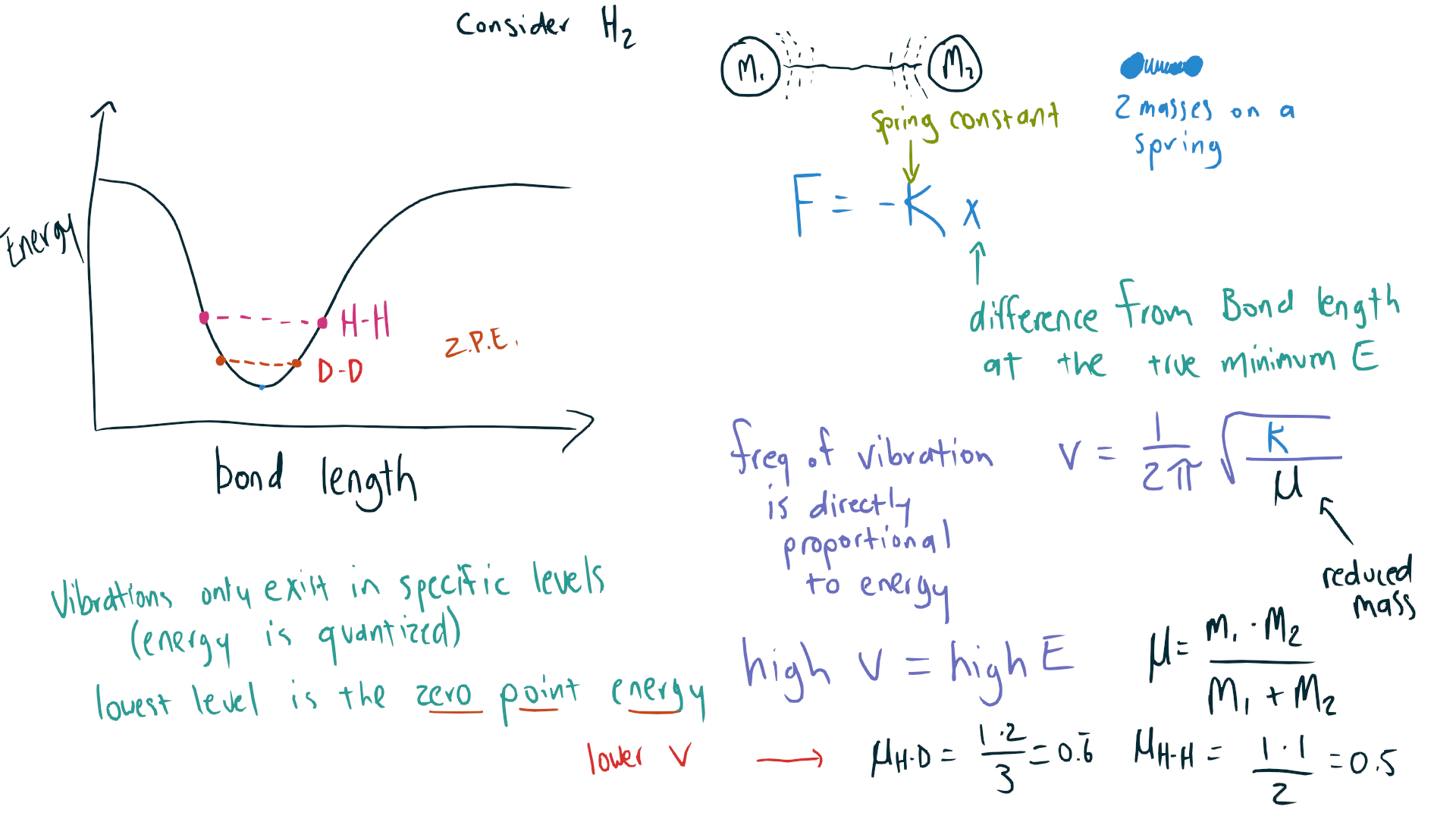
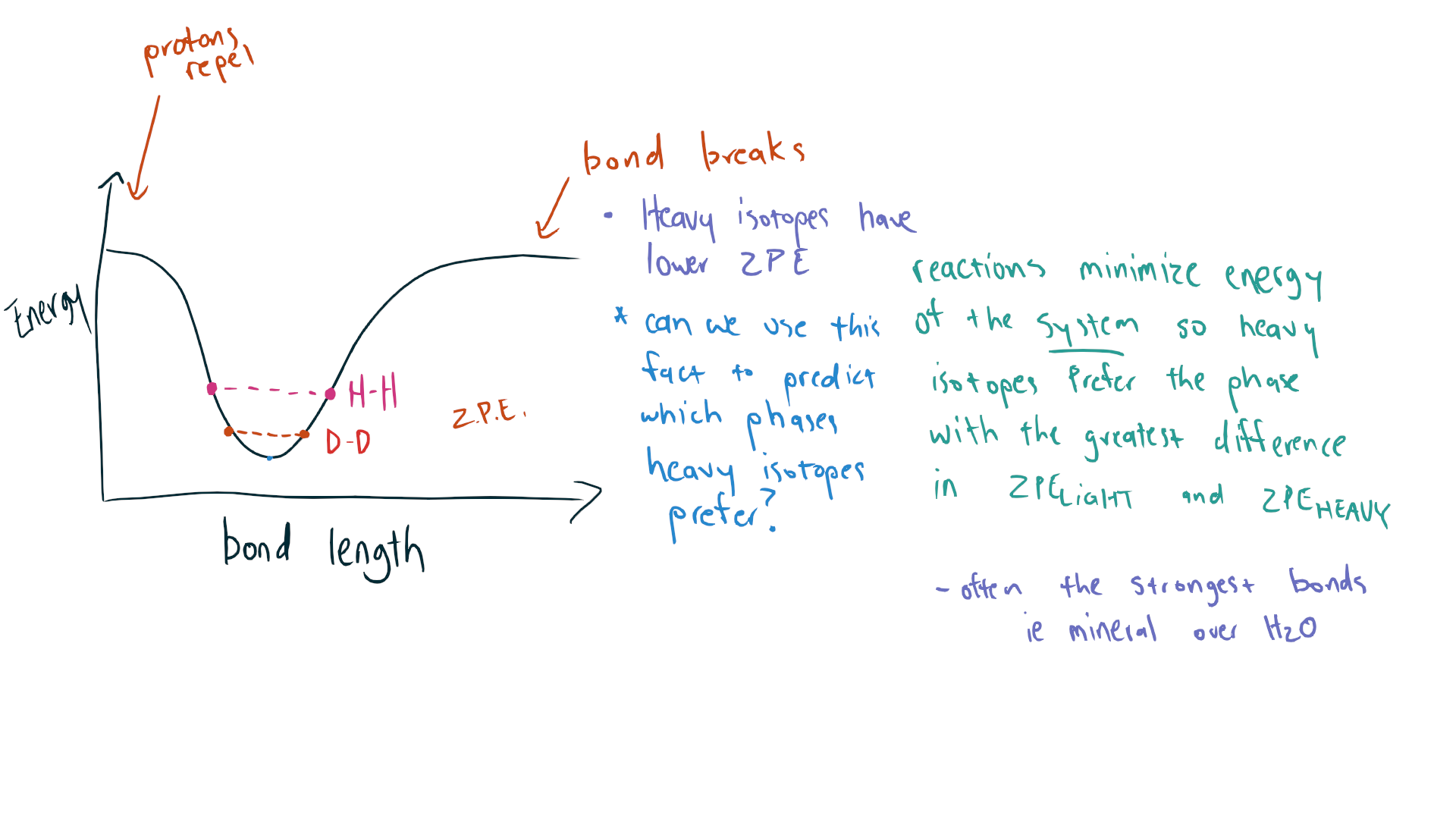
"Before the discovery of isotopes, it was generally assumed that all atoms of an element were identical in all respects. With their discovery it was evident that such atoms may differ in atomic weights, but it was believed that their chemical and physical properties were identical except for those properties directly related to mass such as densities of gases and condensed phases, rates of diffusion and evaporation (kinetics), and others of this kind. As a result of the theoretical and experimental studies reviewed in this paper, we now know that isotopes and isotopic compounds differ in their thermodynamic properties (equilibrium). These differences are small except in the case of the hydrogens and they generally decrease with increasing atomic weight (mass dependence). These small differences... may have important applications as a means of determining the temperatures at which geological formations were laid down."
-Harold Urey, The Thermodynamic Properties of Isotopic Substances, 1947
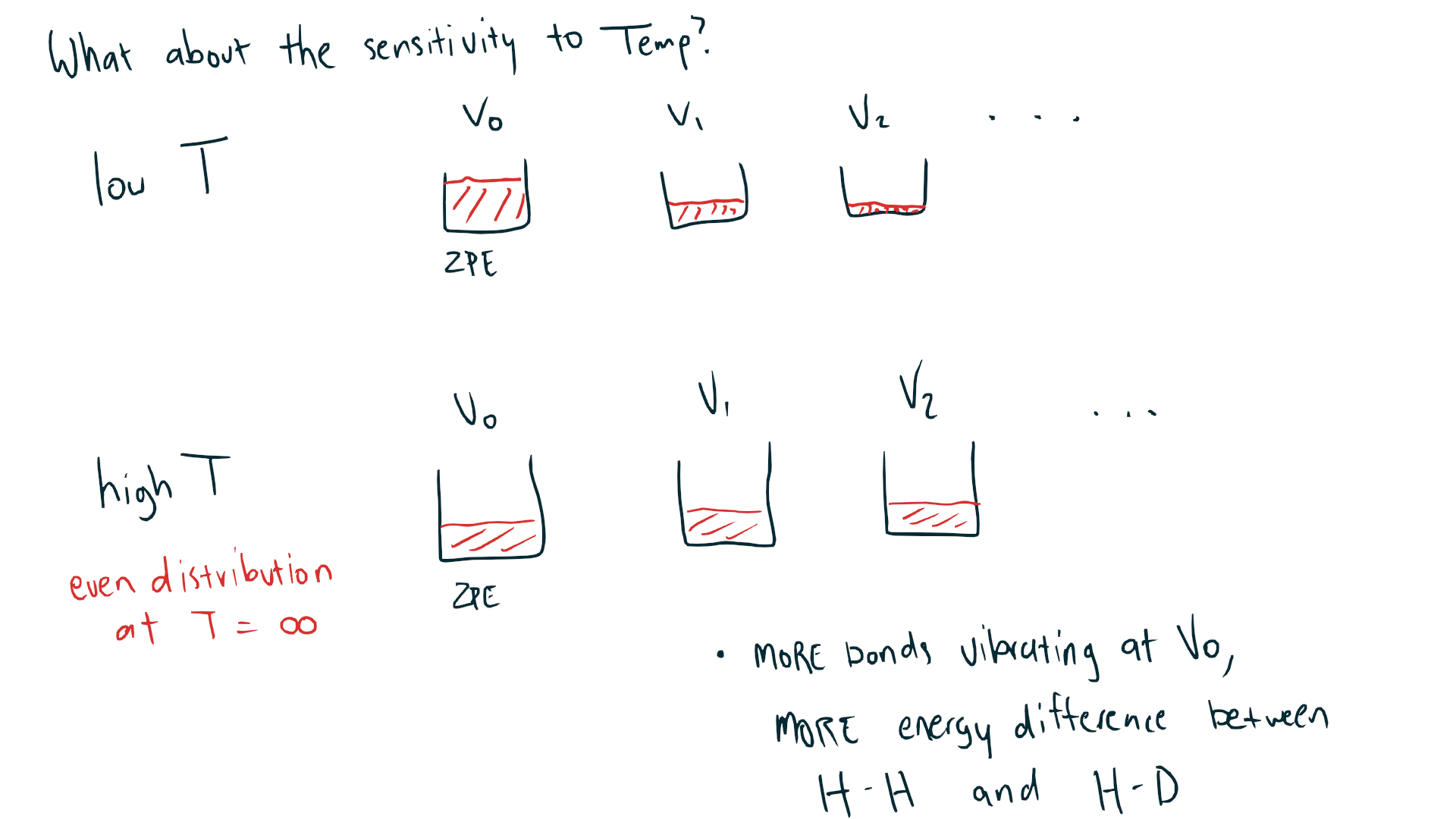
"Before the discovery of isotopes, it was generally assumed that all atoms of an element were identical in all respects. With their discovery it was evident that such atoms may differ in atomic weights, but it was believed that their chemical and physical properties were identical except for those properties directly related to mass such as densities of gases and condensed phases, rates of diffusion and evaporation (kinetics), and others of this kind. As a result of the theoretical and experimental studies reviewed in this paper, we now know that isotopes and isotopic compounds differ in their thermodynamic properties (equilibrium). These differences are small except in the case of the hydrogens and they generally decrease with increasing atomic weight (mass dependence). These small differences... may have important applications as a means of determining the temperatures at which geological formations were laid down (a sensitivity to Temperature)."
-Harold Urey, The Thermodynamic Properties of Isotopic Substances, 1947
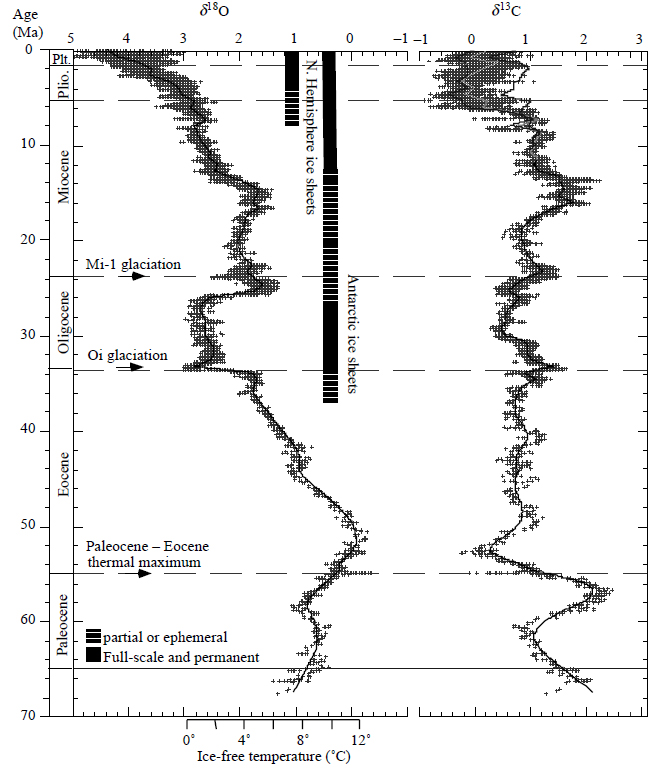
Compilation from Zachos et al., 2001

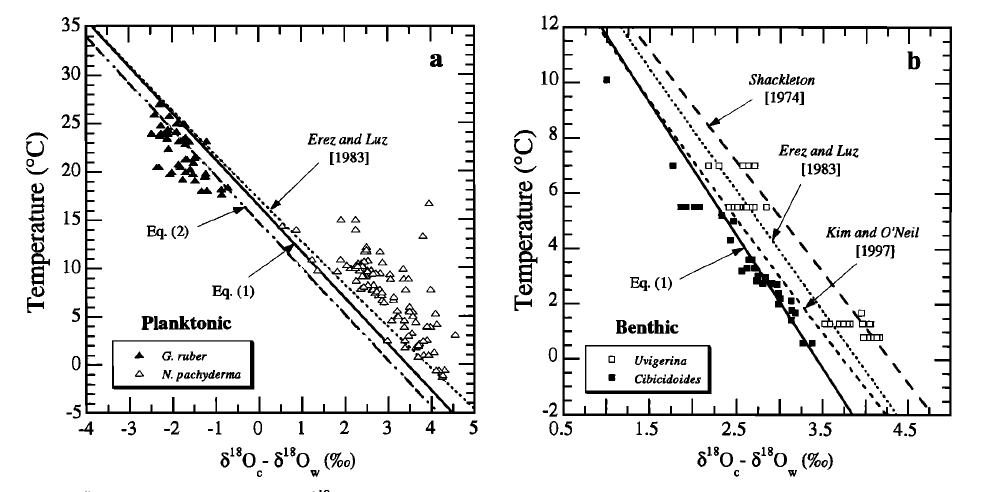
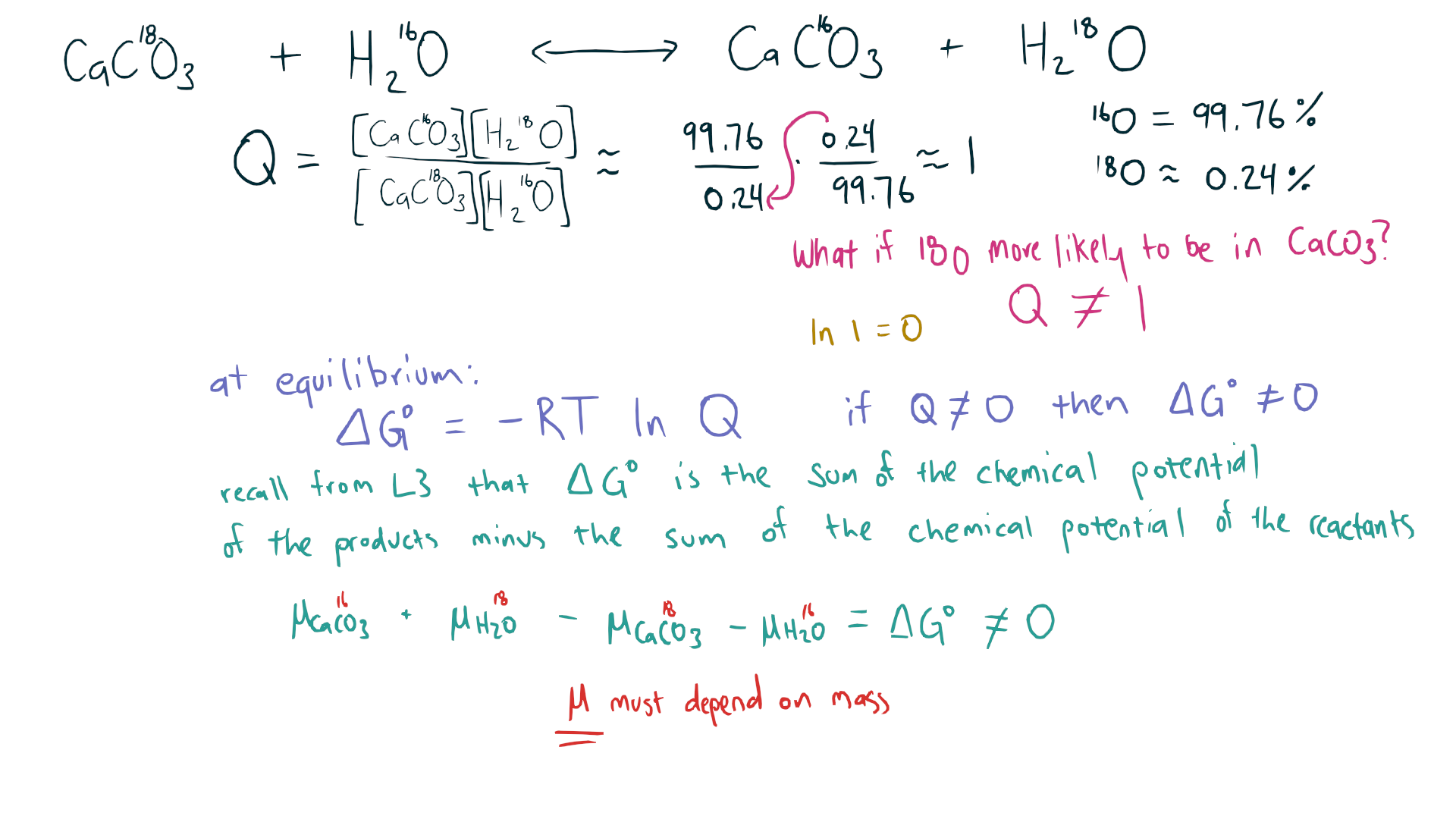
Compilation from Zachos et al., 2001
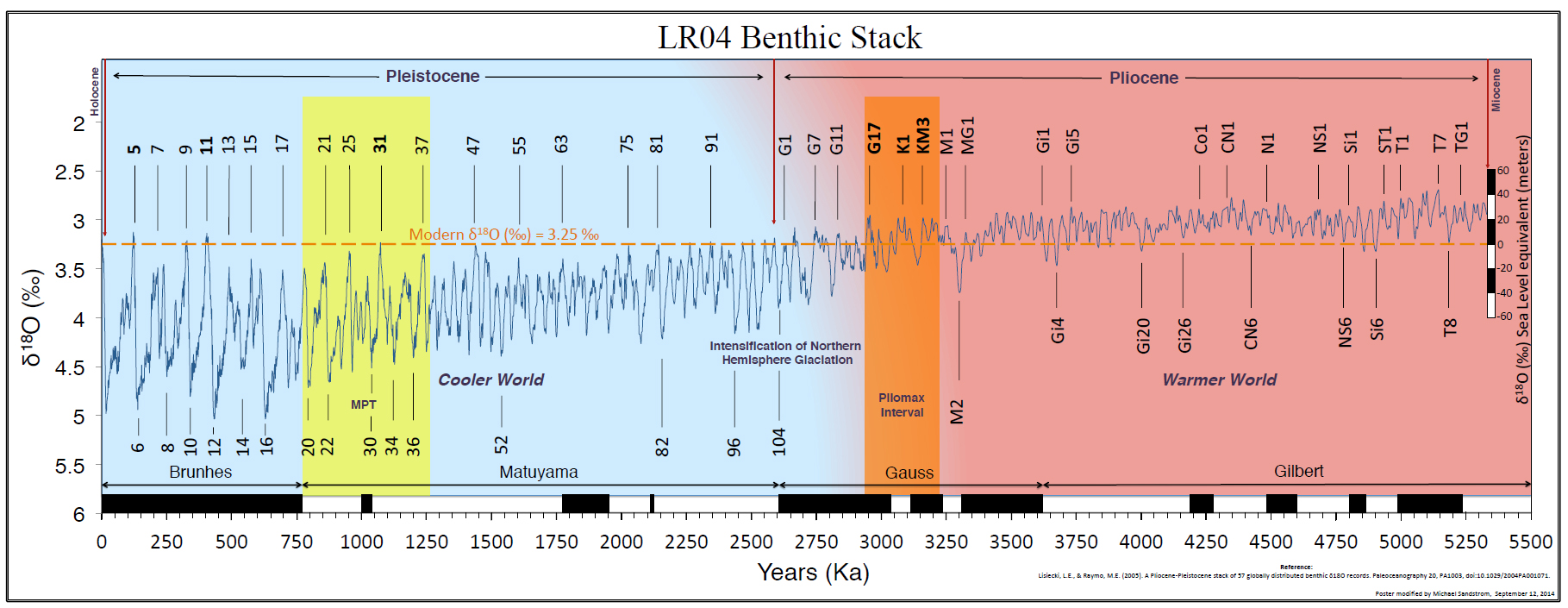
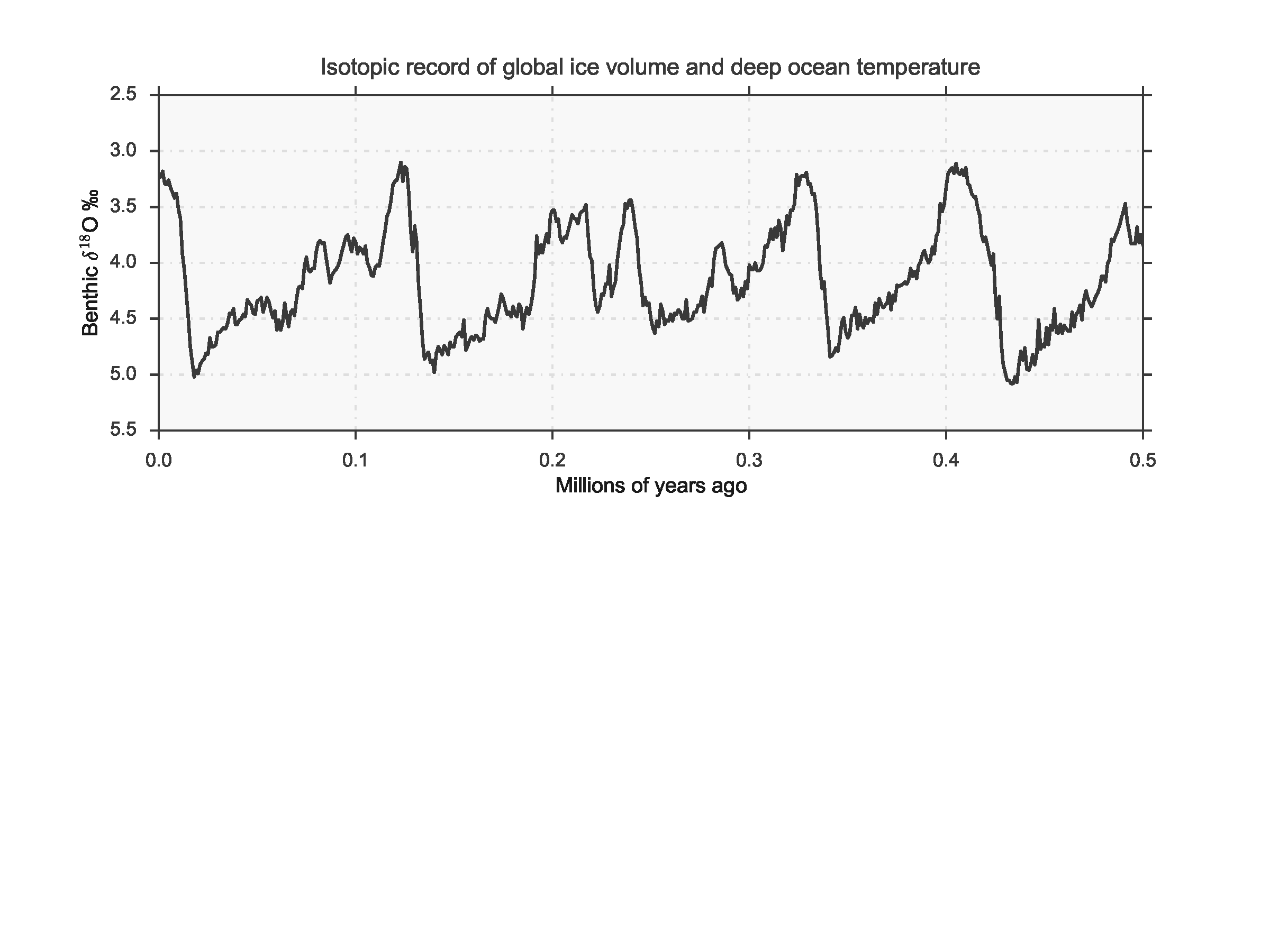
from Lisiecki and Raymo, 2004