EOS 423 // EOS 518: Advanced Sedimentology and Stratigraphy

Welcome to Advanced Topics: Sedimentology and Stratigraphy! Here is the plan for today:
- introductions
- overview of course outline
- overview of course content
- first assigment:
- make sure Python is installed on your computer (due Jan. 13, 2025)
- surface transport
Who am I?
- Blake Dyer (he/him/his)
- I prefer Blake over Dr. Dyer or Professor Dyer
- Undergraduate at Rice University 2006-2010
- PhD at Princeton University 2010-2015
- Postdoc at LDEO (Columbia University) 2016-2019
- Started in SEOS at UVic in Nov 2019
- Second time teaching EOS 423
- Also teach Geochemistry, Marine Geology, and The Dynamic Earth

Bob Wright A419
blakedyer@uvic.ca
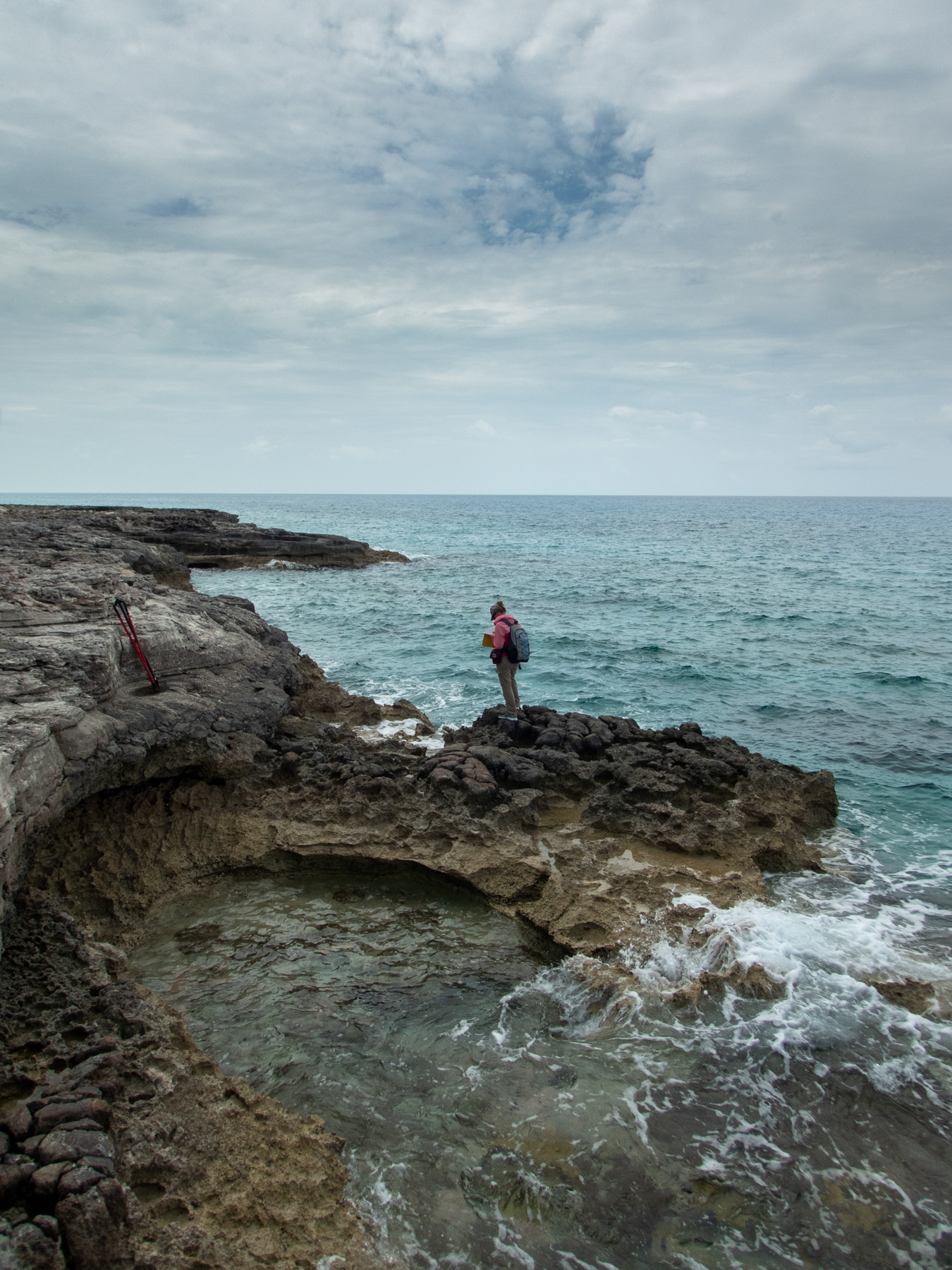
Research interests: the geologic history of climate and life
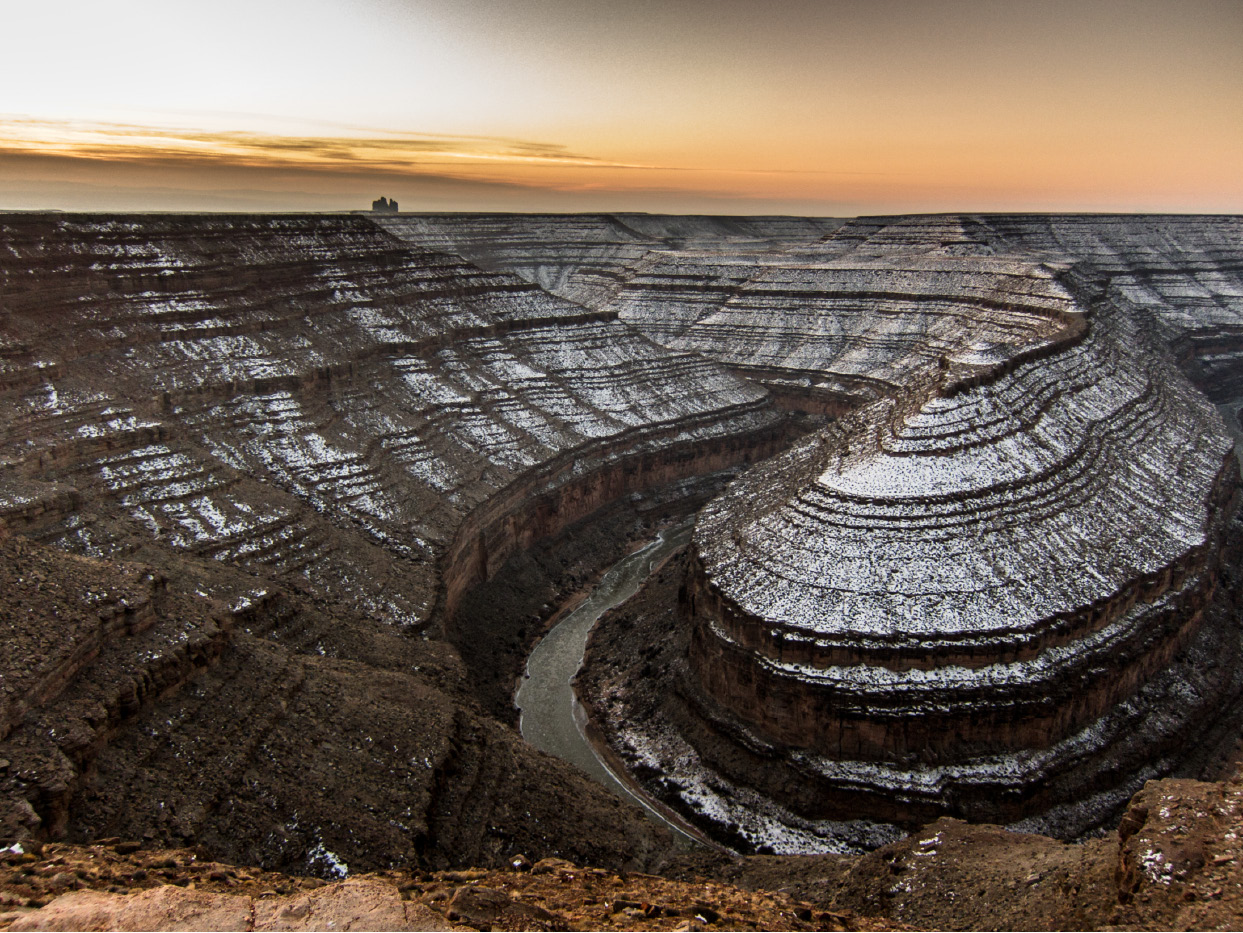
Research interests: the geologic history of climate and life
Course Outline, Brightspace, and Course Webpage
Brightspace: All important announcements, assignments, and grades will be managed through Brightspace.
Course Webpage: Lecture slides and other course materials can be found on the course webpage, updated shortly after each class. There is a link to this page under Course Materials on Brightspace.
1c. Introductions: who are you
- What do you hope to learn in EOS 423?
- What challenges do you anticipate?
#let's get some help from Python for class introductions

import numpy as np
class_list=['Abbey','Benoit','Bronwen','Brooke','Byron','Clare','Claudia','Jacob','Kascia',
            'Kate','Jinfeng']

def pick_someone(class_list):
    if len(class_list)>0:
        person=np.random.choice(class_list)
        toprint="%s, please introduce yourself!" % person
        toprint='#####\n'+toprint+'\n#####\n'
        print(toprint)
        class_list.remove(person)
    return class_list
class_list=pick_someone(class_list)
2a. Course outline
Course description and objectives: In this course, we will explore how geologic and Earth surface processes, including tectonic, sea level and climate changes, are recorded and preserved in the stratigraphic record. Focus will be on modern and ancient case studies, with topics including basin analysis, cyclostratigraphy, process sedimentology and paleo-environmental reconstruction. Problem sets emphasize computational skills, such as model building and introductory time-series analysis. Pre-requisites: EOS 325, EOS 201.
*If someone does not have one of these pre-reqs, please contact Blake ASAP!*
Course Materials: There is no required textbook. Readings will be made available through the course website. Students are required to have a computer work on assignments.
2b. Course outline
Course structure: The course will meet twice a week (M/Th) for lectures and in B119 on Fridays to work on the weekly assignment.
- On Monday some weeks will begin with a flipped classroom: I will randomly select, with python, at least two students to informally present their progress on the current weekly assignment.
- Any remaining time on Monday and all of Thursday will be used for lectures on new material or guided group discussions of assigned readings.
2c. Course outline
Grading: Your grade will be determined primarily by your performance on assignments. Although I will not formally track participation in lecture, I expect that the assignments and exams will be easier for those who participate.
- Students enrolled in the graduate version of the course (EOS 518) will be expected to complete an alternative final assignment that includes a greater amount of self-direction.
- Below is a breakdown of the course assessment:
| EOS 423 (Undergraduate Students) | EOS 518 (Graduate Students) | ||
|---|---|---|---|
| 6 Lab write-ups | 40% | 5 Lab write-ups | 30% |
| 1 Lab exam | 20% | 1 Lab exam | 20% |
| Mid-term 1 | 15% | Mid-term 1 | 15% |
| Mid-term 2 | 15% | Final report | 15% |
| Assignment presentations | 10% | Assignment presentations | 20% |
3a. Sedimentary transport & building stratigraphy
from IPython.display import HTML, IFrame
HTML('<iframe style="display: block;border-style:none; margin:auto;" width="1200" height="675" src="https://www.youtube.com/embed/VRXR86uRnUY"></iframe></p>')
3b. Geospatial analysis & surface processes
3b. Geospatial analysis & surface processes
3c. Carbon systems & chemistry
3d. Stratigraphic correlation
- correlation = building age models
- how is time distributed in sedimentary rocks?
3d. Stratigraphic correlation
- correlation = building age models
- how is time distributed in sedimentary rocks?
3d. Stratigraphic correlation
- correlation = building age models
- how is time distributed in sedimentary rocks?
3e. Data synthesis & sediment cycling
| a decaying rock record? |
|---|
| I look at the natural geological record, as a history of the world imperfectly kept, and written in a changing dialect; of this history we possess the last volume alone, relating only to two or three countries. Of this volume, only here and there a short chapter has been preserved; and of each page, only here and there a few lines. |
| -- Charles Darwin |
3e. Data synthesis & sediment cycling
| a decaying rock record? |
|---|
| I look at the natural geological record, as a history of the world imperfectly kept, and written in a changing dialect; of this history we possess the last volume alone, relating only to two or three countries. Of this volume, only here and there a short chapter has been preserved; and of each page, only here and there a few lines. |
| -- Charles Darwin |
3e. Data synthesis & sediment cycling
macrostrat.org: 1,534 chronostratigraphic columns | 35,461 rock units | 2,540,323 map polygons | 12,935,471 TDM-ready papers
4. First assignment (due before next class):
Install Python on your computer (or other scripting language)
- One of the easiest ways to install and manage python on your local machine is through Anaconda: https://www.anaconda.com/products/individual
- There are two versions of python, version 2 and version 3. *You should install Python 3*.
- Also: https://uvic.syzygy.ca/