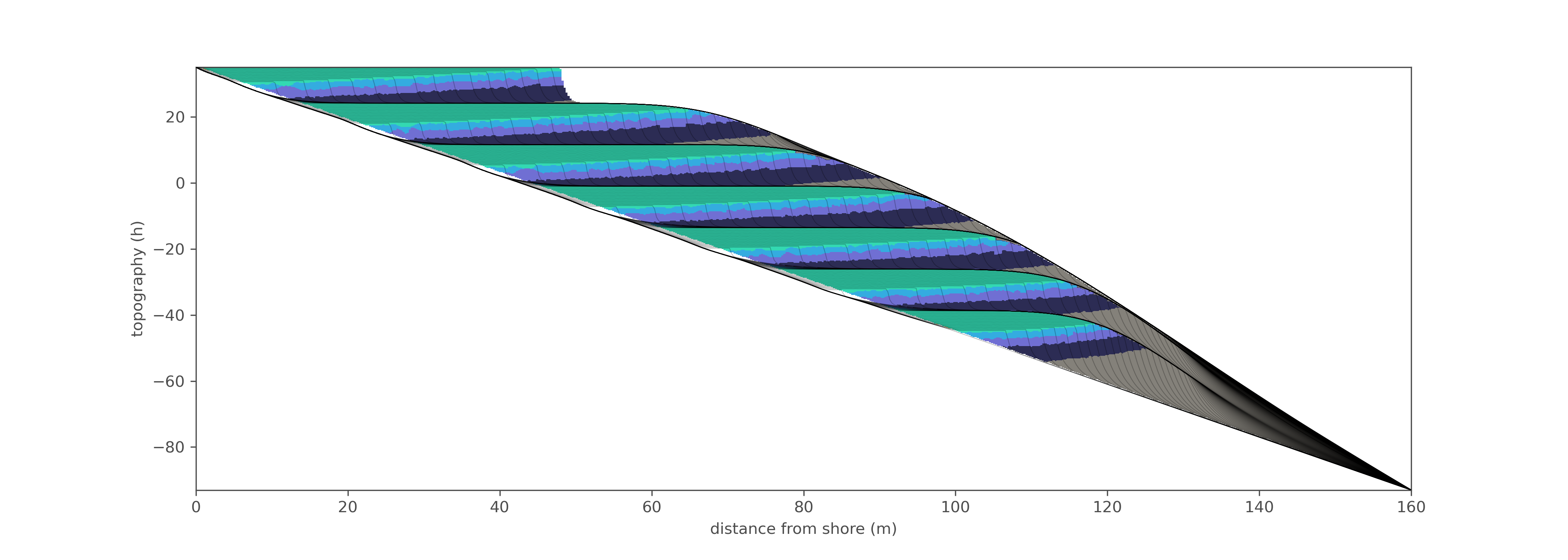
Lecture 8: Stratigraphic time part I
- Gross vs. net fluxes
- erosion and hiatus
- how to build a rock record
- Correlative surfaces
- Chronostratigraphy (Wheeler diagrams)
- Time in the rock record
- Sadler effect
We acknowledge and respect the lək̓ʷəŋən peoples on whose traditional territory the university stands and the Songhees, Esquimalt and W̱SÁNEĆ peoples whose historical relationships with the land continue to this day.
Gross and net sedimentation
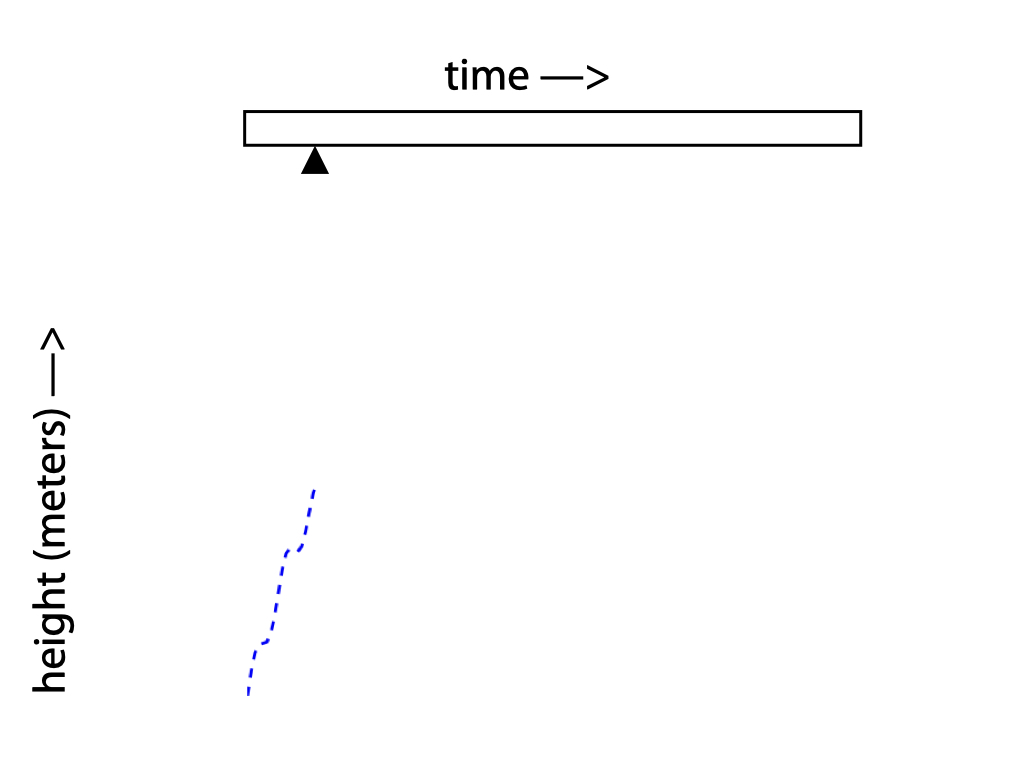
Gross and net sedimentation
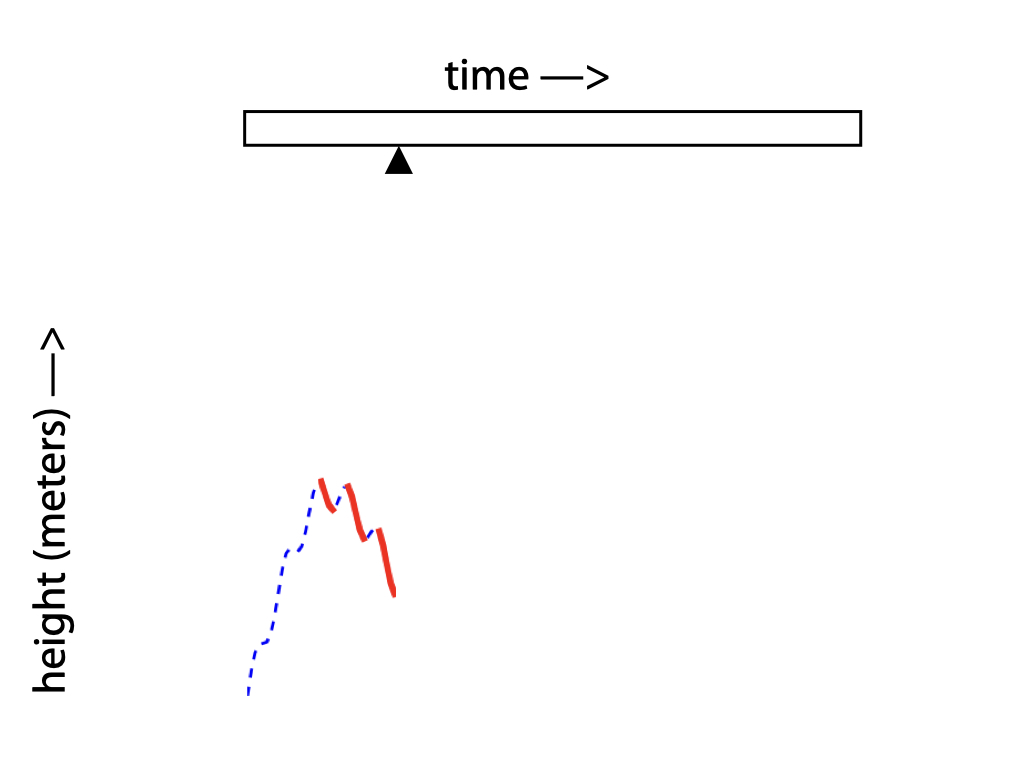
Gross and net sedimentation
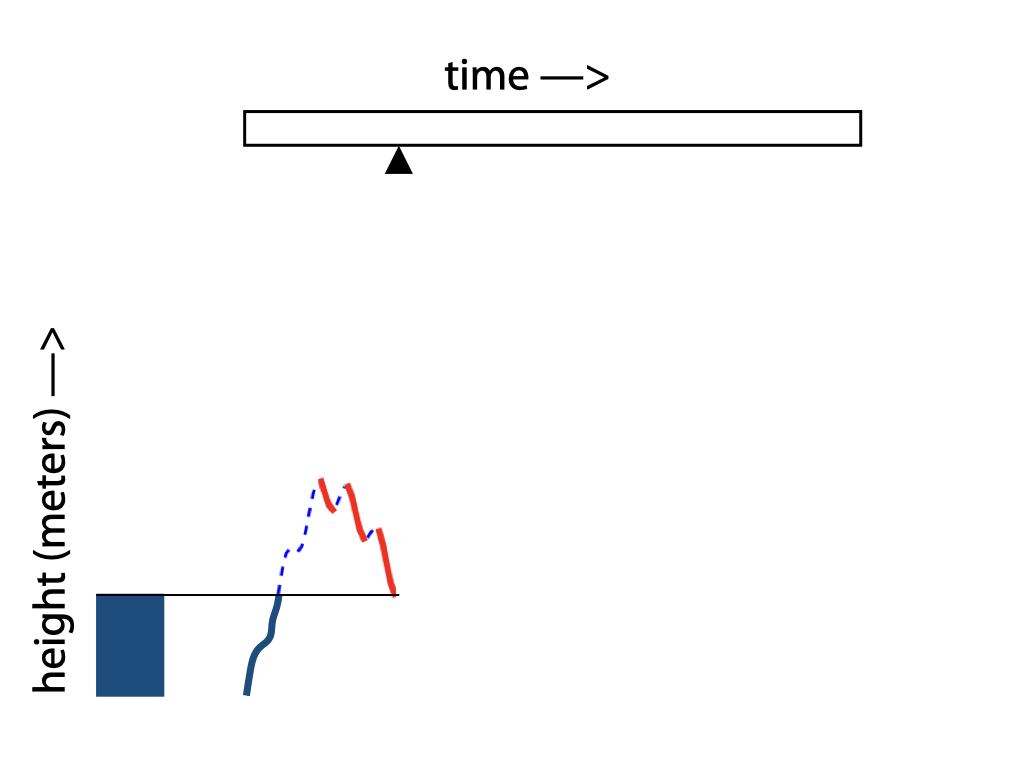
Gross and net sedimentation
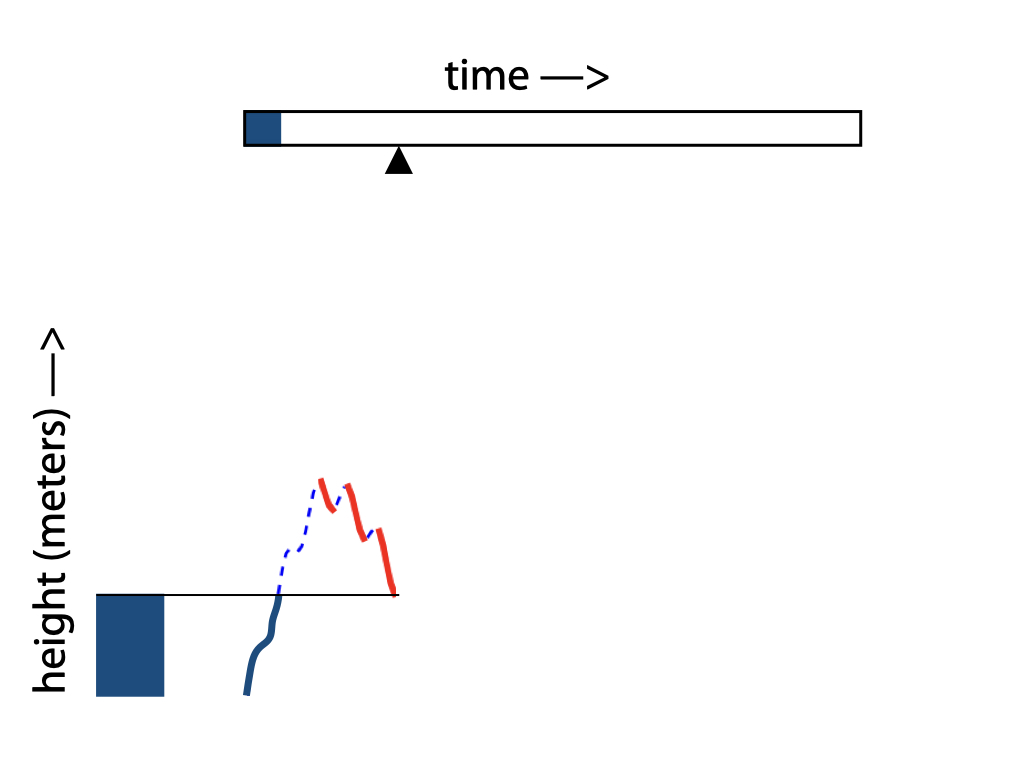
Gross and net sedimentation
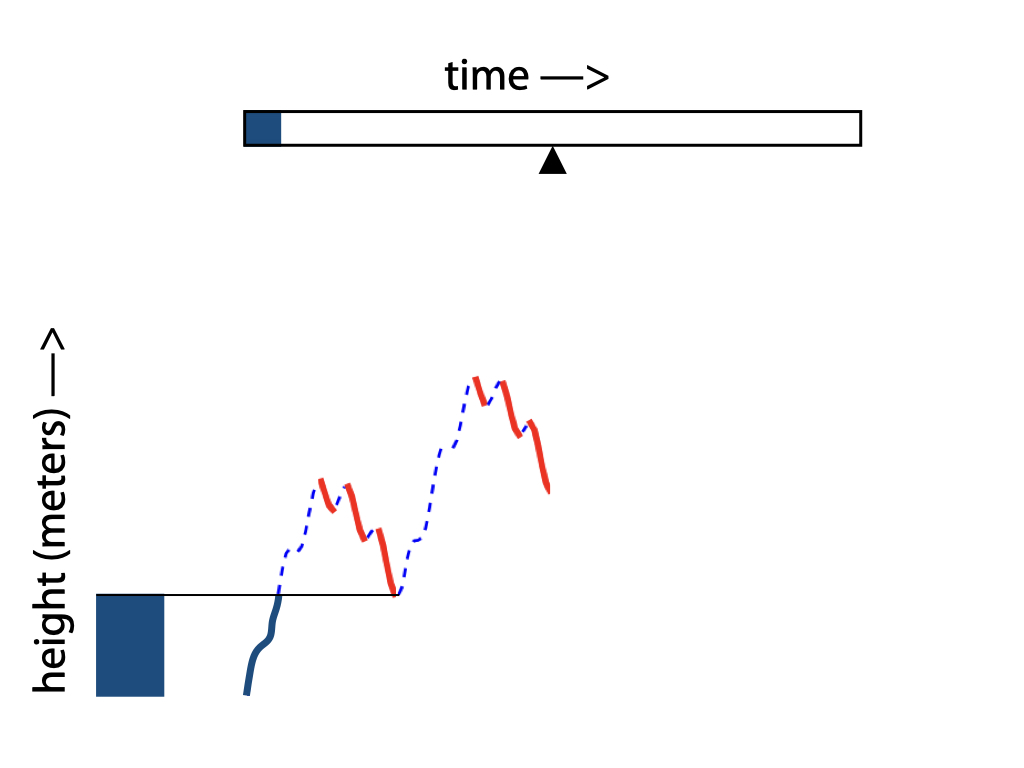
Gross and net sedimentation
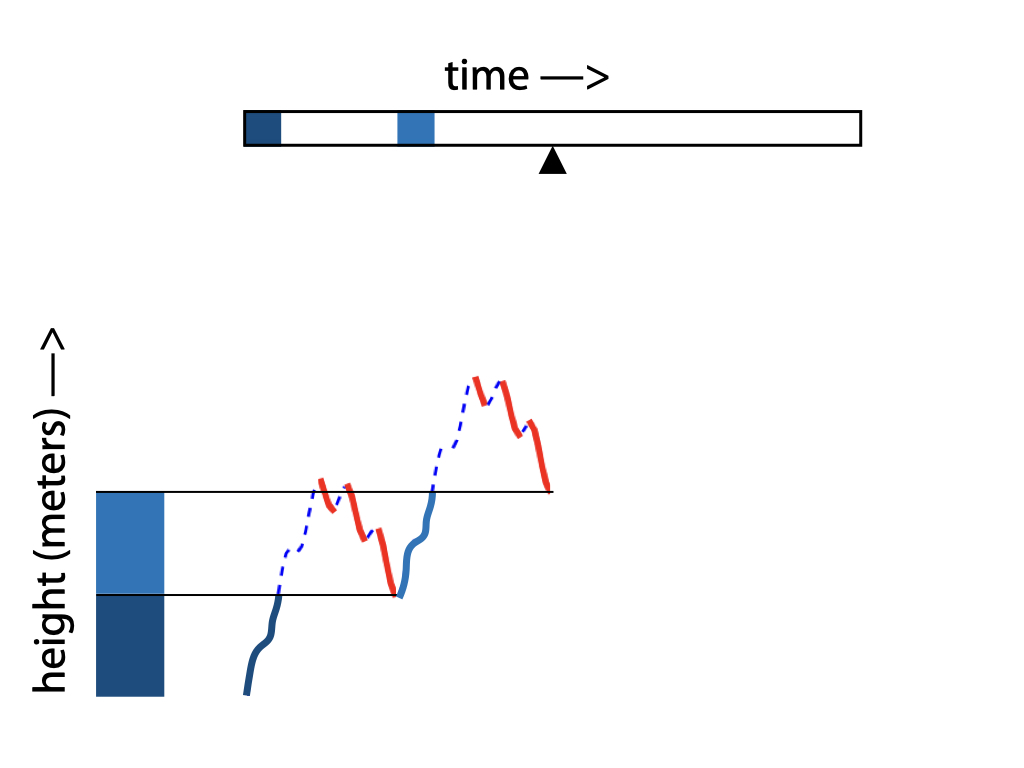
Gross and net sedimentation
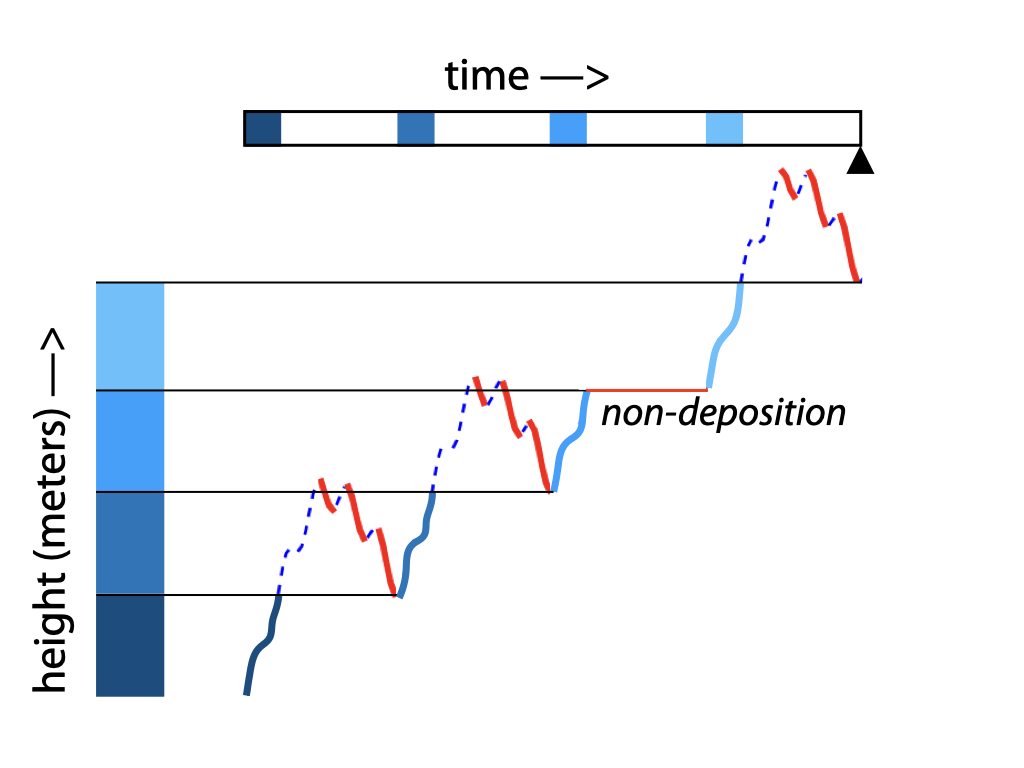
Gross and net sedimentation
net sedimentary record is full of gaps: both erosive surfaces and hiatuses.
How much time is represented by sedimentary rock?
How to build the net rock record
In [2]:
import csv
import numpy as np
from matplotlib import pyplot as plt
import seaborn as sns
sns.set_context('talk')
%matplotlib inline

#empty lists for data
model_topo=[]

#open the data file
with open("model_results.csv","r") as fid:
    data = csv.reader(fid, delimiter=",")

    #reads the data in line-by-line
    for row in data:
        model_topo.append([float(r) for r in row[1:]])

#convert to list of numpy arrays
model_topo=[np.array(t) for t in model_topo]

#define as change from inital conditions
model_topo=[t-model_topo[0] for t in model_topo]
How to build the net rock record
In [3]:
#pull topographic evolution from one spot in the basin
section=[t[454] for t in model_topo]

plt.plot(section,'-',color='r')
plt.plot(np.arange(len(section))[0::4],section[0::4],'.',markersize=5,color='k')

plt.gca().set_xticks([])
plt.gca().set_xlabel(r'time $\rightarrow$')
plt.gca().set_ylabel('height (meters)')
plt.gca().xaxis.set_label_position('top')

How to build the net rock record
In [3]:
net=np.flipud(section) #flip this stratigraphy upside down to examine youngest to oldest
for i,s in enumerate(net): #count through time slices starting at the youngest
    if i!=len(net)-1: #if we're not at the end
        #look "down section" - was this layer eroded?
        # --> if height had decreased, then yes
        if s<net[i+1]: #s is height of current timeslice, net[i+1] is heigh of previous timeslice
            net[i+1]=s #create new record of net sedimentation
#make stratigraphy younging upwards again
net=np.flipud(net)
plt.plot(net,color='b')
plt.fill_between(np.arange(len(section)),section,net,color='r',alpha=0.25)
plt.gca().set_xticks([])
plt.gca().set_xlabel(r'time $\rightarrow$')
plt.gca().set_ylabel('height (meters)')
plt.gca().xaxis.set_label_position('top')

How to build the net rock record
Coastline position and erosion and hiatus
We will look at a set of model runs to better understand the relationship of the coastline position to erosion and hiatus (and time). First, let's review the controls on coastline position:
- Coastline progrades/regresses/moves seaward when: $\frac{sed}{dt}>\frac{space}{dt}$
- Coastline retrogrades/transgresses/moves landward when: $\frac{sed}{dt}<\frac{space}{dt}$
- Coastline aggrades/stays in the same location landward when: $\frac{sed}{dt}\approx\frac{space}{dt}$
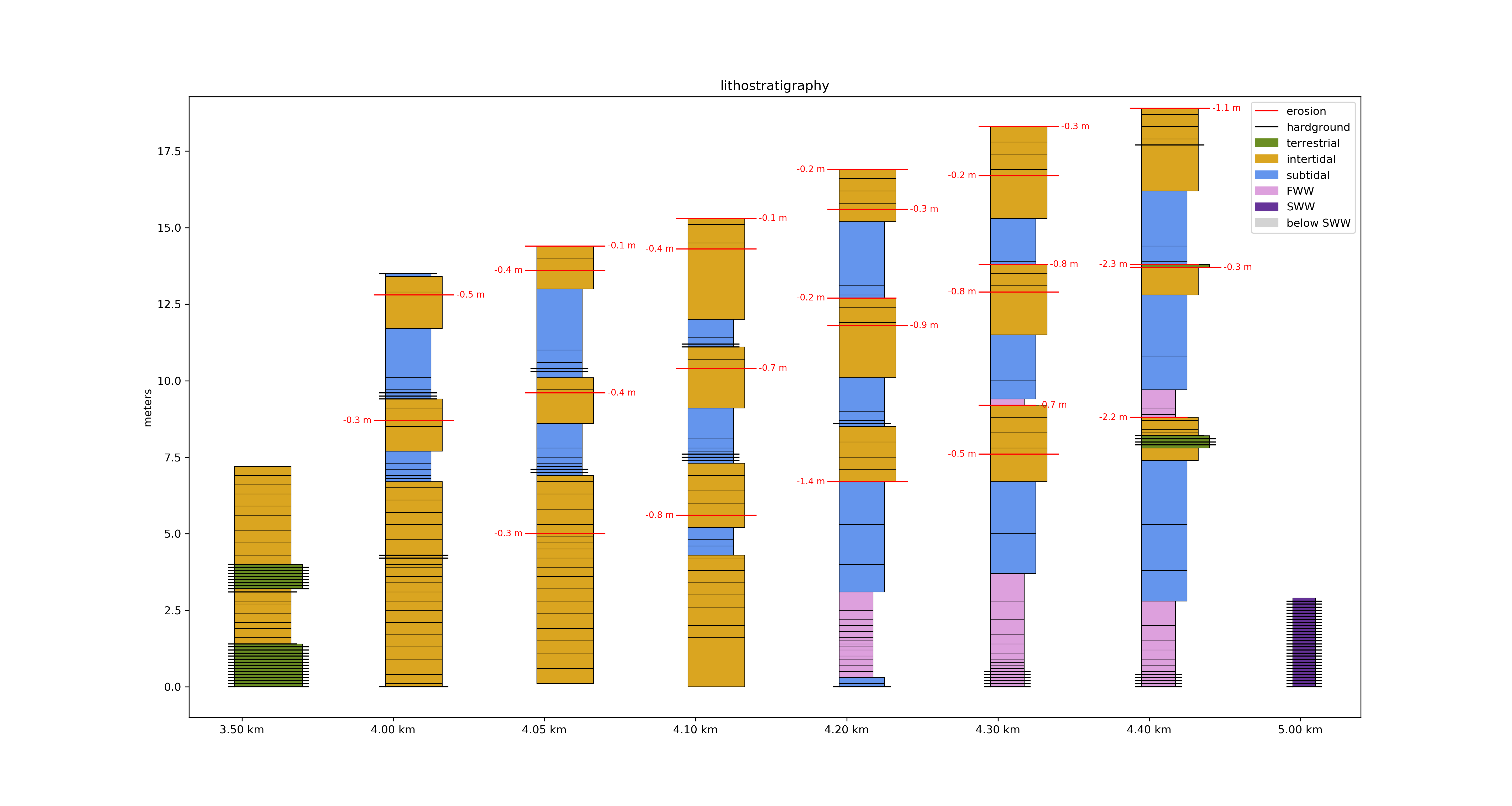
Simple sea level cycles: stratigraphic columns
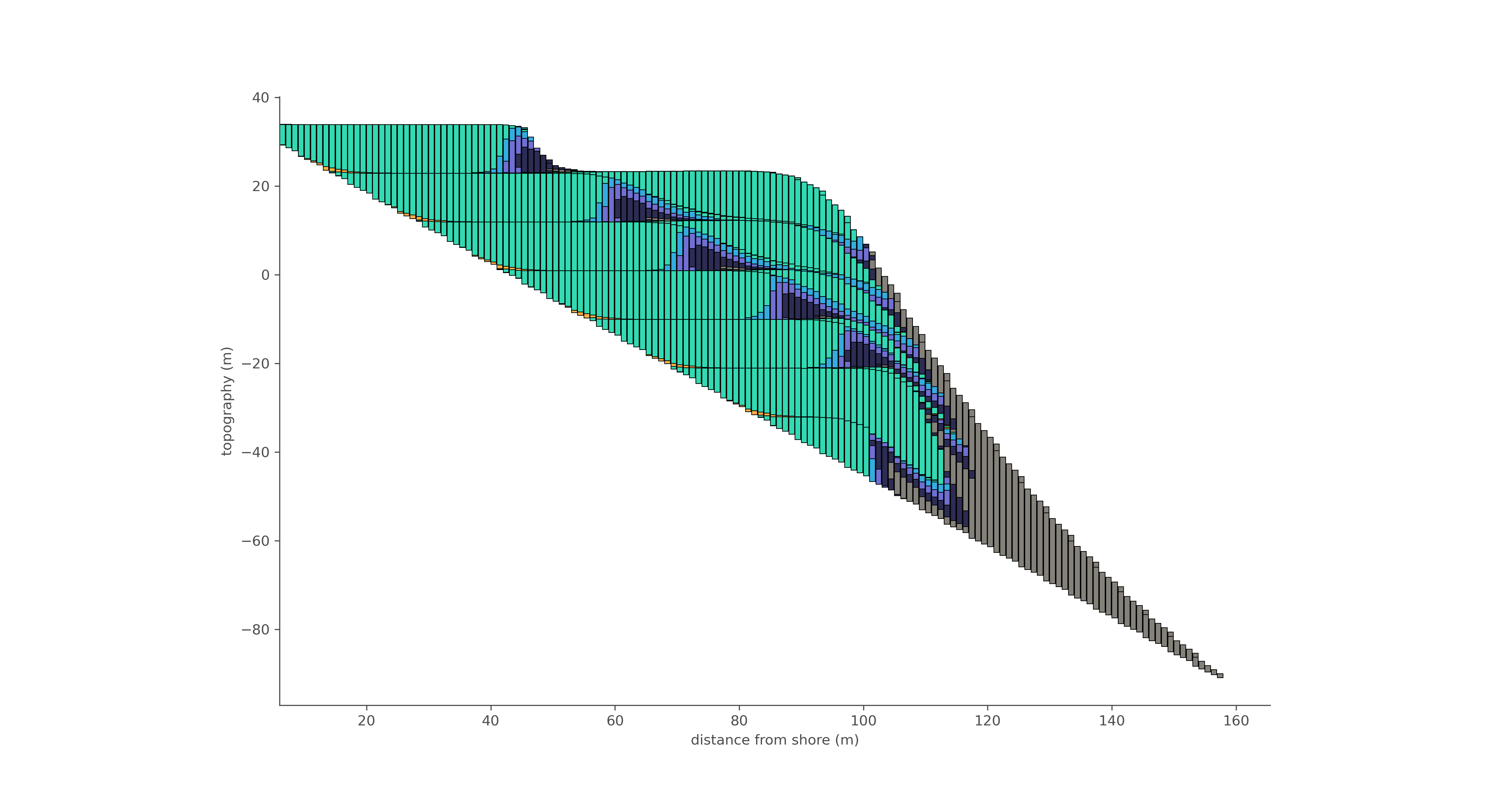
Simple sea level cycles: time vs topography
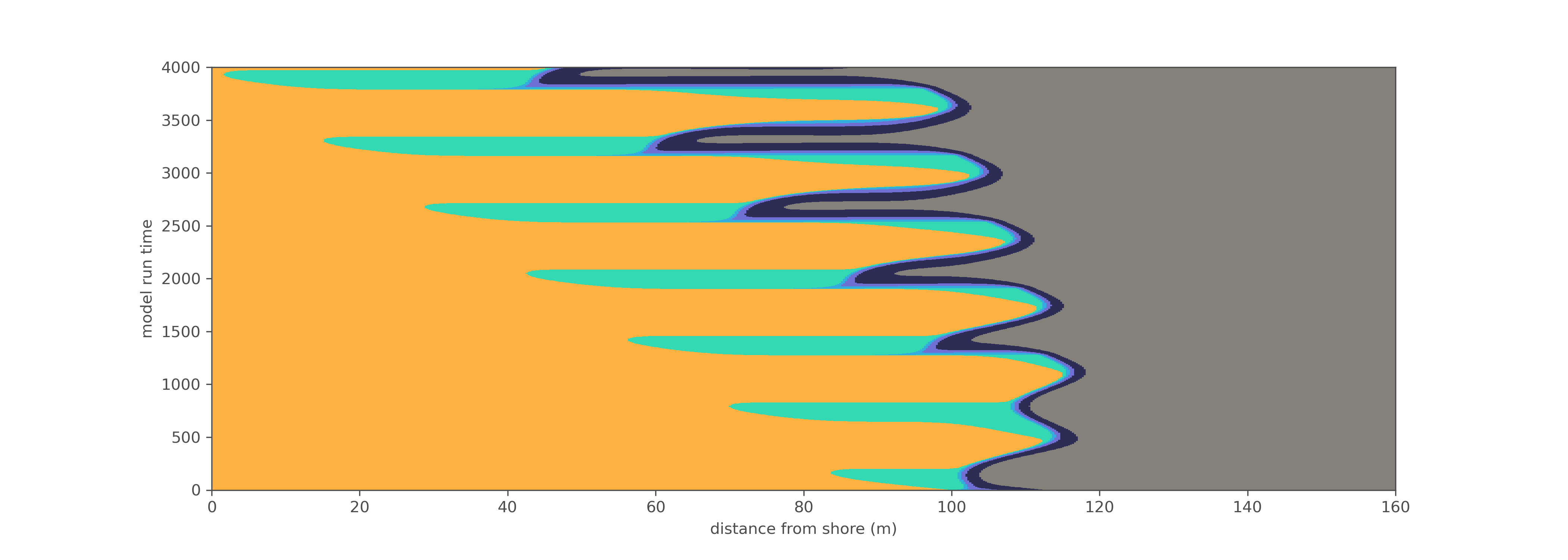
Simple sea level cycles: time vs topography
Simple sea level cycles: time vs topography (erosion)
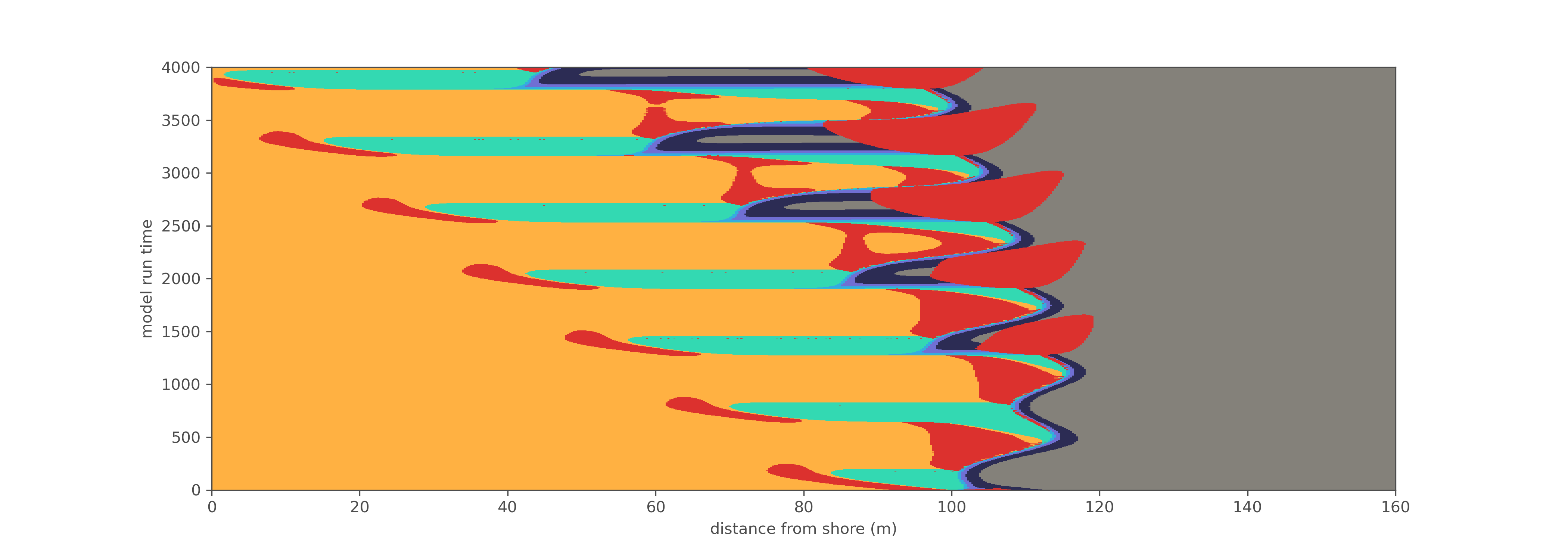
Simple sea level cycles: time vs topography (erosion and hiatus)
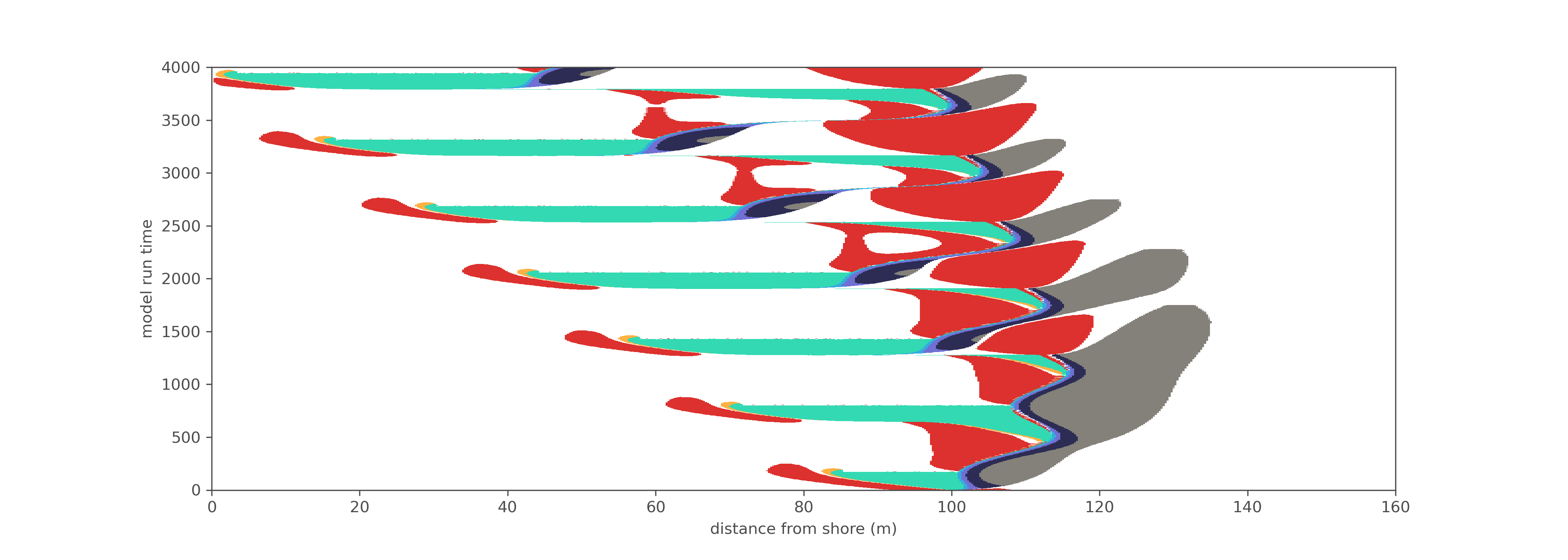
Simple sea level cycles: Wheeler diagram
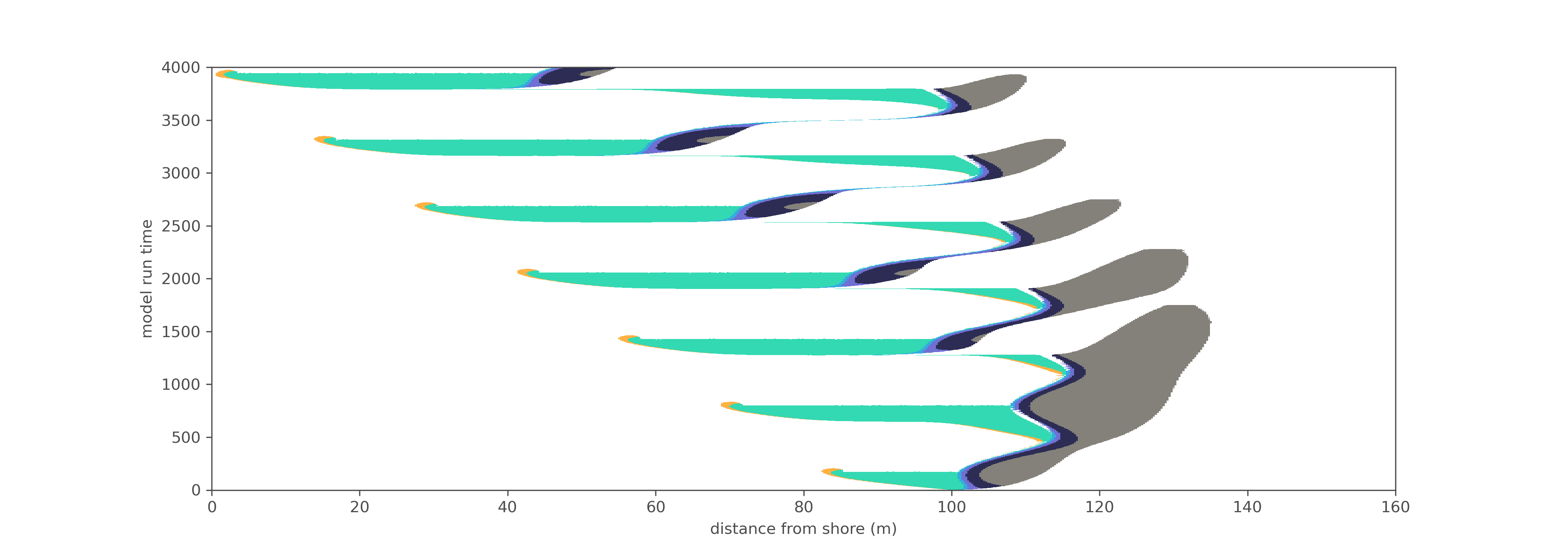
Simple sea level cycles: Wheeler diagram
Simple sea level cycles: stratigraphic profile
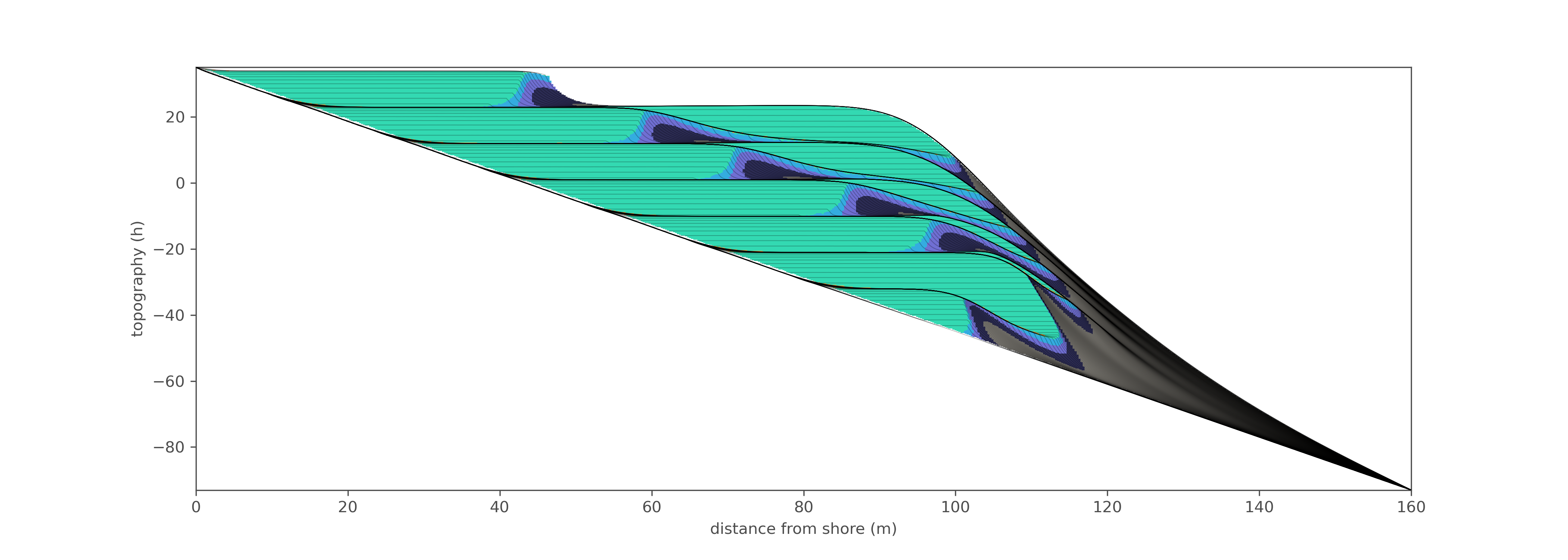
Class example 1: stratigraphic columns
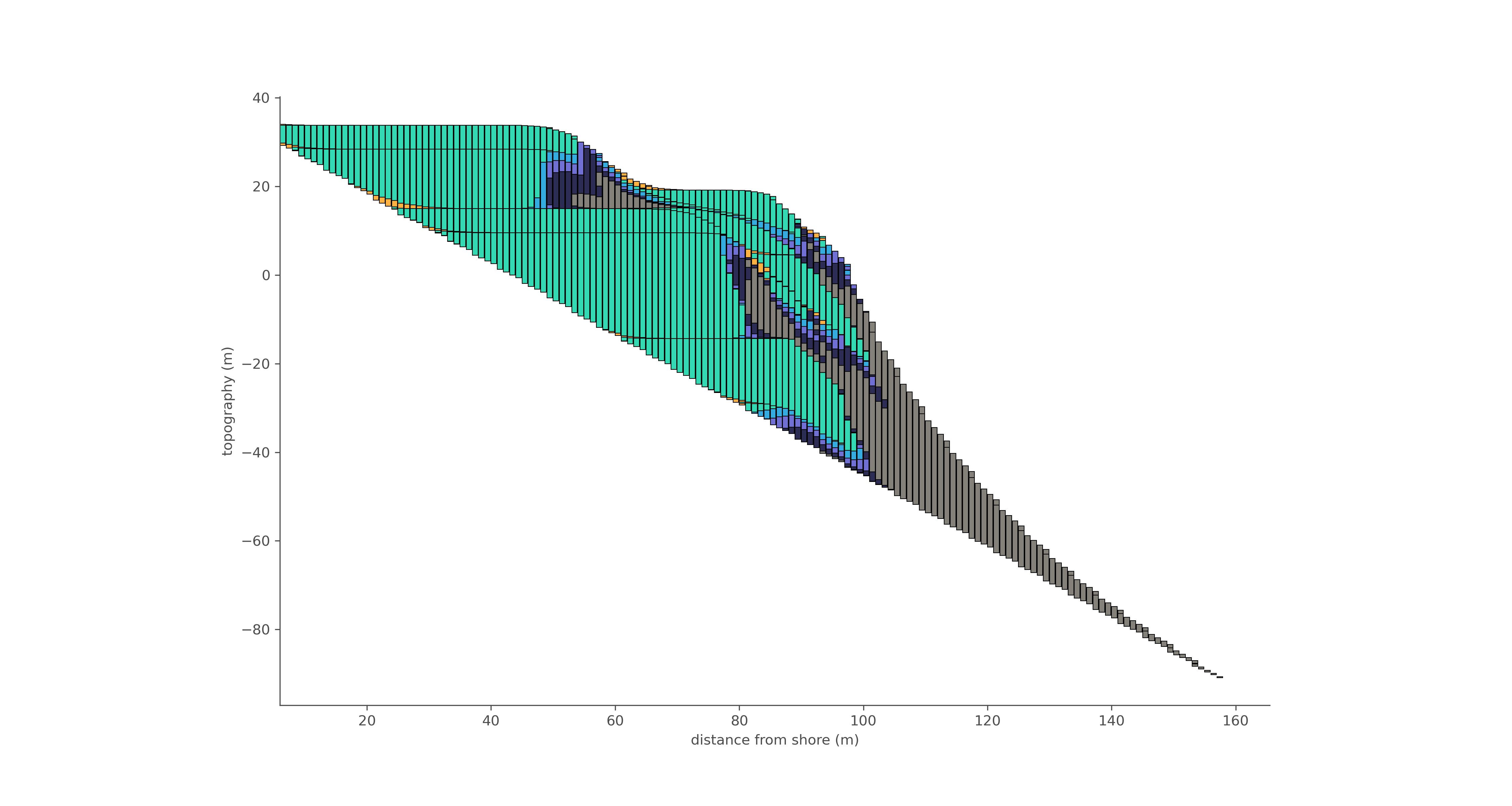
Class example 1: time vs topography
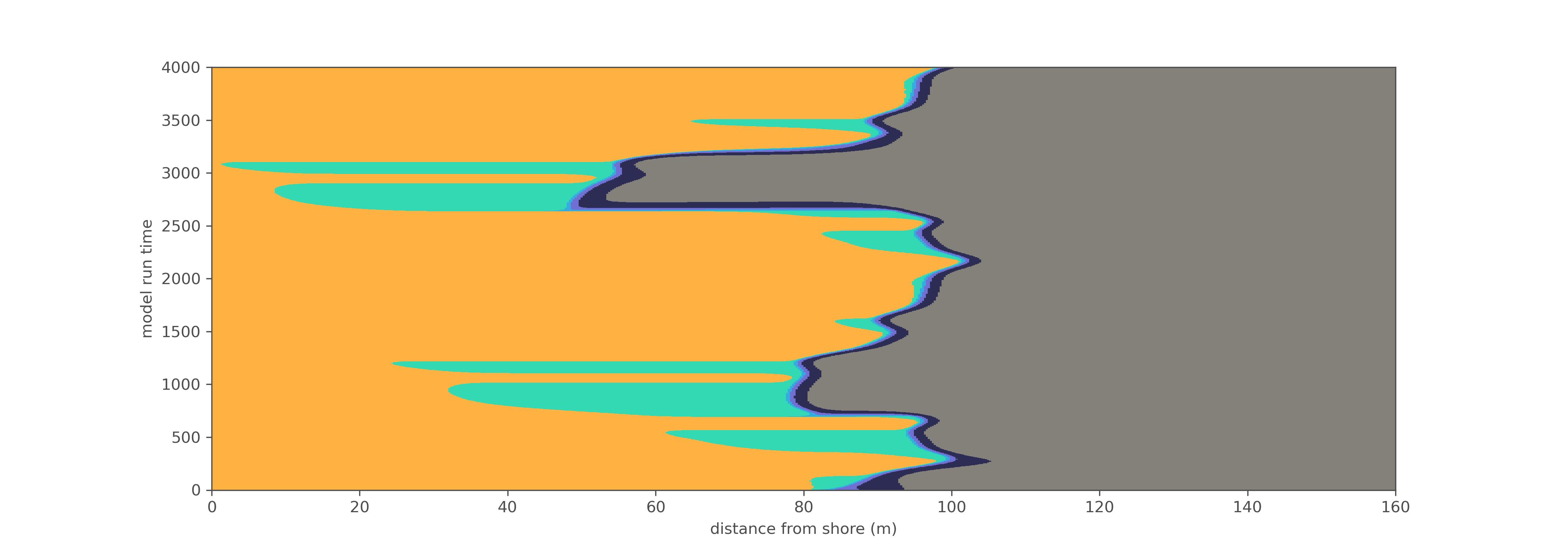
Class example 1: time vs topography (erosion)
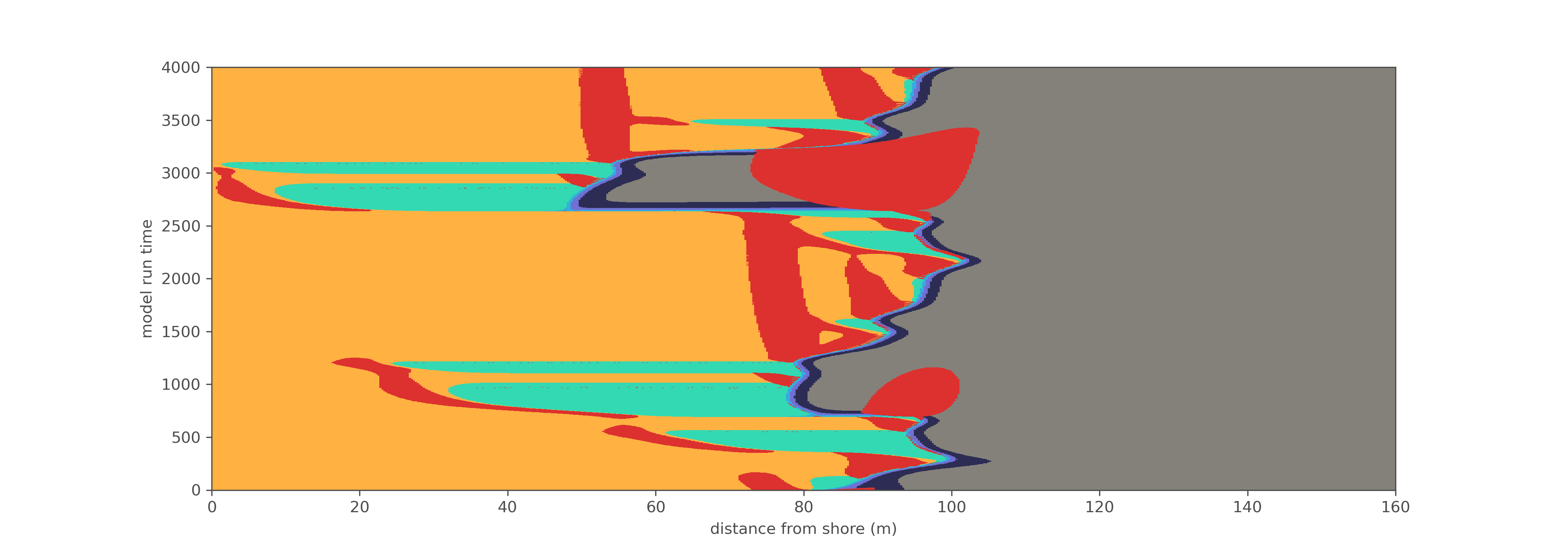
Class example 1: time vs topography (erosion and hiatus)
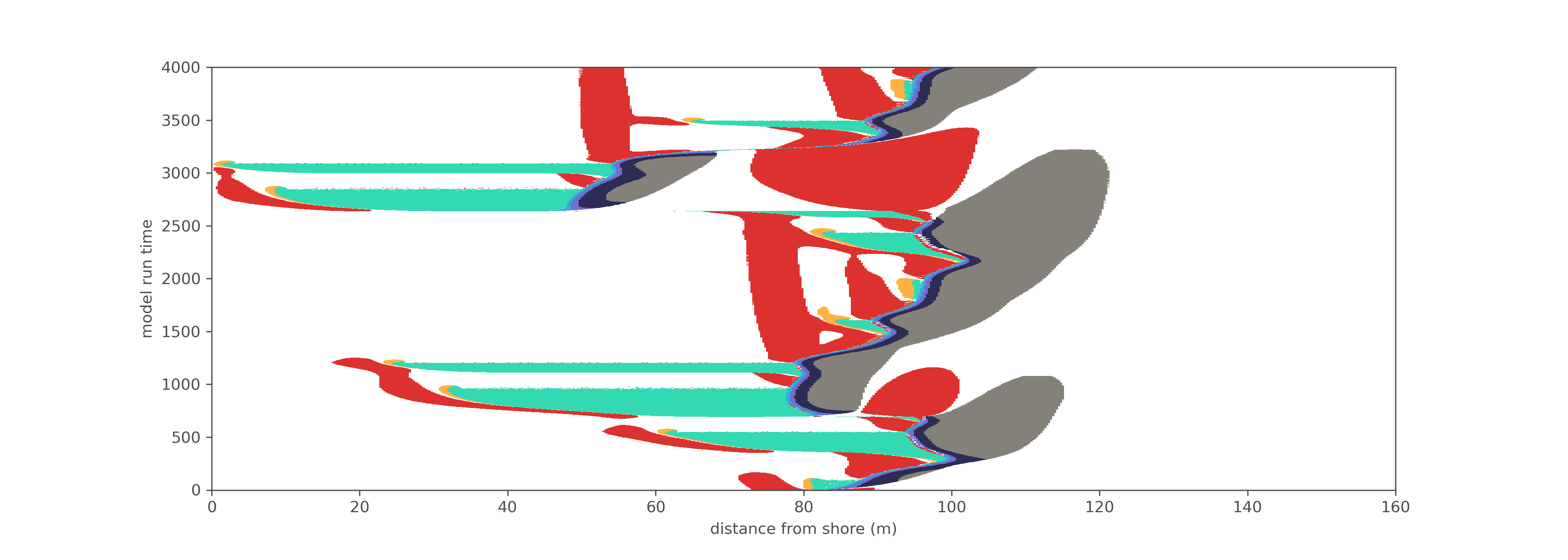
Class example 1: Wheeler diagram
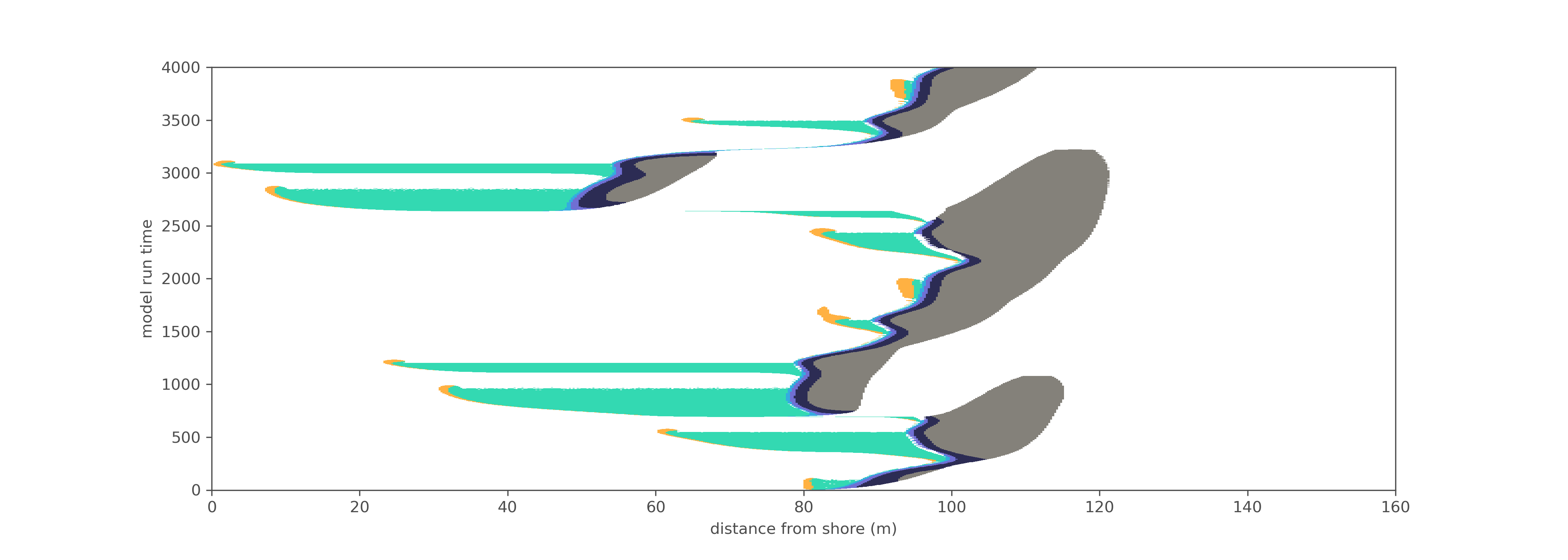
Class example 1: stratigraphic profile
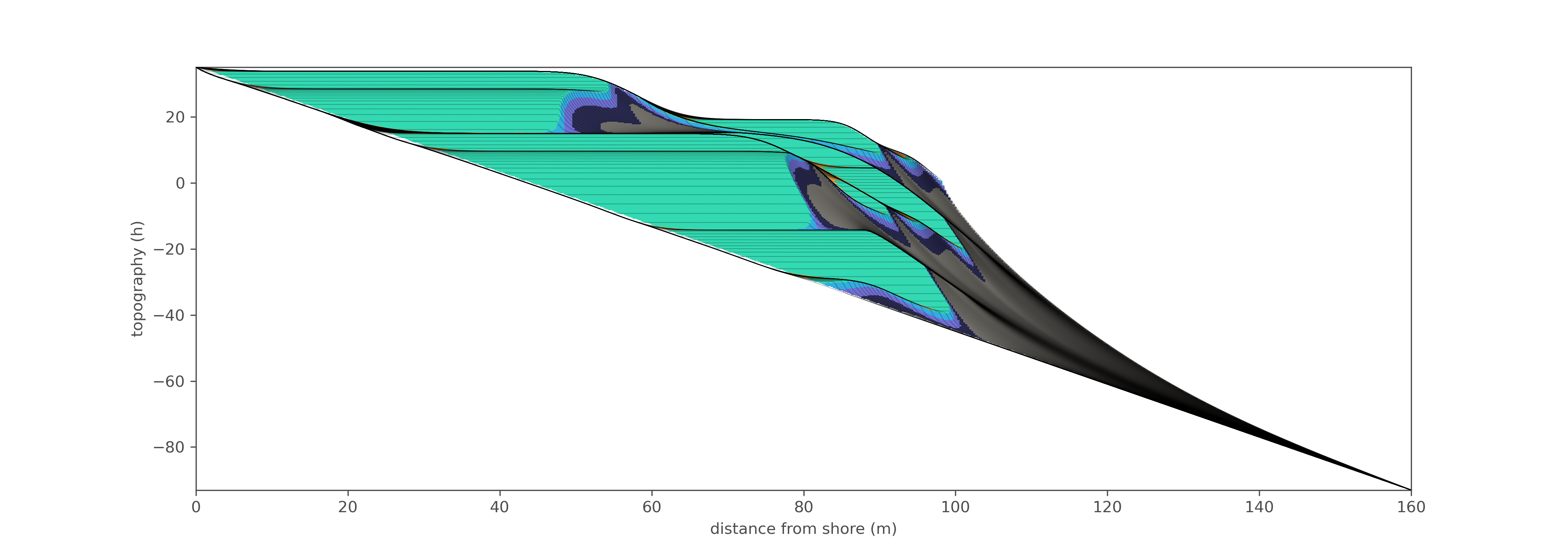
Class example 2: stratigraphic columns
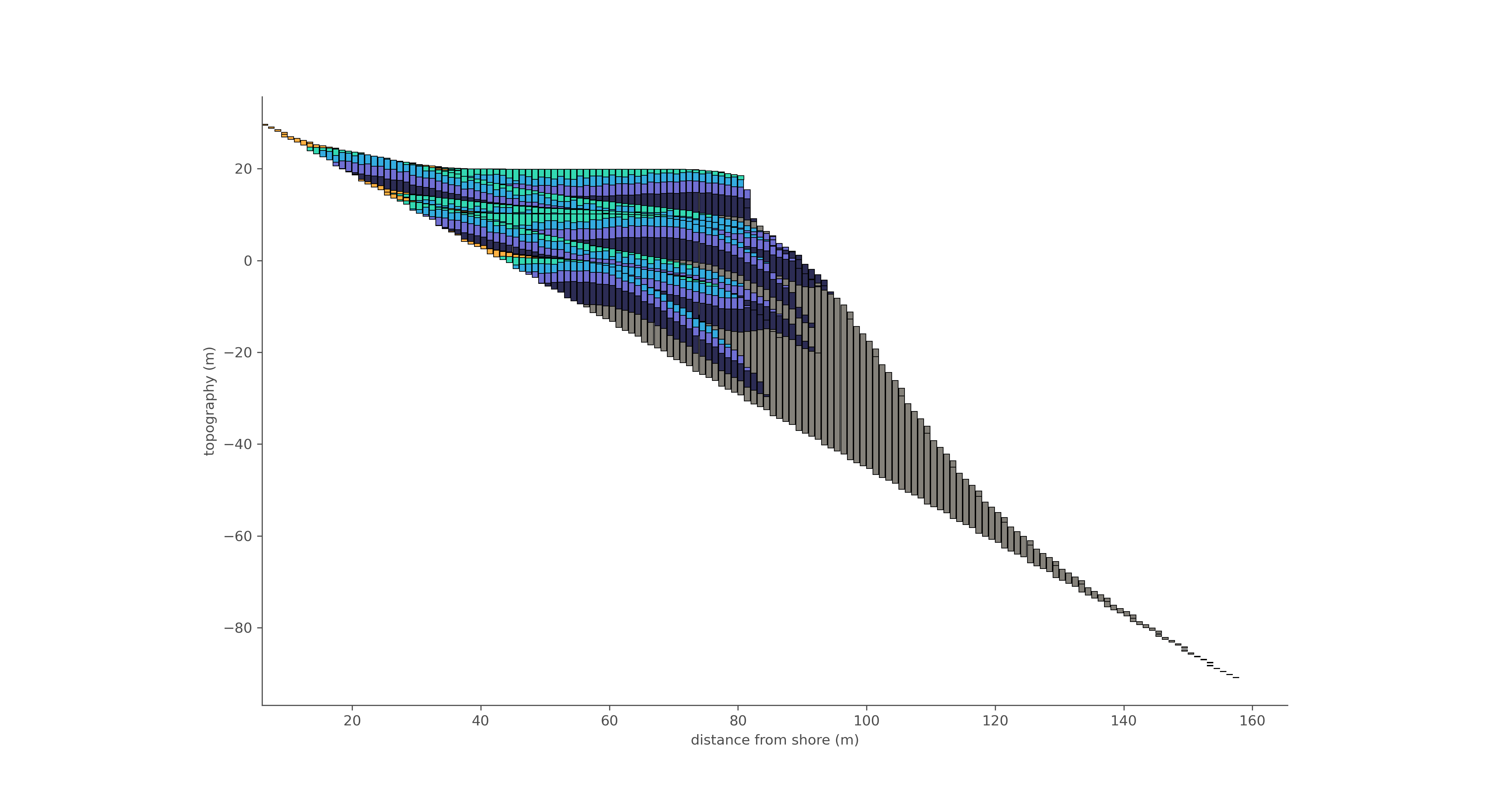
Class example 2: time vs topography
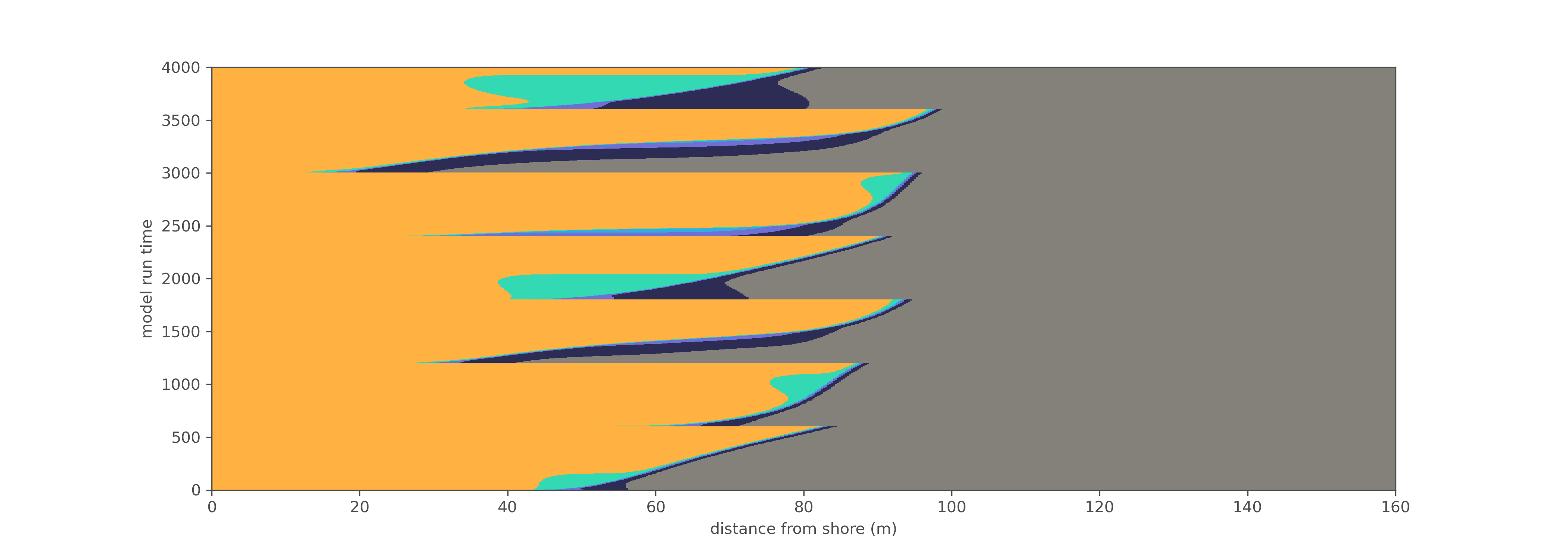
Class example 2: time vs topography (erosion)
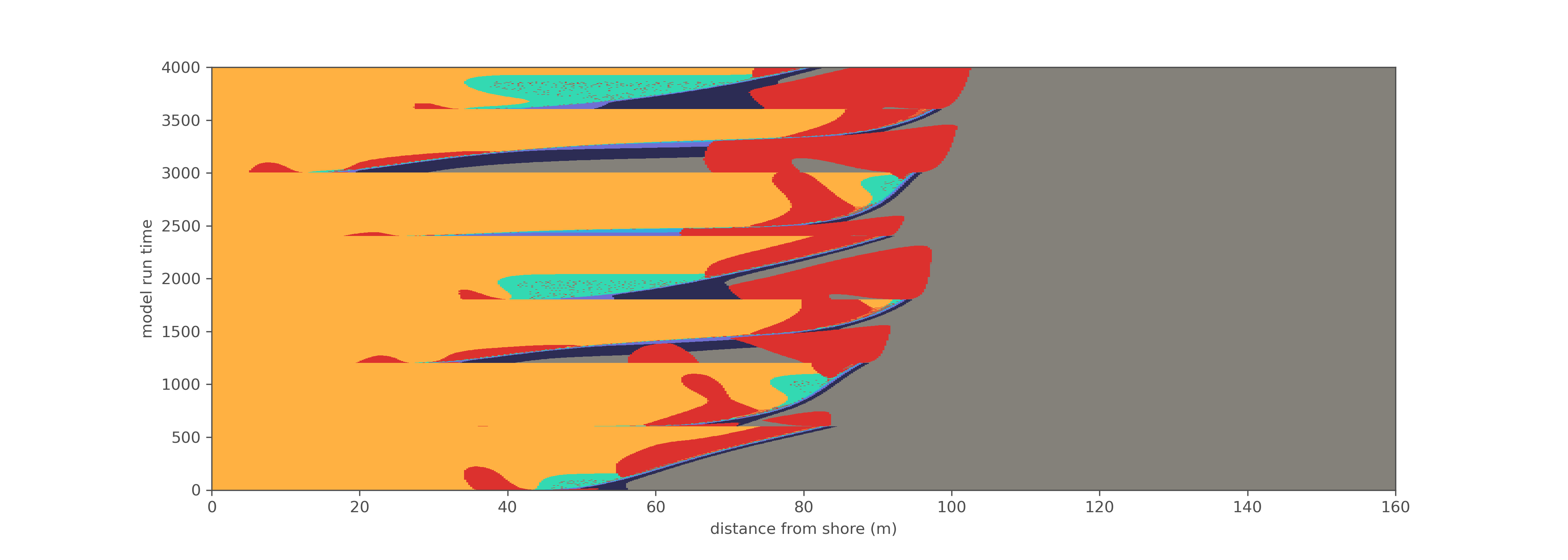
Class example 2: time vs topography (erosion and hiatus)
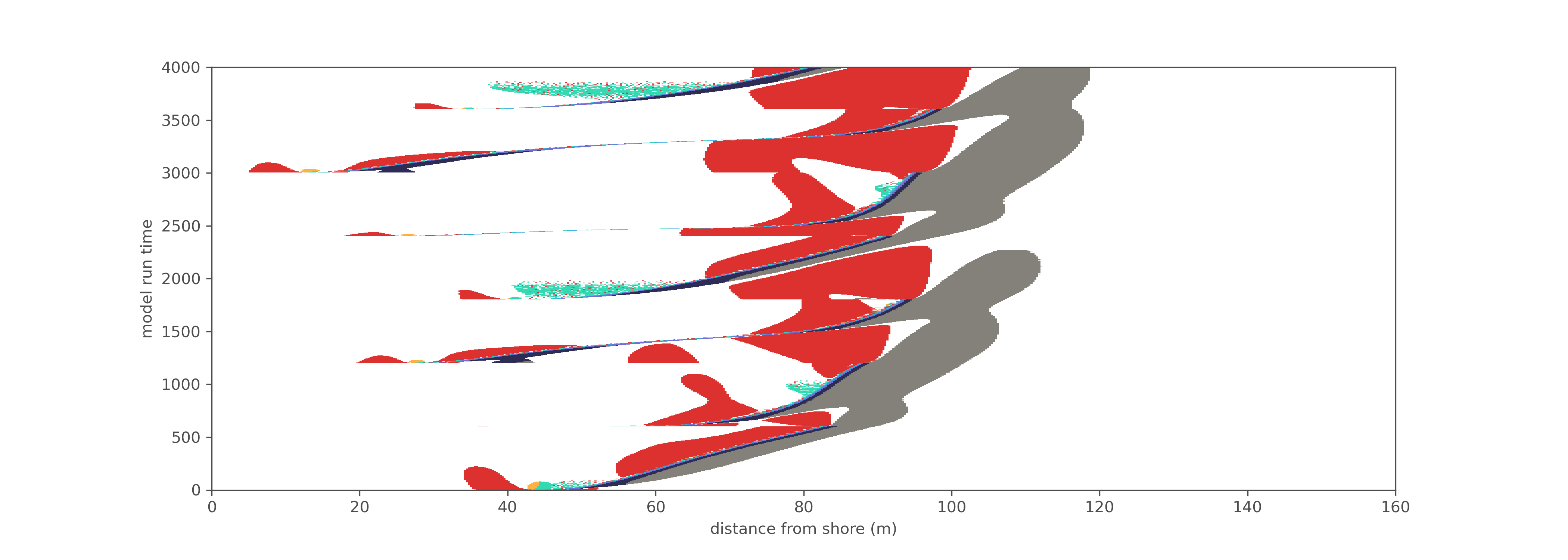
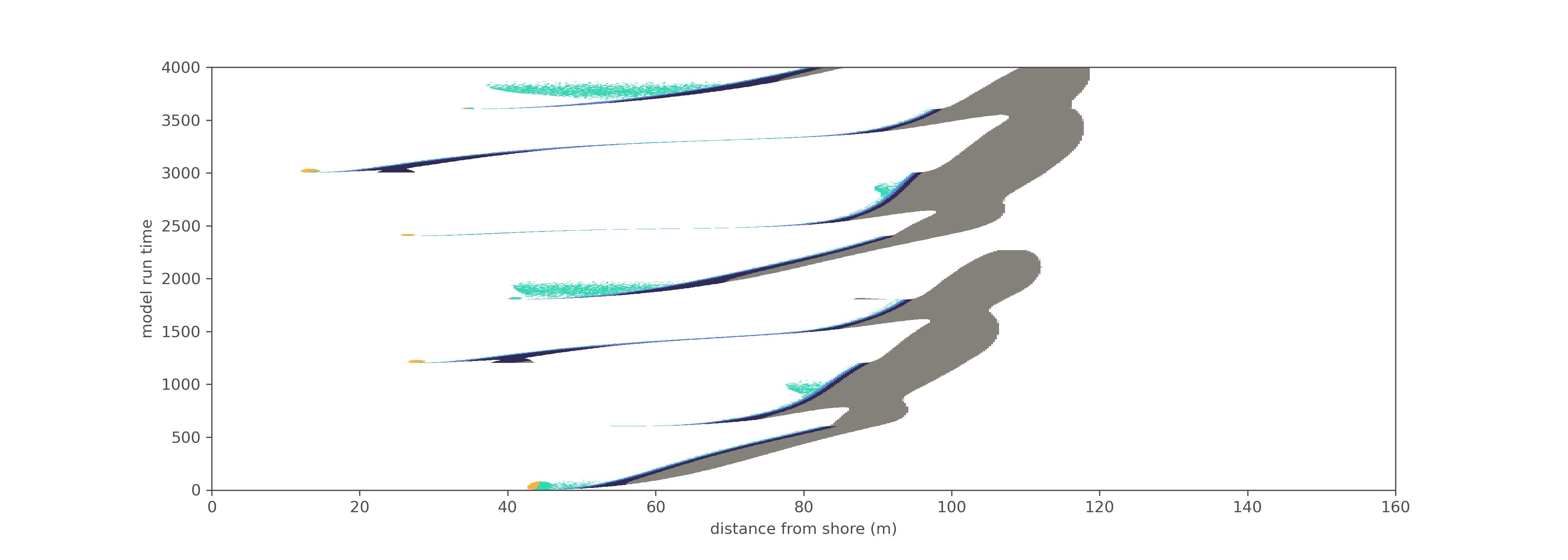
Class example 2: Wheeler diagram
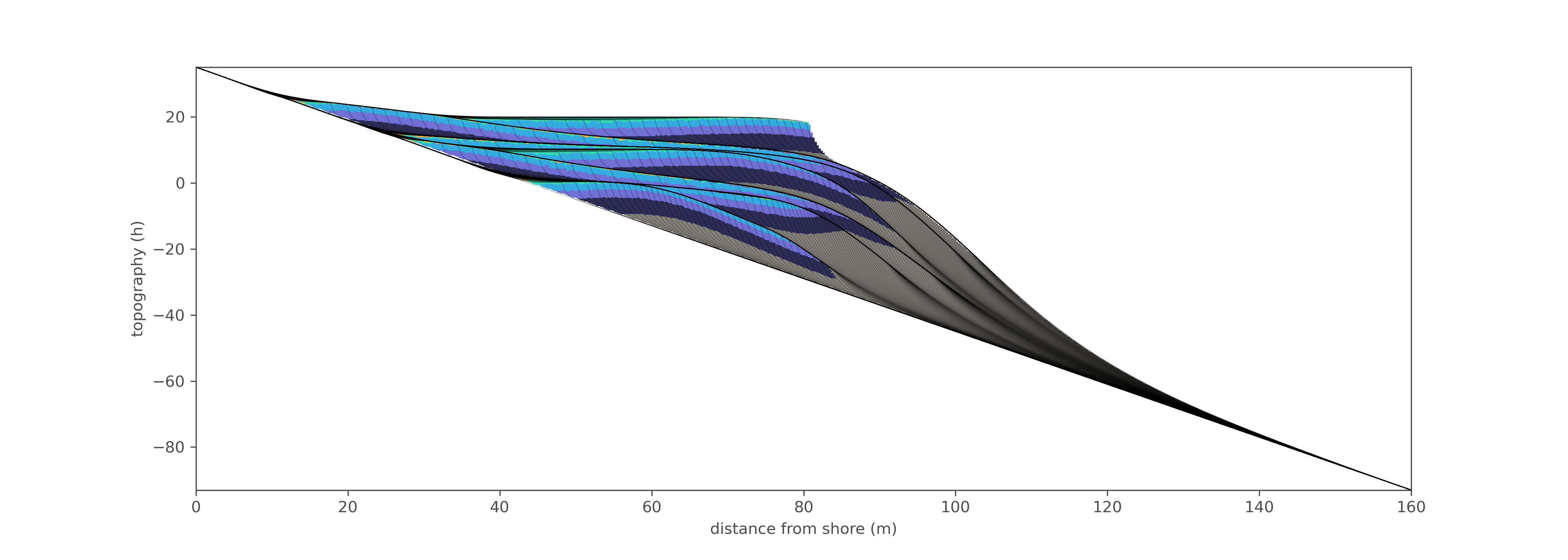
Class example 2: stratigraphic profile
On/Off sediment supply with constant subsidence: time vs topography
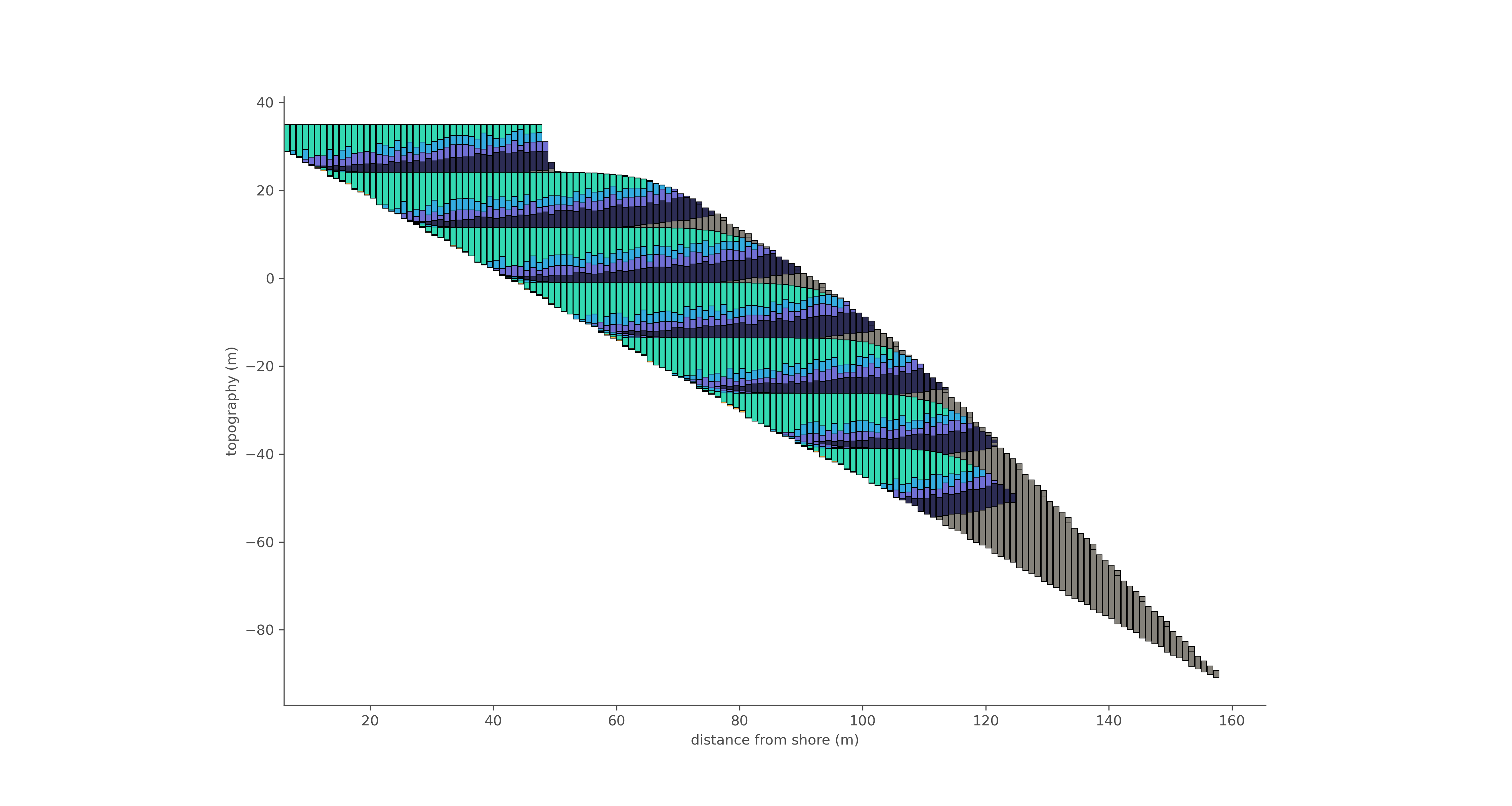
On/Off sediment supply with constant subsidence: time vs topography
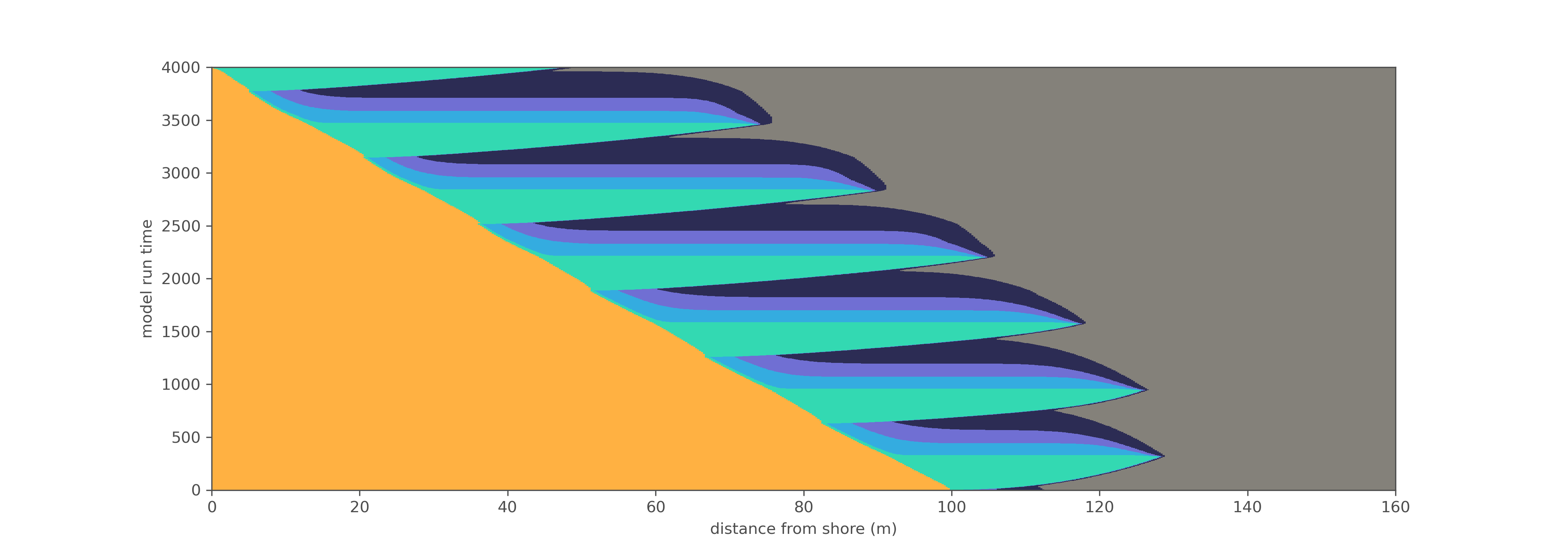
On/Off sediment supply with constant subsidence: time vs topography (erosion)
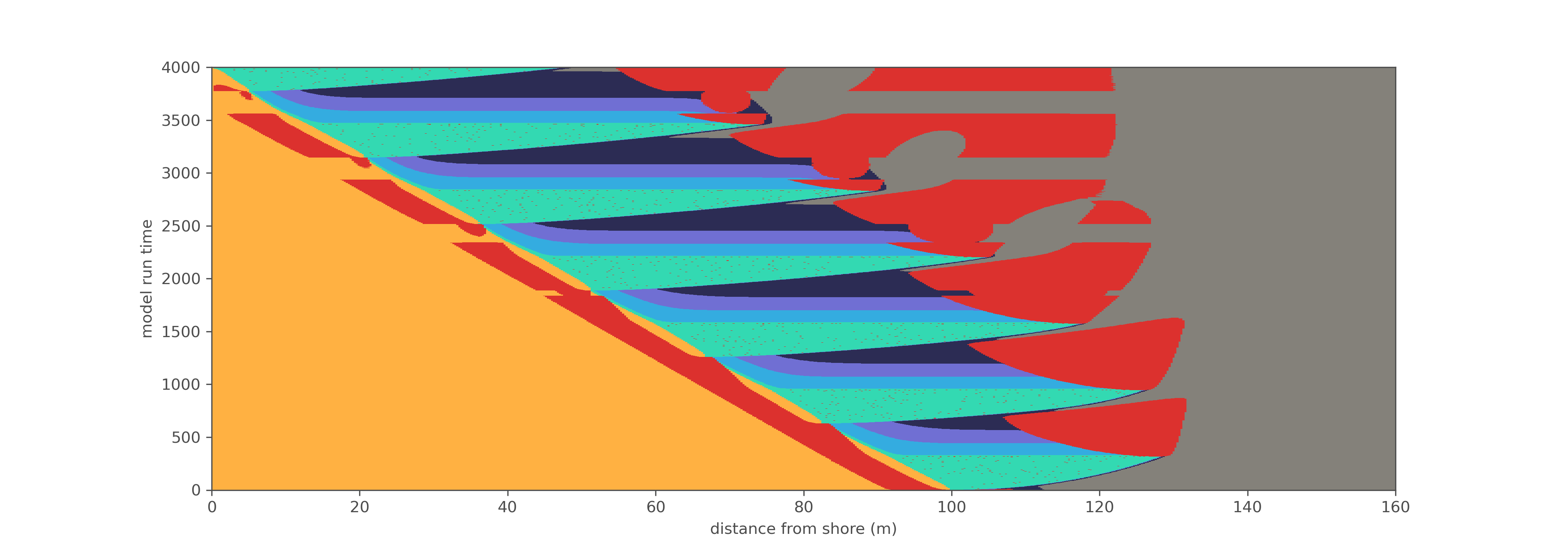
On/Off sediment supply with constant subsidence: time vs topography (erosion and hiatus)
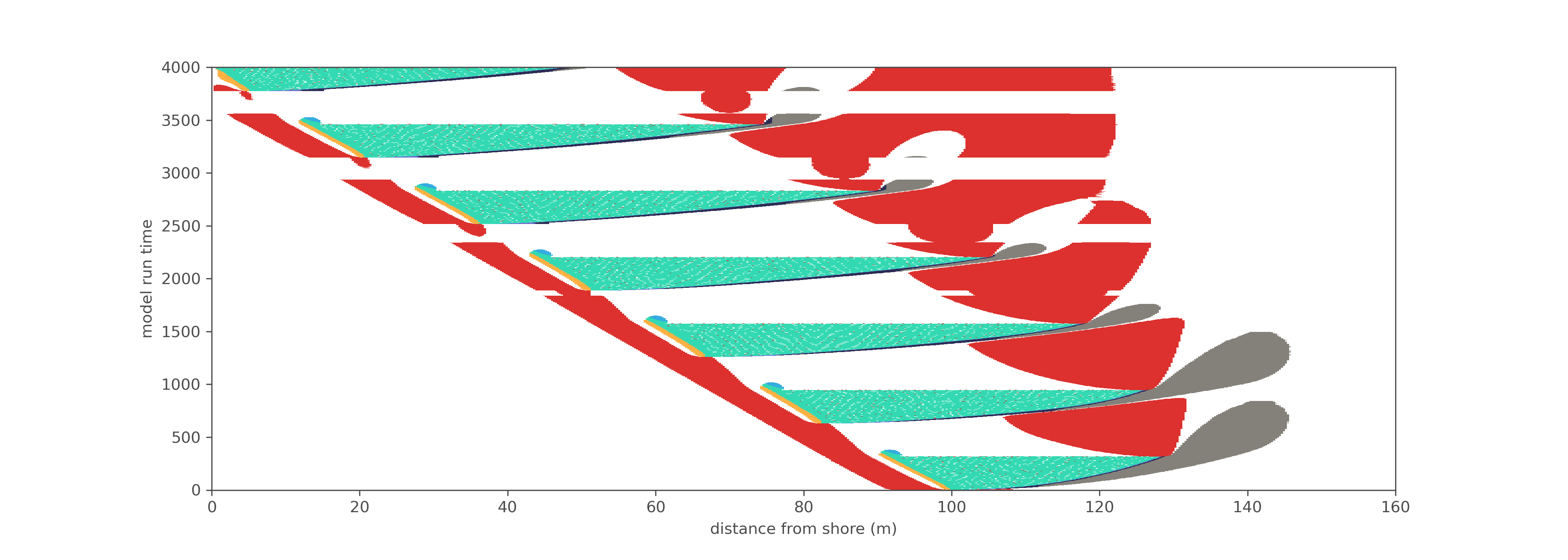
On/Off sediment supply with constant subsidence: Wheeler diagram
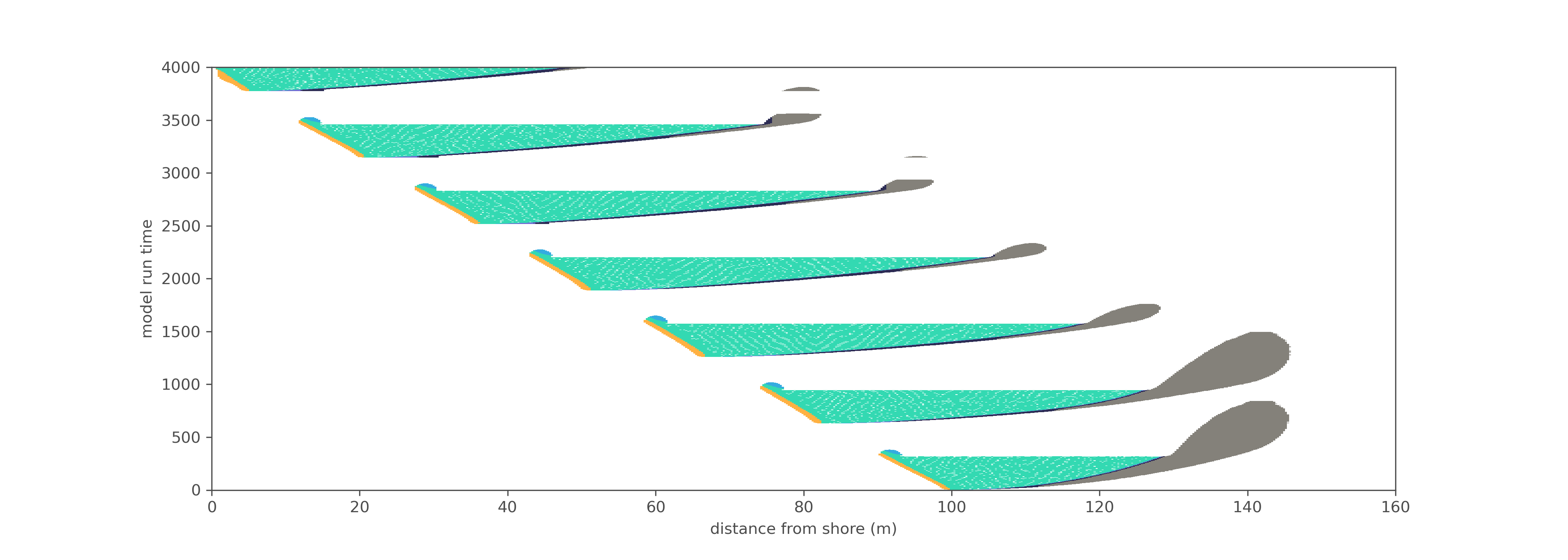
On/Off sediment supply with constant subsidence: stratigraphic profile