Lecture 12: Introduction to Age Models
- The importance of knowing time
- Building an age model
- Markov chain Monte Carlo approaches
- constant sedimentation rates
- varying sedimentation rates
We acknowledge and respect the lək̓ʷəŋən peoples on whose traditional territory the university stands and the Songhees, Esquimalt and W̱SÁNEĆ peoples whose historical relationships with the land continue to this day.
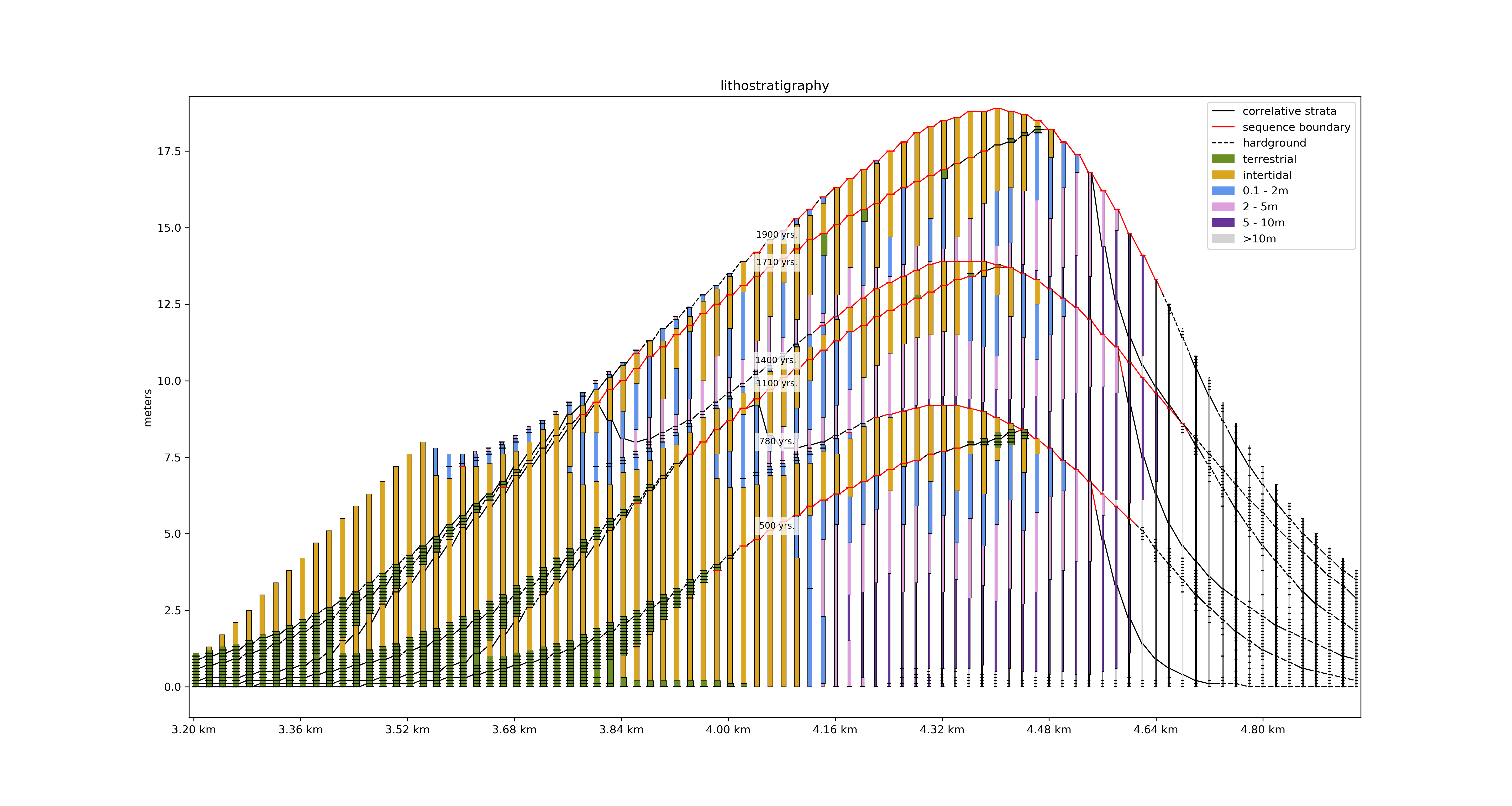
Importance of knowing time
Importance of knowing time
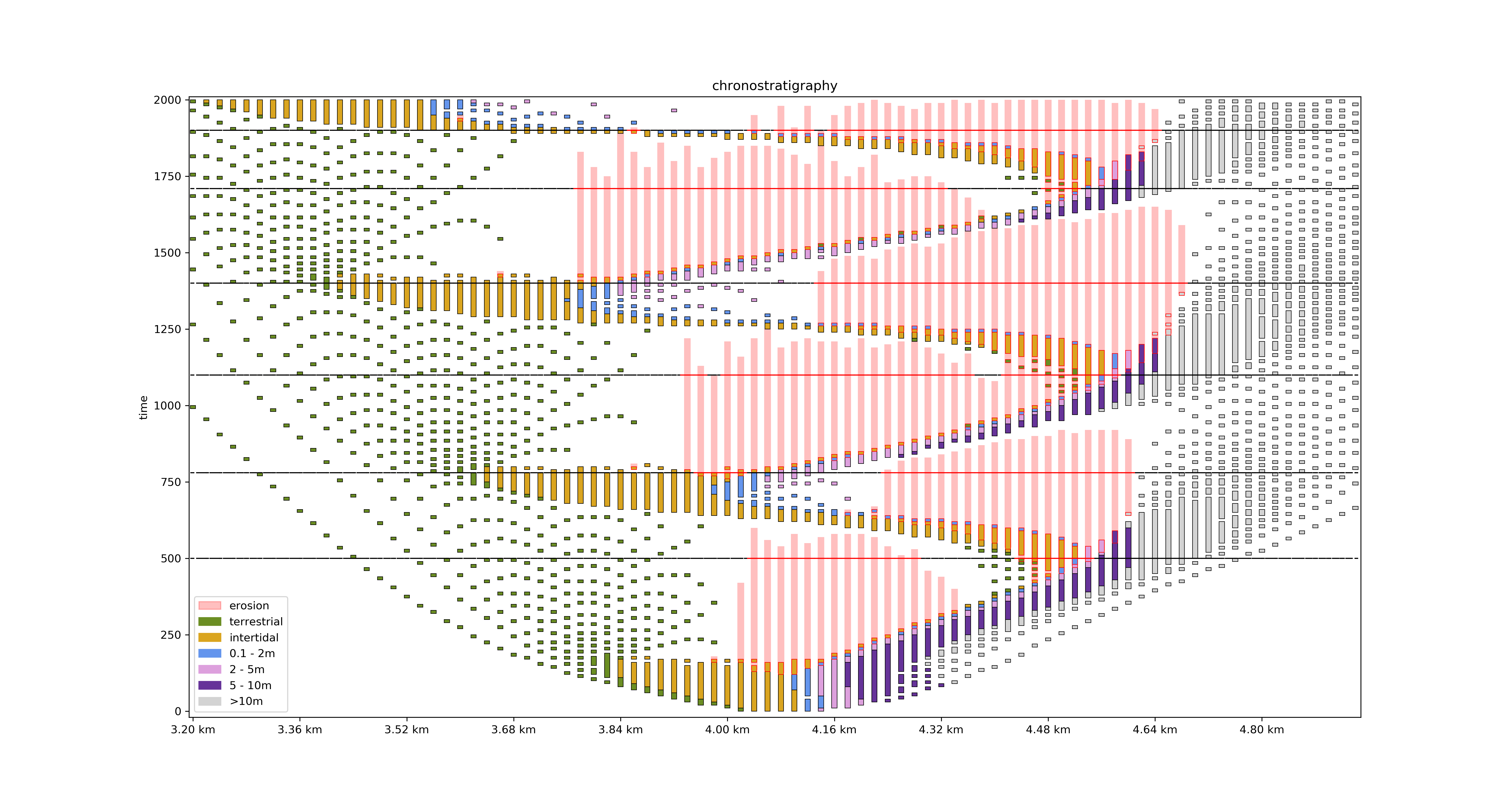
Age models are important: how do we get them?
- Cyclostratigraphy
- Biostratigraphy
- Absolute ages
- U-Pb (volcanics), Ar-Ar (volcanics), Re-Os (sediments)
- Signal matching
- magnetostratigraphy
- chemostratigraphy
- Relative ages
- Amino Acid Racemization
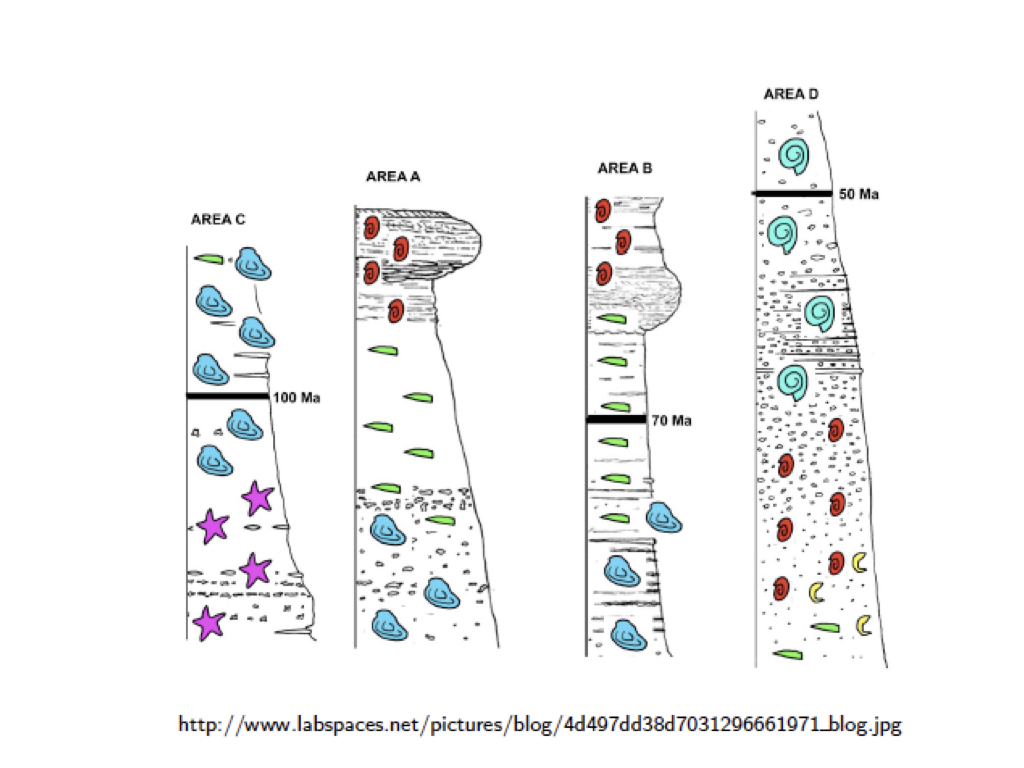
Biostratigraphy
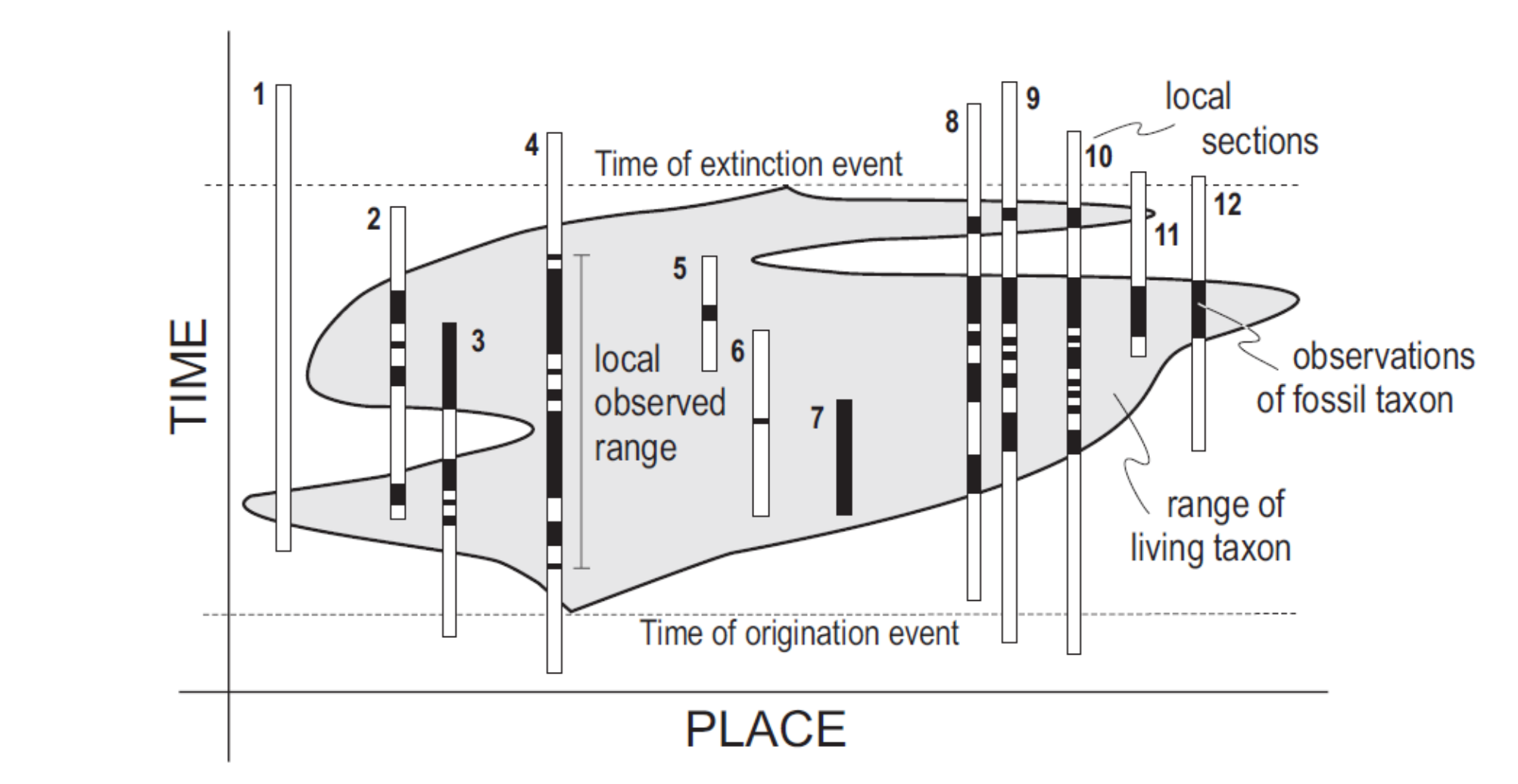
- based on the unique, sequential, nonrepeating appearance of fossils through time
- observations are: first appearance and last appearance per section
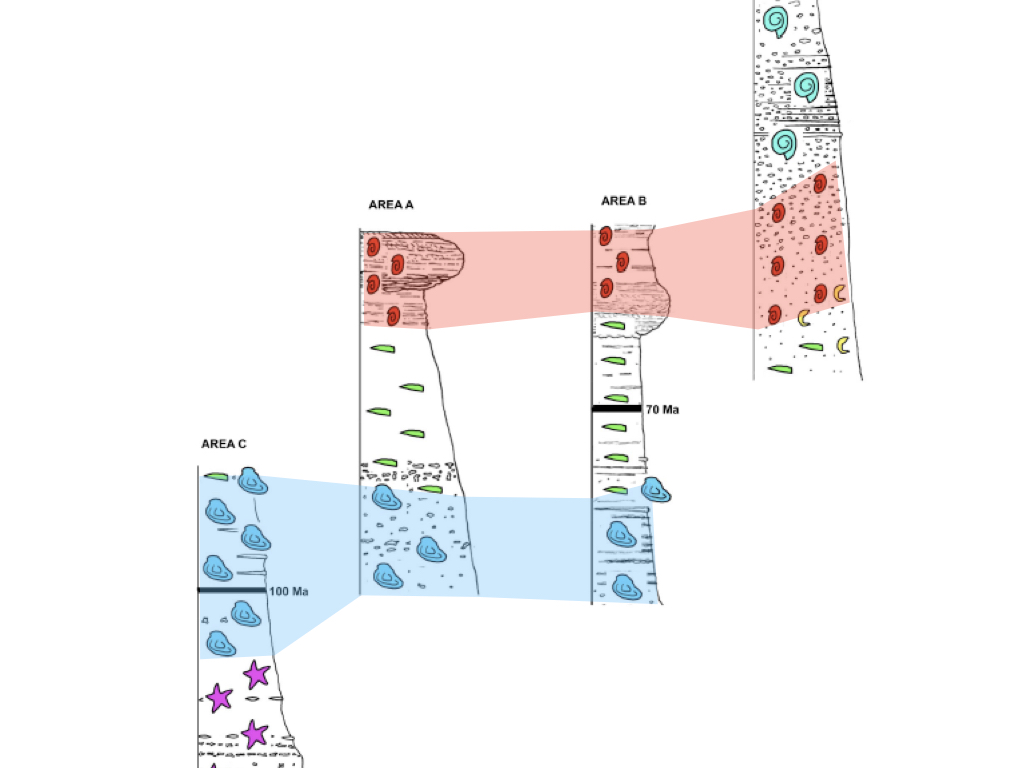
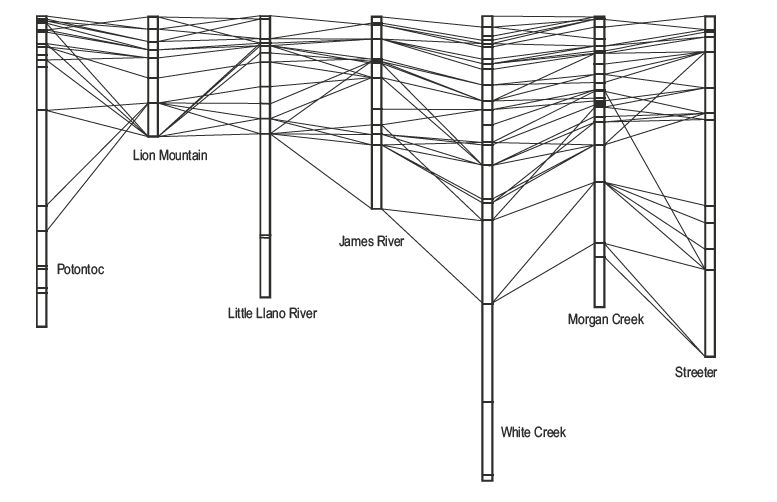
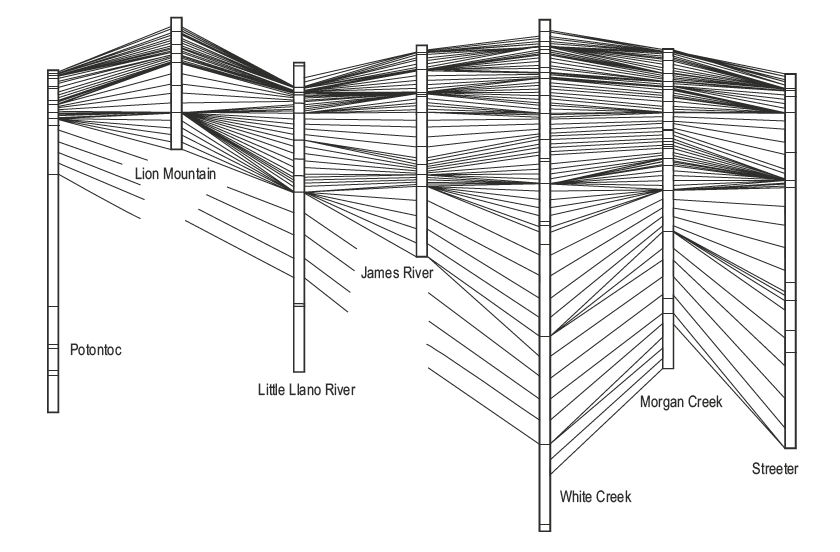
- what is wrong with this picture?
- fence diagram (correlation) of the observed FADs and LAD between 7 sections that preserve 62 taxa of the Cambrian Riley Formation of Texas (data from Palmer, 1954; Shaw, 1964).
- lines are meant to represent time lines, so equal time
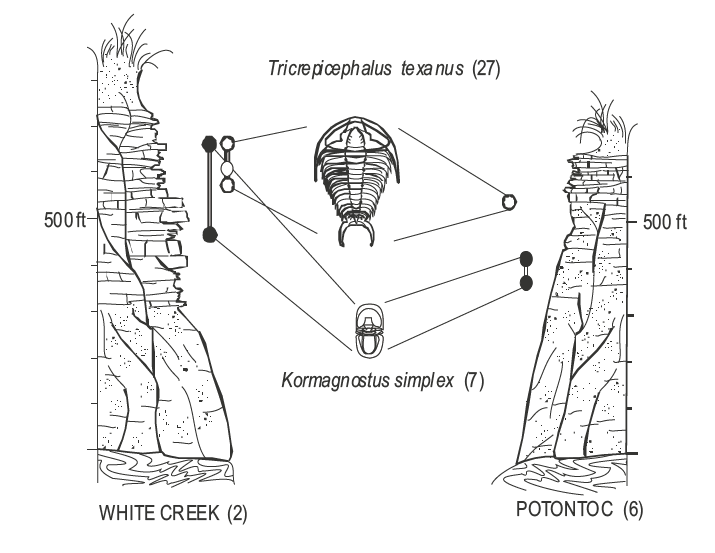
Contradictory ranges
Resolving contradictory ranges
- ranges of original data need modifcation to be consistent everywhere (time goes left to right)
Resolving contradictory ranges
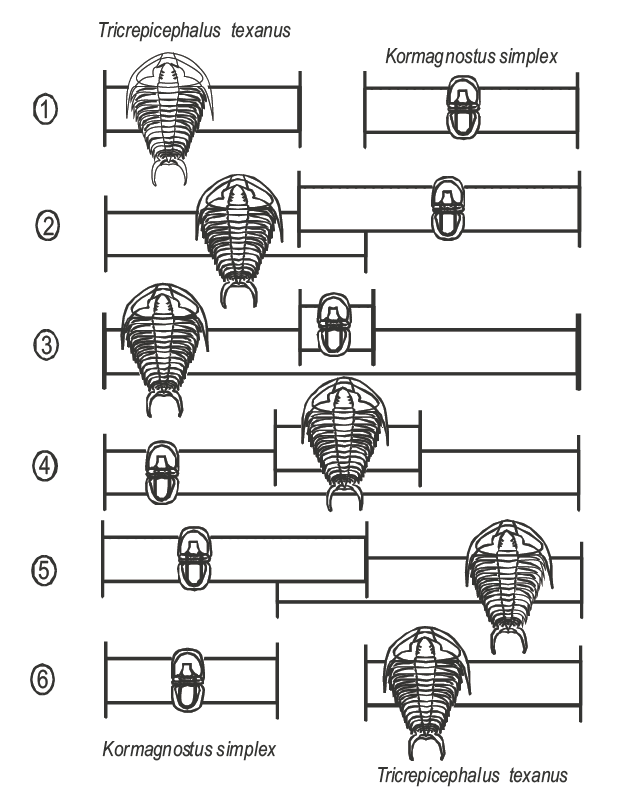
- can we rule any out? working out the possibilities not so hard with just two taxa..
Resolving contradictory ranges
- can we rule any out? working out the possibilities not so hard with just two taxa.. 90 options with 3,
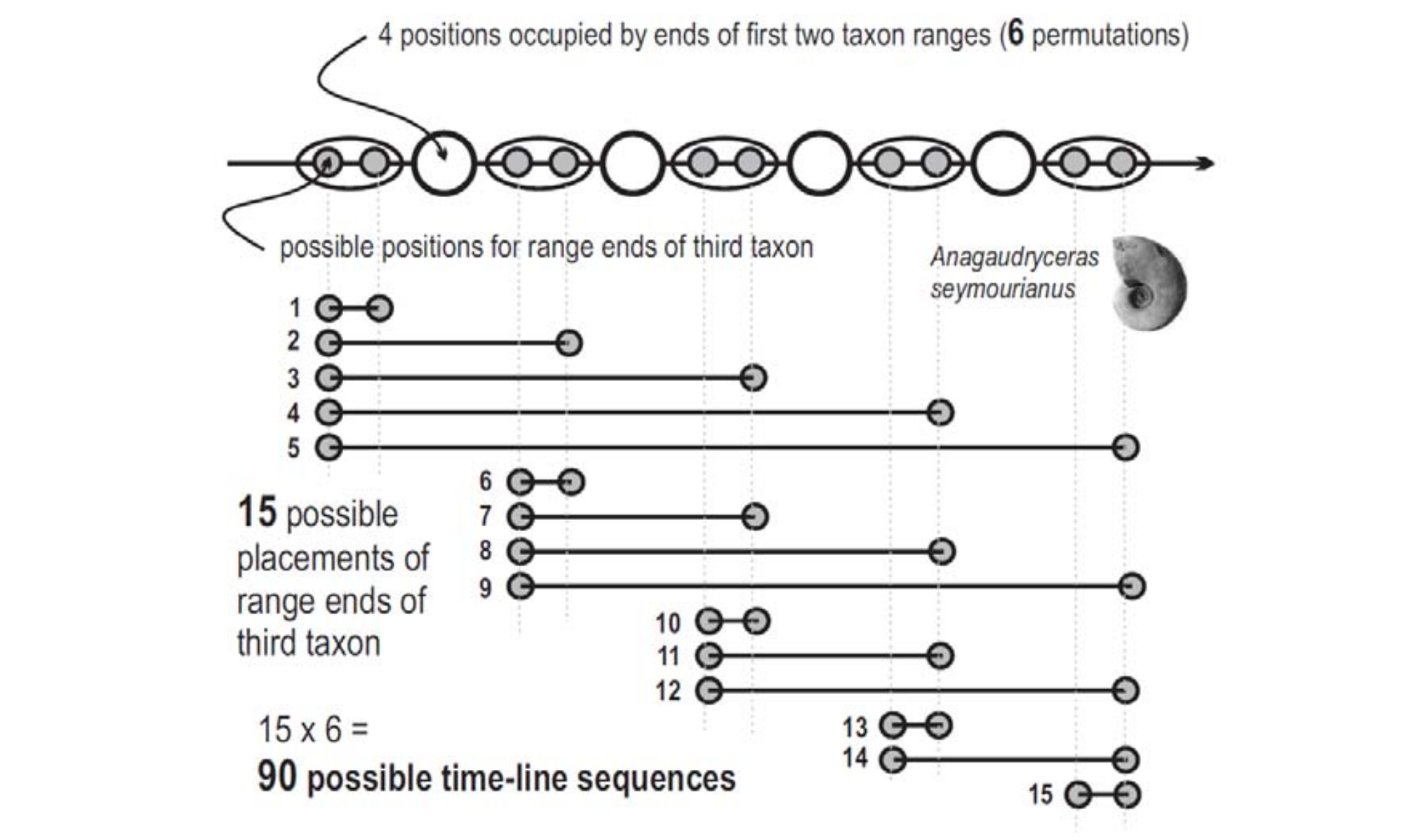
- in actuality, there are 6 different possibilities that could be considered
- time is older on the left, and younger on the right
- we can rule out some of these, because we have direct evidence of coexistence
- this is pretty tractable, and we could pretty quickly come up with a solution
- a guiding principle is, do the MINIMUM amount of modification needed to make the ranges consistent
- OK, but what if we are dealing with THREE TAXA
- number of possibilities grows to 90
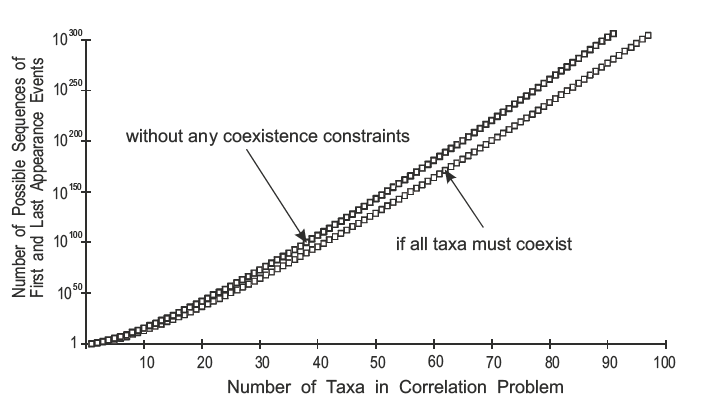
Number of possible sequences
- requires constrained optimization (CONOP9; Sadler and Cooper, 2008)
- number of atoms in universe = $10^{82}$
Building an age model
Building an age model
In [18]:
fig=plt.figure(1,figsize=(15,6))
ax=fig.add_subplot(121)
ax,trace,boxes,liths=rando_strat(ax,num_box=5,height=2,boxes=[],liths=[]) #stratigraphy for fun
#ashes in the strat column
for a in ashes:
    tmp_w=trace[(trace[:,0]<=ashes[a]['height']) & (trace[:,1]>ashes[a]['height']),2]
    ax.plot([0,tmp_w],[ashes[a]['height'],ashes[a]['height']],'r--')
#KT boundary
tmp_w=trace[(trace[:,0]<=KT) & (trace[:,1]>KT),2]
ax.plot([0,tmp_w],[KT,KT],'k--')
ax.text(tmp_w,KT,'  KT boundary',verticalalignment='center',fontsize=20)
#ash ages
ax=fig.add_subplot(122)
for a in ashes:
    ax.plot(ashes[a]['age'],ashes[a]['height'],'rs')
ax.plot([66.2,65.95],[KT,KT],'k--')
ax.set_xlim([66.2,65.95]); ax.set_ylim([-0.1,2])
ax.set_ylabel('meters'); _=ax.set_xlabel('age (Ma)')
