Lecture 20: Alkalinity
- Alkalinity
- Examples and practice
We acknowledge and respect the lək̓ʷəŋən peoples on whose traditional territory the university stands and the Songhees, Esquimalt and W̱SÁNEĆ peoples whose historical relationships with the land continue to this day.
An exercise: relative abundance of carbon species in seawater
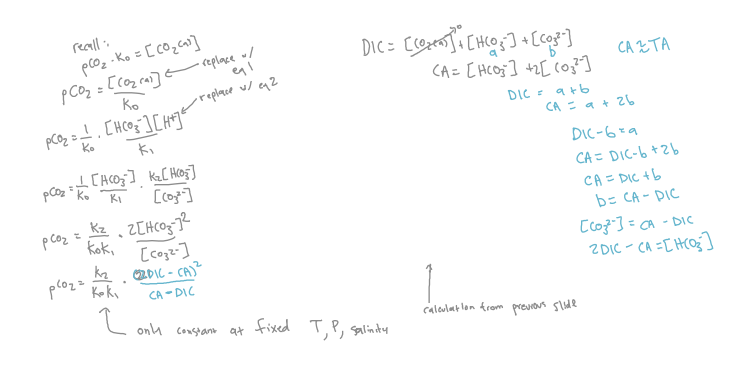
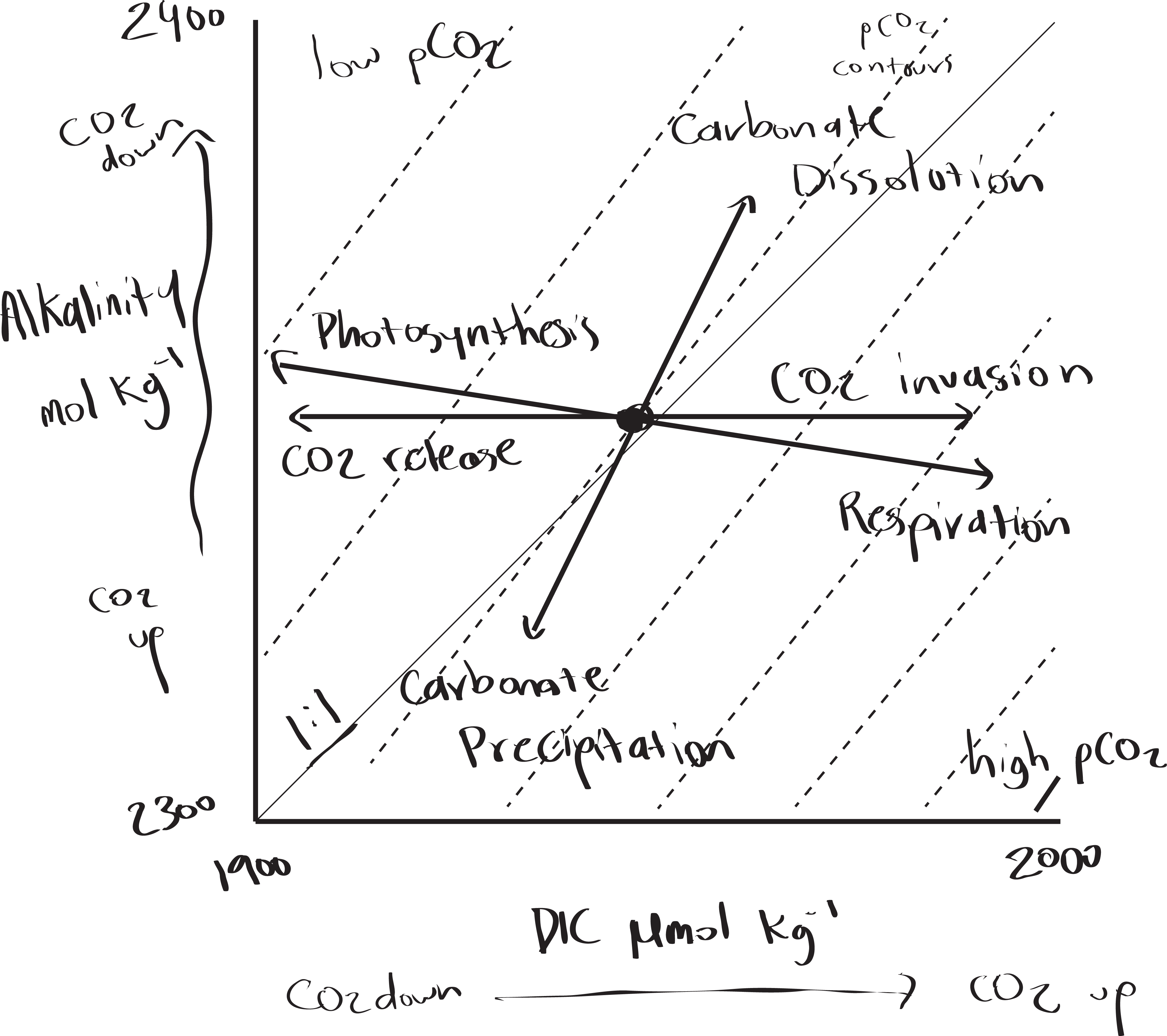
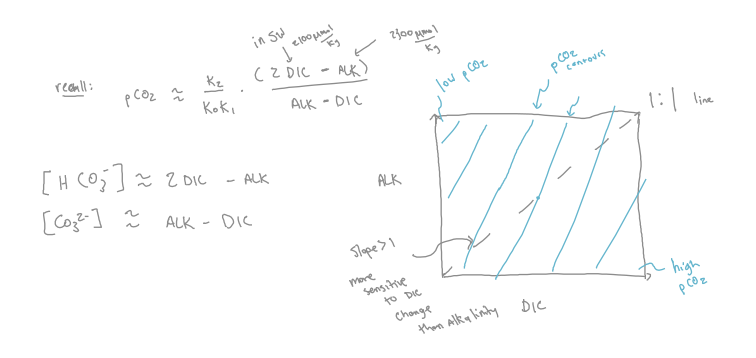
CO2, Alkalinity, and DIC
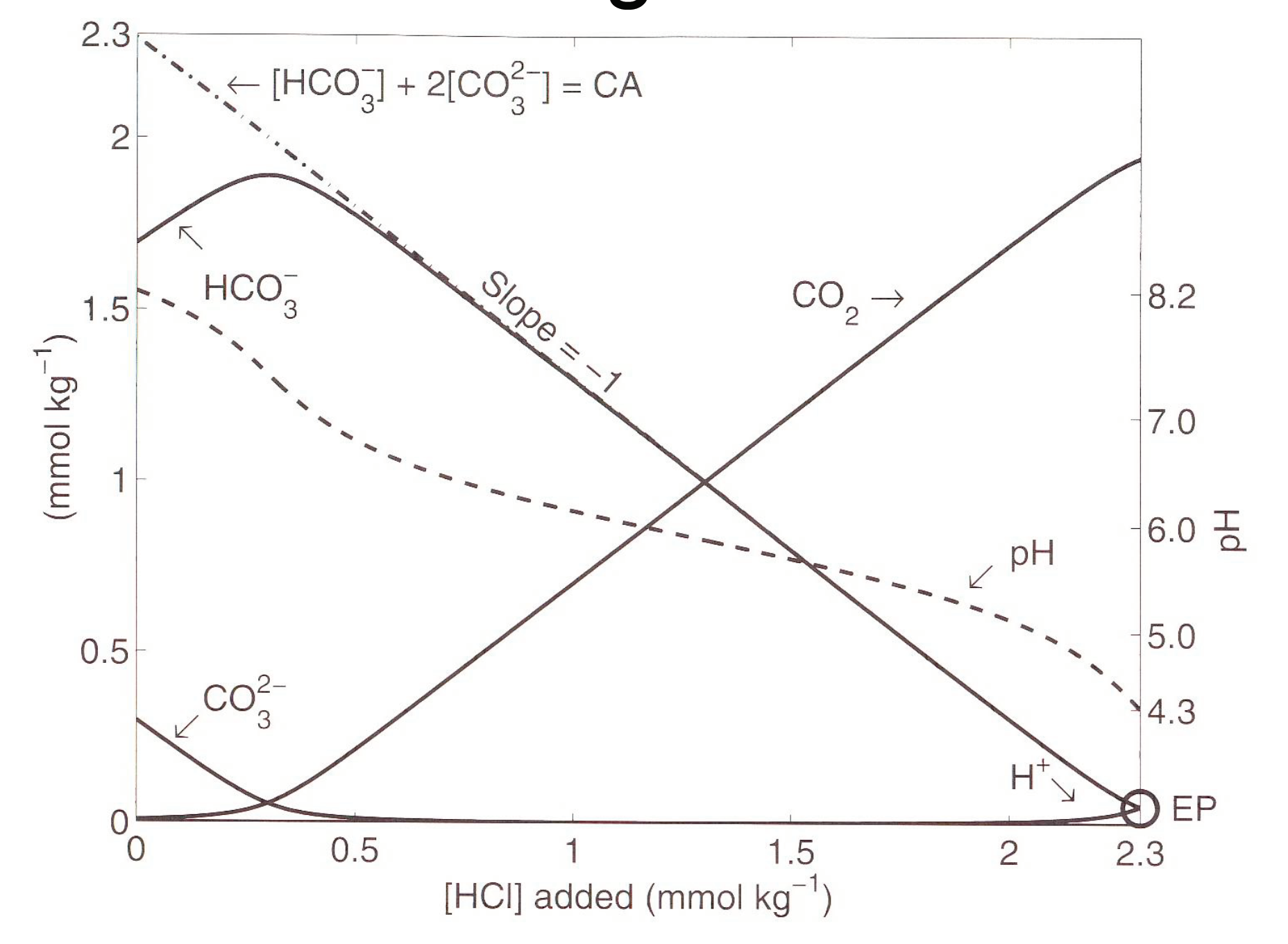
Total Alkalinity (TA)
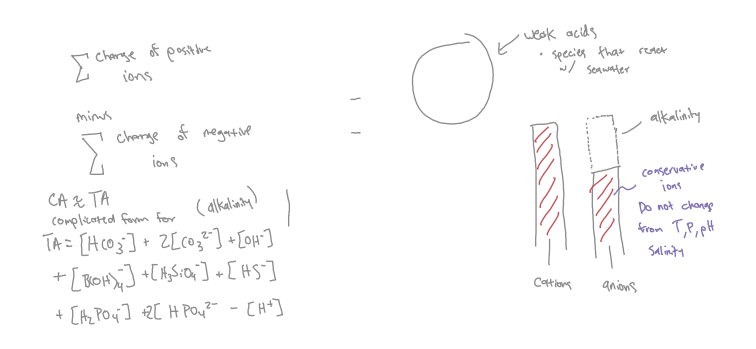
TA is the excess of proton-accepting species over proton-donating species in seawater. These are the species that react with seawater and contribute to its ability to resist a drop in pH.
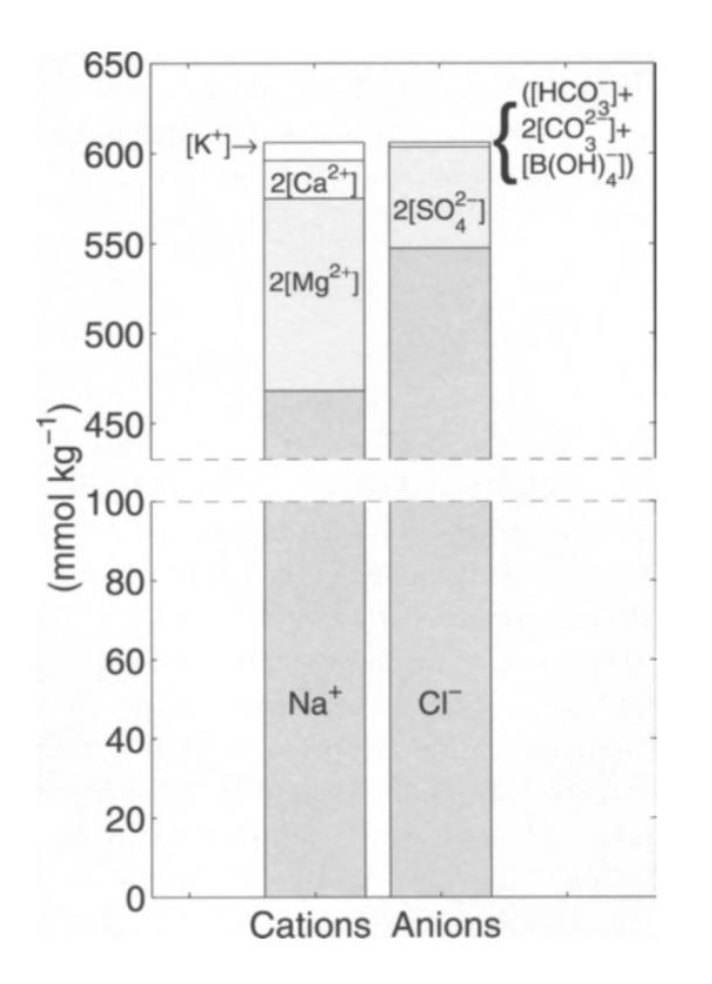
$$ \mathrm{TA} \approx [HCO_3^-] + 2[CO_3^{2-}] + [B(OH)_4^-] + [OH^-] + [H_3SiO_4^-] + [HS^-] + [H_2PO_4^{-}] + 2[HPO_4^{2-}] - [H^+] $$Total alkalinity can also be tracked as the net charge difference between conservative cations and conservative (non-reactive) anions in seawater.
- Conservative cations contribute positive charge
- Conservative anions contribute negative charge
- Their net excess positive charge is balanced by the seawater acid-base system (above)
TA behaves like a conserved charge balance quantity during many mixing processes, even though its chemical expression is often written in terms of acid-base species such as bicarbonate and carbonate.
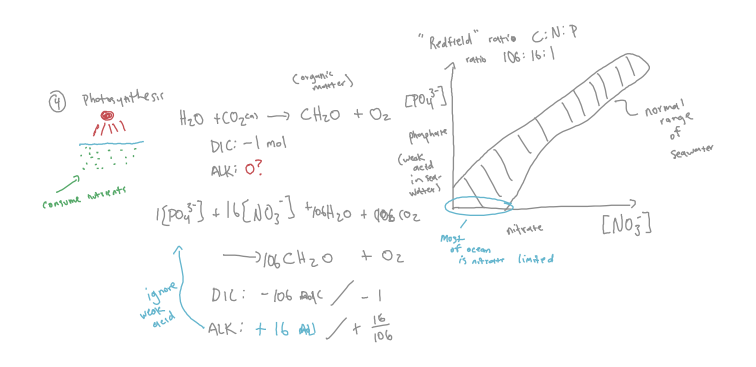
Alkalinity: real world examples
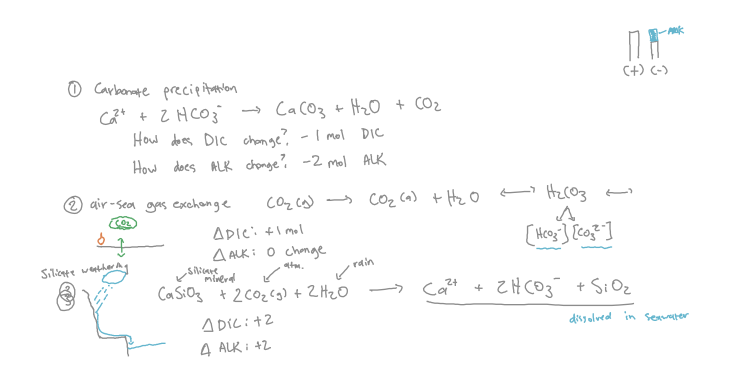
Alkalinity: real world examples